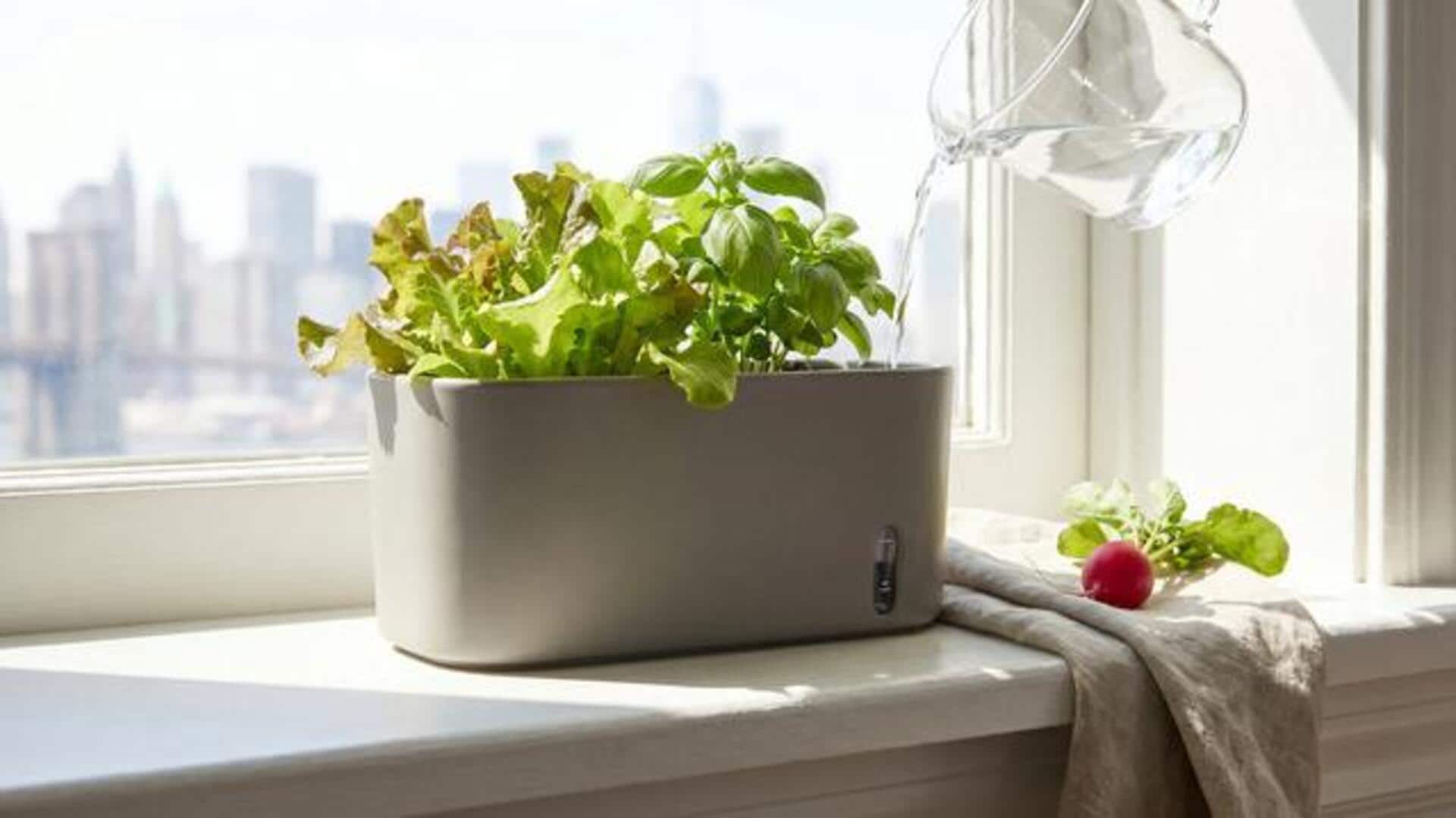
What are self-watering planters?
What's the story
Indoor gardening is a great way to bring greenery into your home, but it can be a hassle to keep the plants watered regularly. Self-watering planters provide a smart solution, keeping plants hydrated without the need for constant attention. These planters are designed to deliver water to the soil as and when required, making them perfect for busy plant parents or those new to gardening. Here are some tips to make the most of self-watering planters for indoor gardening.
Tip 1
Choosing the right planter
Choosing the right self-watering planter is key to successful indoor gardening.
Consider the size and material of the planter, as it impacts water retention and plant growth.
Plastic planters are lightweight and affordable, while ceramic ones offer better insulation.
Make sure the planter has a proper reservoir system that allows excess water to drain out, preventing root rot.
Tip 2
Understanding water levels
Understanding how water levels work in self-watering planters is key to keeping your plants healthy.
The reservoir at the bottom of these planters allows plants to absorb water through capillary action.
It is important to check the water level regularly and refill it when needed, but not overfill it to avoid flooding the roots.
Tip 3
Selecting suitable plants
Not all plants are suited for self-watering planters.
Choose plants that thrive in consistently moist soil conditions, such as ferns or peace lilies.
Avoid plants that prefer dry conditions, like succulents or cacti, as they may suffer from excess moisture.
Tip 4
Maintenance tips for longevity
To ensure your self-watering planter lasts long and works well, regular maintenance is a must.
Clean the reservoir and wicking system every few months to avoid mineral buildup, which can block water flow.
Also, check for any cracks or damages in your planter that might lead to leaks, and replace it if needed to keep your plants thriving.