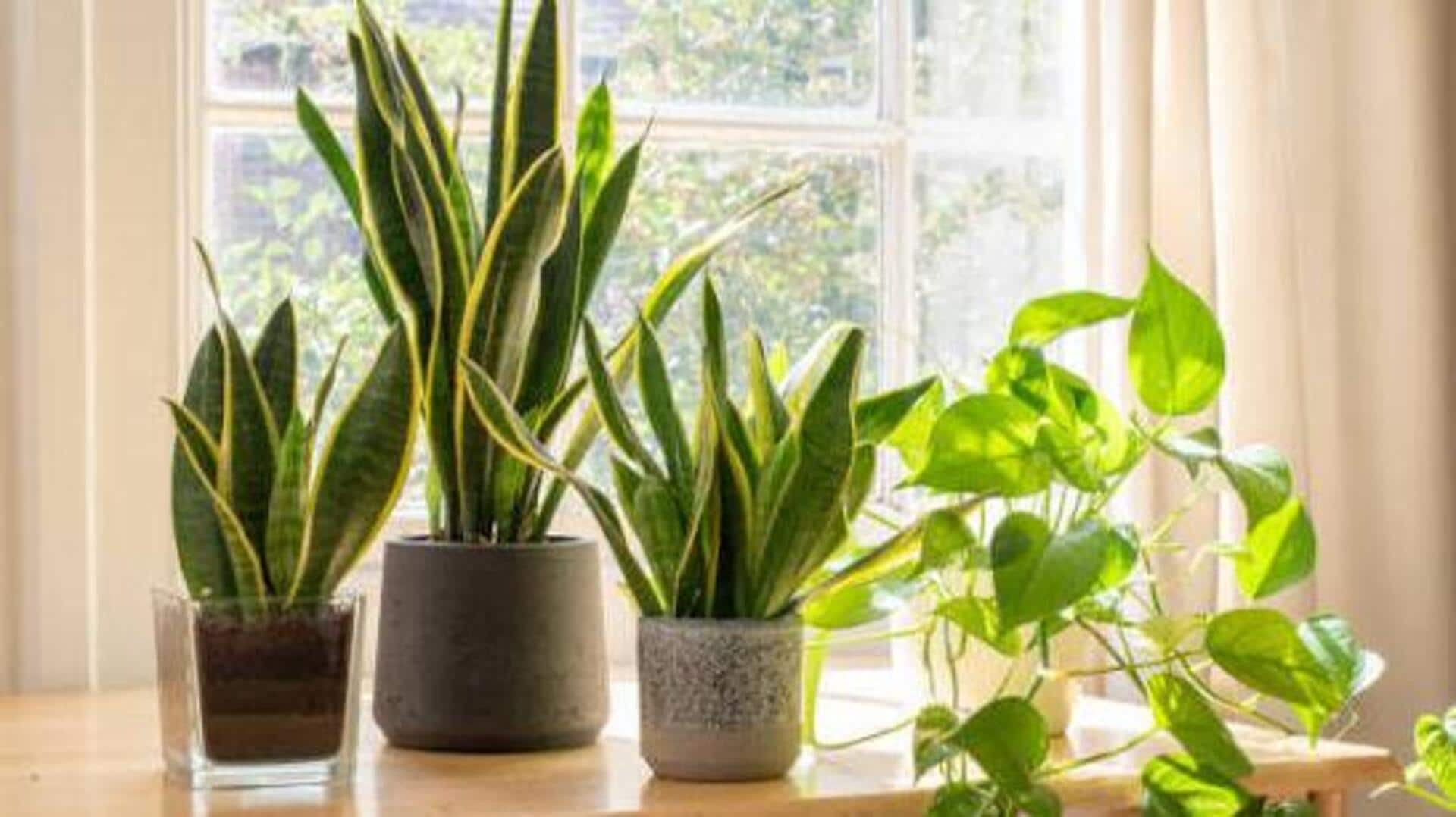
How to care for indoor plants during monsoons
What's the story
Monsoon brings a lot of rain and humidity, which can be a challenge for indoor plants. The excess moisture can lead to root rot, fungal diseases, and other problems. However, with the right care and attention, you can keep your indoor plants healthy during this season. Here are five practical tips to help you maintain your indoor garden during the monsoon months.
Tip 1
Adjust watering frequency
During monsoon, the humidity levels rise significantly, which means that plants require less frequent watering.
Overwatering is a common mistake that can lead to root rot.
Check the soil moisture before watering by sticking your finger about an inch deep into the soil.
If it feels damp or moist, hold off on watering until it dries out a bit.
Tip 2
Improve air circulation
Increased humidity during monsoon can cause stagnant air around indoor plants, leading to fungal growth.
To improve air circulation, use fans or open windows when weather permits.
This helps reduce moisture buildup around plant leaves and stems, keeping them healthy and disease-free.
Tip 3
Use well-draining pots
Choosing pots with good drainage holes is crucial during monsoon. It prevents water from accumulating at the bottom of the pot, which can cause root rot.
If your current pots do not have adequate drainage, consider repotting your plants into containers that allow excess water to escape easily.
Tip 4
Monitor light exposure
Cloudy skies during monsoon reduce natural light levels indoors.
However, it is important to ensure that your plants still get enough light exposure to thrive.
Move them closer to windows, or use artificial grow lights if necessary, to provide adequate lighting conditions for photosynthesis.
Tip 5
Check for pests regularly
The increased humidity during monsoon creates a favorable environment for pests like aphids and spider mites to thrive on indoor plants.
Regularly inspect leaves and stems for any signs of infestation, such as discoloration or webbing.
If you notice any pests, treat them promptly with appropriate methods, like insecticidal soap or neem oil sprays, ensuring minimal damage to plant health.