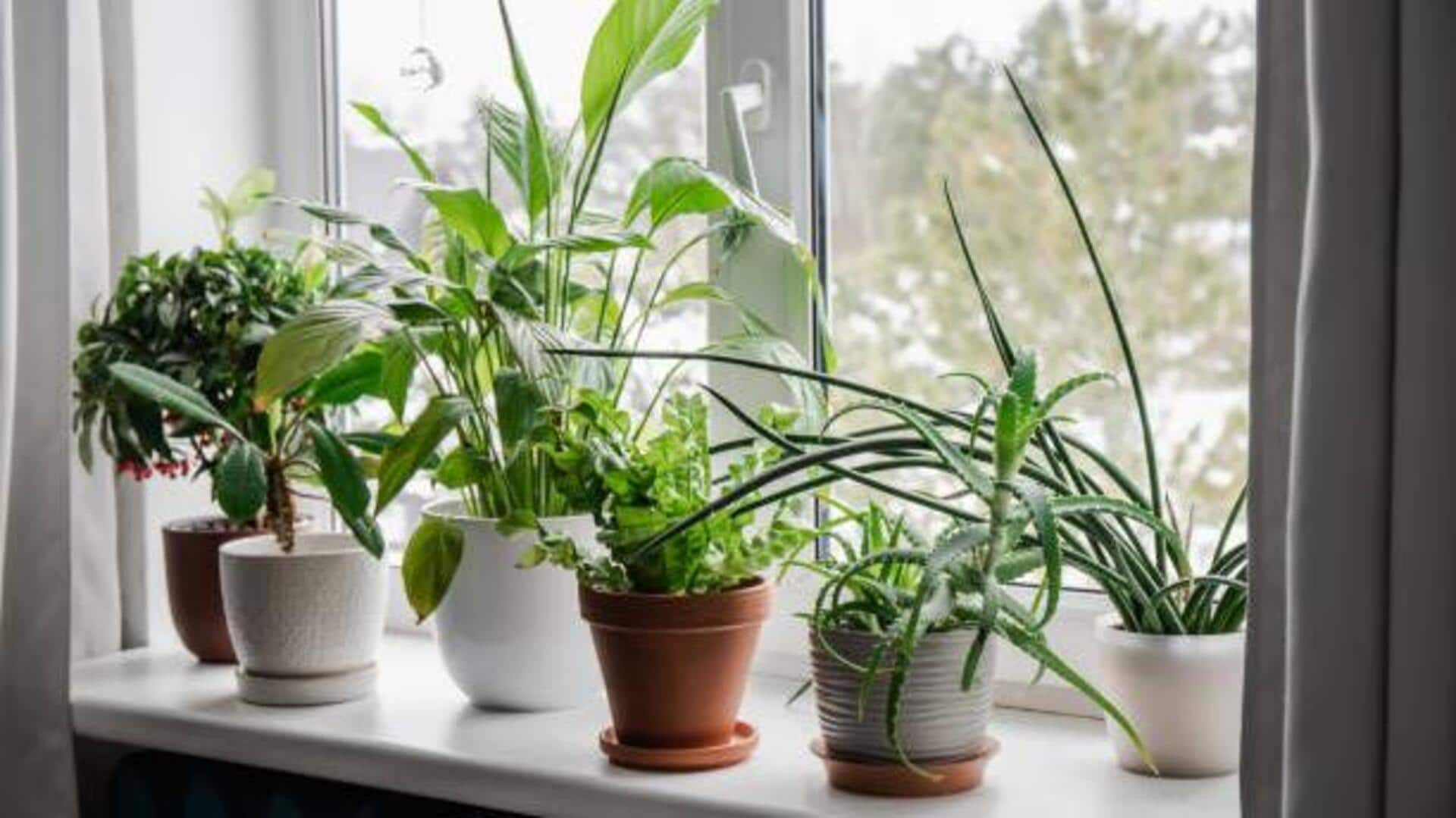
Indoor plant lighting: 5 mistakes to avoid
What's the story
Indoor plants need proper lighting to flourish, but many of us make common mistakes while providing light. These errors can affect the growth and health of your plants. By knowing these mistakes, you can ensure your indoor plants get the right amount of light they need. Here are five common lighting mistakes that indoor plant owners often make, and how to avoid them.
Mistake 1
Overexposing plants to direct sunlight
Direct sunlight can be too harsh for some indoor plants, leading to scorched leaves and stunted growth.
Many assume that more sunlight is always better, but this is not true for all plant species.
It's important to know how much direct sunlight your specific plants need.
For those sensitive to direct light, placing them near a window with filtered light, or using sheer curtains, can help protect them.
Mistake 2
Underestimating light requirements
Not all indoor spaces provide enough natural light for plant growth.
Some people think low-light plants are enough for dimmer corners, but many plants require more than just low-light conditions.
It's important to assess the light levels in your space and choose plants accordingly, or supplement with artificial lighting like LED grow lights.
Mistake 3
Ignoring seasonal changes in light
Seasonal changes can greatly affect the amount of natural light your indoor plants receive.
During winter months, days are shorter, and sunlight is weaker, which may not be enough for some plants.
Adjusting plant placement according to seasonal changes, or using grow lights during these months, can help maintain optimal lighting conditions year-round.
Mistake 4
Not rotating plants regularly
Plants tend to lean toward the light source, resulting in uneven growth if not rotated regularly.
Without rotation, some parts may become leggy, while others remain healthy.
Rotating your plants every few weeks ensures even exposure to light sources, promoting balanced growth and preventing deformities.
Mistake 5
Relying solely on artificial lights
While artificial lights are a great way to supplement natural light, they should not be the only source of illumination for indoor plants.
Natural sunlight has unique qualities that artificial lights cannot replicate completely.
Whenever possible, combine both natural and artificial lighting methods for optimal results, ensuring your indoor garden thrives under the best possible conditions.