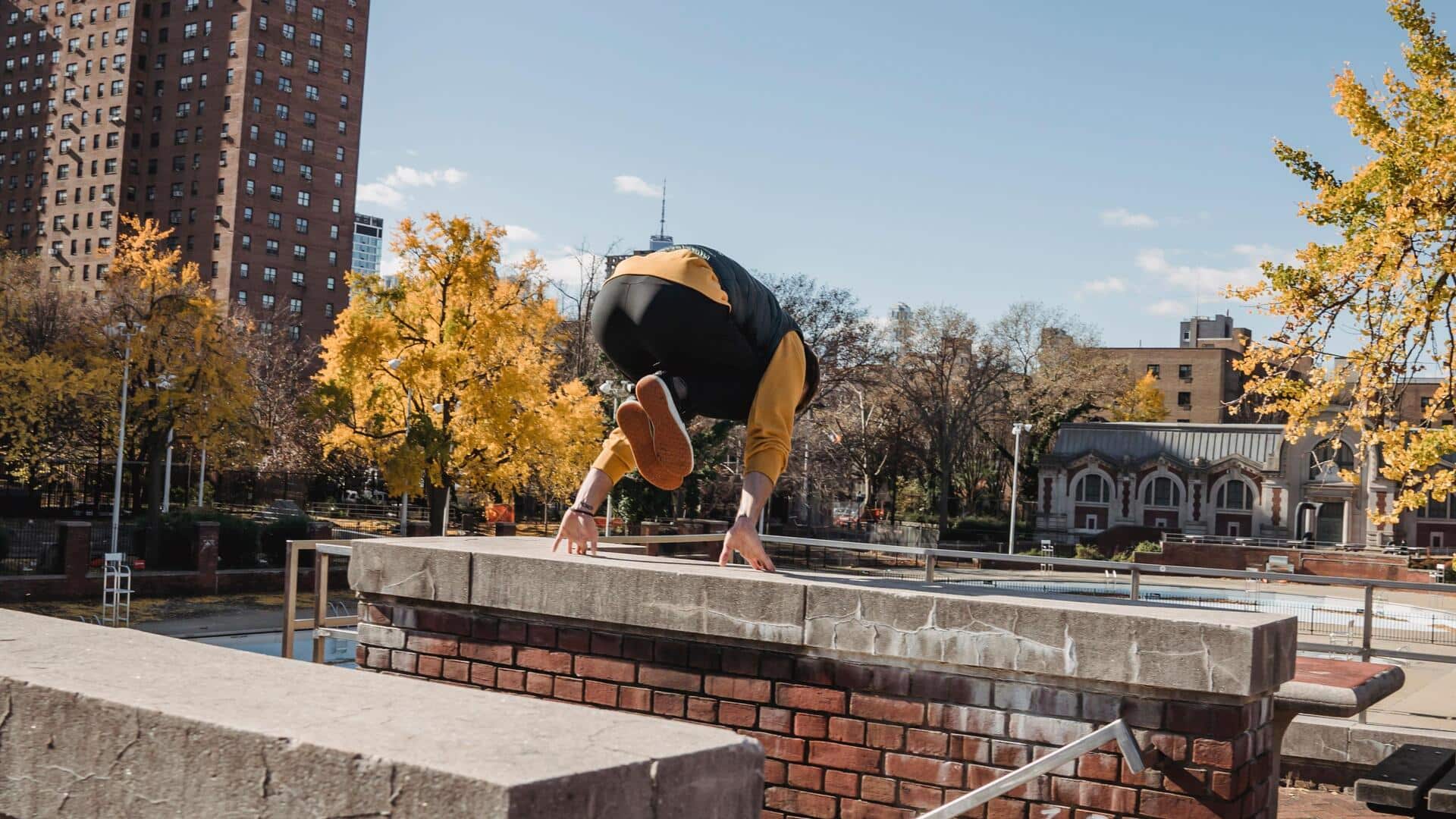
Skating or parkour? See how each one trains your body
What's the story
Inline skating and parkour are two popular activities that offer unique fitness benefits. While inline skating focuses on balance and endurance, parkour emphasizes agility and strength. Both activities provide a full-body workout, but they target different muscle groups and skills. Understanding the differences can help individuals choose an activity that aligns with their fitness goals. Here are the key fitness benefits of inline skating and parkour.
#1
Balance and coordination in inline skating
Inline skating is all about maintaining balance on wheels, which requires a lot of coordination.
As you glide forward, your core muscles engage to keep your body steady.
This activity also improves *proprioception*, which is the body's ability to sense movement and position in space.
Regular practice can enhance your balance skills significantly, making it easier to perform other physical activities.
#2
Cardiovascular benefits of parkour
Parkour is an intense workout that involves running, jumping, climbing, and vaulting over obstacles.
These dynamic movements elevate heart rate quickly, providing excellent cardiovascular benefits.
Engaging in parkour regularly can improve cardiovascular endurance and increase lung capacity.
The high-intensity nature of the sport also aids in burning calories efficiently.
#3
Strength building through resistance in inline skating
Inline skating serves as a resistance exercise that builds muscle strength over time.
Pushing against the ground requires leg muscles, like quadriceps, hamstrings, calves, and glutes, to work hard.
The repetitive motion improves muscle tone without the need for weights or equipment.
This makes inline skating an excellent option for those looking to build lower body strength.
#4
Flexibility enhancement with parkour movements
The various movements involved in parkour require flexibility to avoid injuries while performing stunts or maneuvers safely.
Stretching before and after training sessions helps increase flexibility over time.
This is important to stay limber enough to execute complex moves without straining muscles or joints unnecessarily during practice sessions or competitions alike.