Love Irish seaweed snacks? These varieties are a must-try
What's the story
Irish seaweed snacks are becoming increasingly popular as a healthy and sustainable snack option. Rich in nutrients and minerals, these snacks provide a unique taste experience that can be enjoyed by anyone. With a variety of seaweeds available, each offering its own distinct flavor and texture, there's something for everyone to try. Here are five varieties of Irish seaweed snacks that you can explore for a different snacking experience.
Dulse
Dulse: The versatile snack
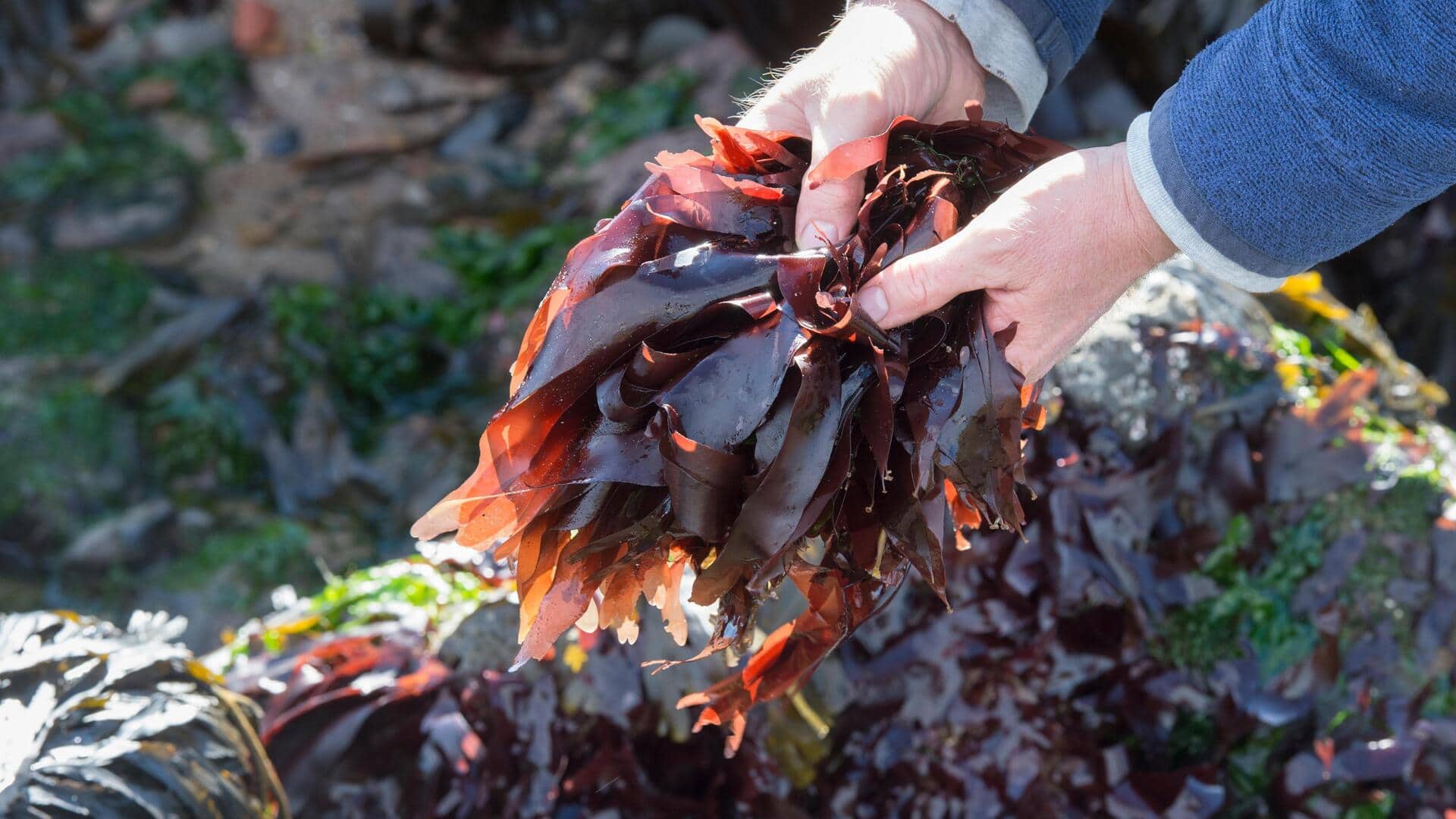
Dulse is a red seaweed that has a chewy texture and a slightly salty taste. It can be eaten raw or roasted to bring out its natural flavors.
Rich in vitamins A, C, and B12, dulse is an excellent source of dietary fiber.
It can be used as a topping on salads or added to soups for an extra punch of flavor.
Carrageen
Carrageen moss: The thickening agent
Carrageen moss is commonly used as a thickening agent in various dishes.
This red seaweed has a mild flavor and is rich in iodine and potassium.
Traditionally, it is soaked in water to extract its gelatinous properties before being added to desserts like puddings or jellies.
Sea lettuce
Sea lettuce: The crisp delight
Sea lettuce is bright green with a crisp texture similar to that of regular lettuce.
It has a mild flavor with a hint of brininess, making it ideal for salads or sandwiches.
Sea lettuce is high in iron, calcium, magnesium, and vitamins A and C.
Irish moss
Irish moss: The nutrient powerhouse
Irish moss is another type of red seaweed that has been used for centuries for its health benefits.
It has a gel-like consistency when soaked in water, making it perfect for use in smoothies or as a natural thickener for soups.
Irish moss is rich in minerals like zinc, calcium, potassium, and iodine.
Bladderwrack
Bladderwrack: The ancient remedy
Bladderwrack has been used in traditional medicine for centuries.
It has a slightly bitter taste, which can be masked by mixing it with other ingredients like lemon juice or honey.
This brown seaweed is rich in antioxidants, vitamins, and minerals such as magnesium, calcium, iodine, iron, and zinc.