The art and history behind Japanese folding fans
What's the story
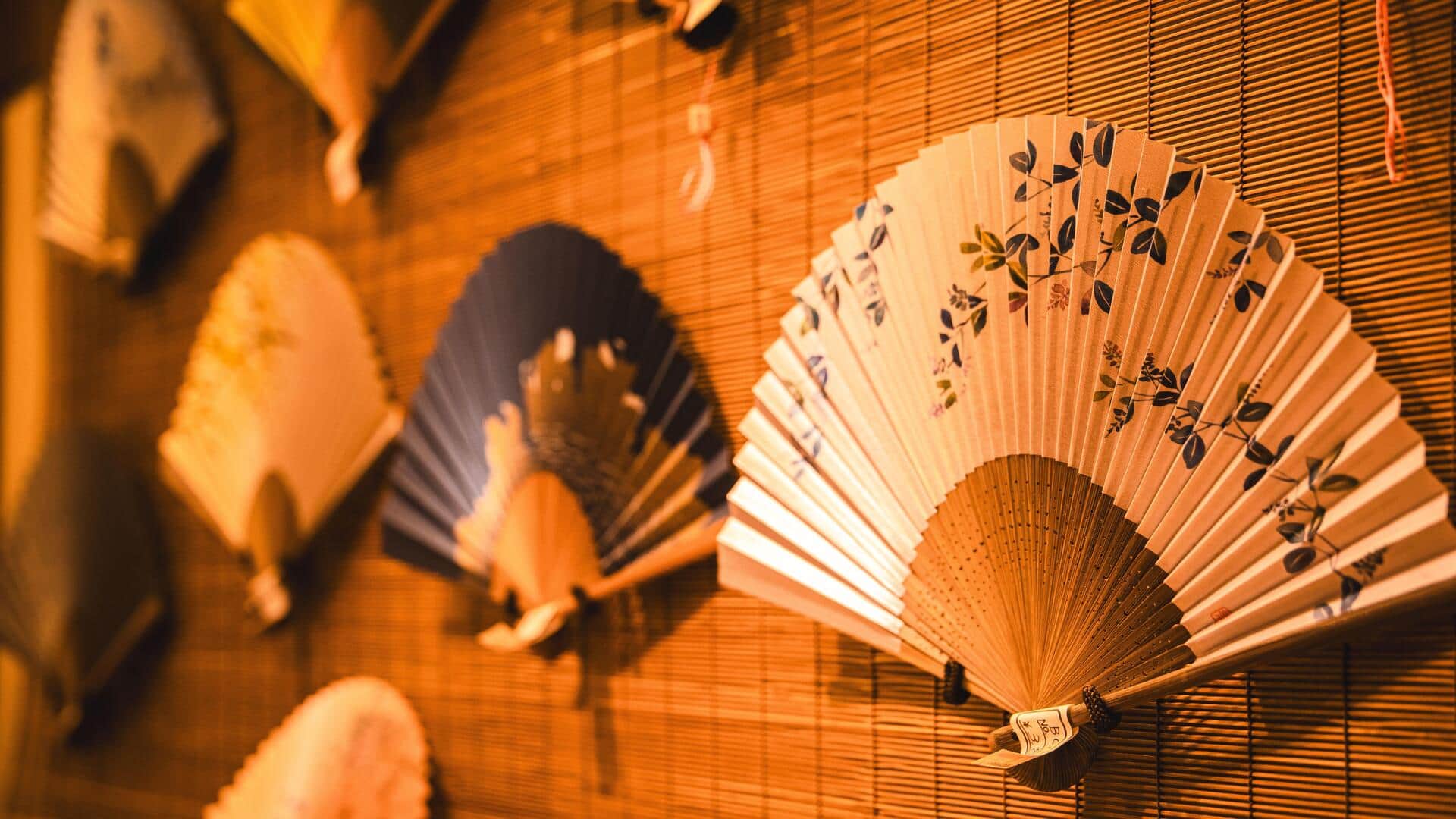
Japanese sensu folding fans are not just beautiful artifacts but also an important part of Japanese culture and history. These fans, which are characterized by their intricate designs and practical use, have been around for centuries. They were used in ceremonies, as symbols of status, and even as tools for communication. Here are five fascinating facts about these iconic fans that highlight their cultural significance and craftsmanship.
#1
Origin dating back to ancient times
The origin of sensu folding fans can be traced back to ancient China before they made their way to Japan around the sixth century.
In Japan, they were adapted into a unique art form, which was both functional and decorative.
The earliest records of these fans in Japan date back to the Heian period (794-1185), when they became popular among the aristocracy.
#2
Symbolism in Japanese culture
In Japanese culture, sensu folding fans also symbolize protection and good fortune.
They are often used in traditional ceremonies like weddings and tea ceremonies as a sign of prosperity and happiness.
The act of opening a fan is also seen as an invitation for positive energy or new opportunities.
#3
Intricate craftsmanship involved
Creating a sensu folding fan is an intricate craft that requires great skill.
Each fan is made from bamboo ribs covered with paper or silk, which is painted or printed with elaborate designs.
The process involves careful cutting, folding, and painting to ensure that every piece meets high standards of beauty and functionality.
#4
Use in traditional performing arts
Sensu folding fans are an integral part of traditional Japanese performing arts such as Noh theater and Kabuki.
They are used by performers to convey emotions or represent different characters without saying a word.
The subtle movements with these fans can convey complex narratives on stage.
#5
Modern adaptations continue tradition
Today, while sensu folding fans continue to be cherished for their cultural value, they have also found modern adaptations in fashion and interior design.
Designers incorporate these fans into contemporary clothing styles and home decor items, such as wall hangings and decorative furniture accents.
This blends tradition with modern design while keeping this timeless art form alive.