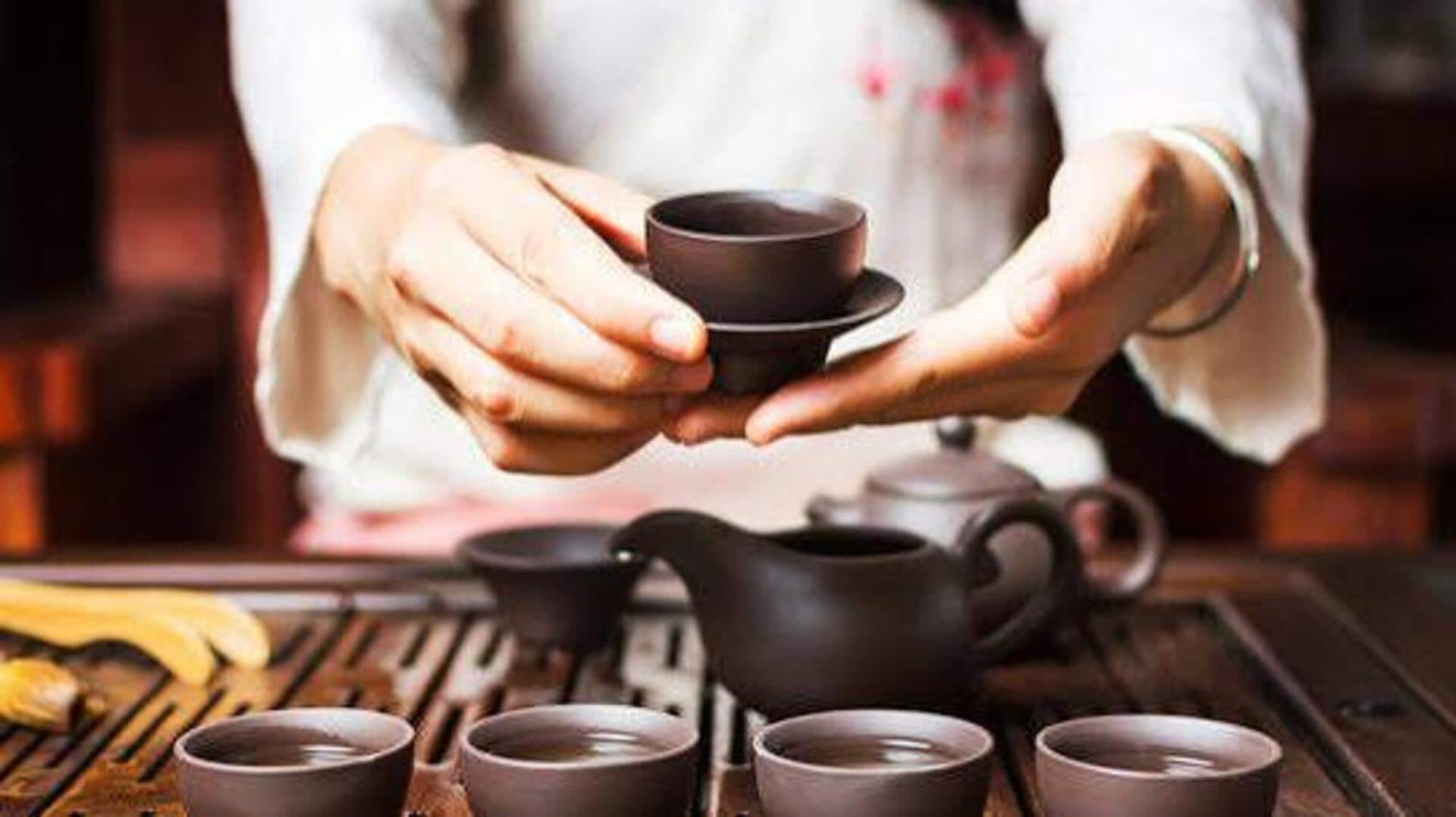
All about Japanese tea ceremony
What's the story
The Japanese tea ceremony is a time-honored ritual that captures the essence of harmony, respect, purity, and tranquility. It is not just about drinking tea but also about experiencing a meditative state. The ceremony emphasizes mindfulness and appreciation for the moment, making it a spiritual journey for participants. The ritual is steeped in tradition and is an integral part of Japanese culture.
#1
The significance of harmony
Harmony is one of the four principles of the Japanese tea ceremony. It means creating a peaceful environment where guests can relax and enjoy the moment.
The host and guests work together to create an atmosphere of mutual respect and understanding.
This principle encourages participants to let go of their worries and focus on the present moment.
#2
Emphasis on respect
Respect is another key element of the tea ceremony. It involves acknowledging each other's presence and valuing the effort put into preparing for the event.
Every action, from serving tea to accepting it, is done with utmost care and consideration.
This practice fosters a deep sense of appreciation among participants, enhancing their connection with one another.
#3
Purity in actions
Purity in actions is central to the Japanese tea ceremony. It refers to keeping things simple and free from unnecessary distractions or complications.
The host meticulously prepares every element of the ceremony, from the selection of utensils to the arrangement of flowers, ensuring that everything is in its place.
This careful attention to detail allows guests to focus on enjoying their experience, without being overwhelmed by excess or clutter.
#4
Tranquility as a goal
Tranquility is the ultimate goal of the Japanese tea ceremony.
It is achieved through mindful participation in each step of the ritual—from cleansing hands before entering the tearoom to sipping matcha from handmade bowls.
This serene atmosphere encourages introspection, allowing guests to find inner peace amid life's chaos.