
Jicama v/s water chestnut: Comparing their nutrition
What's the story
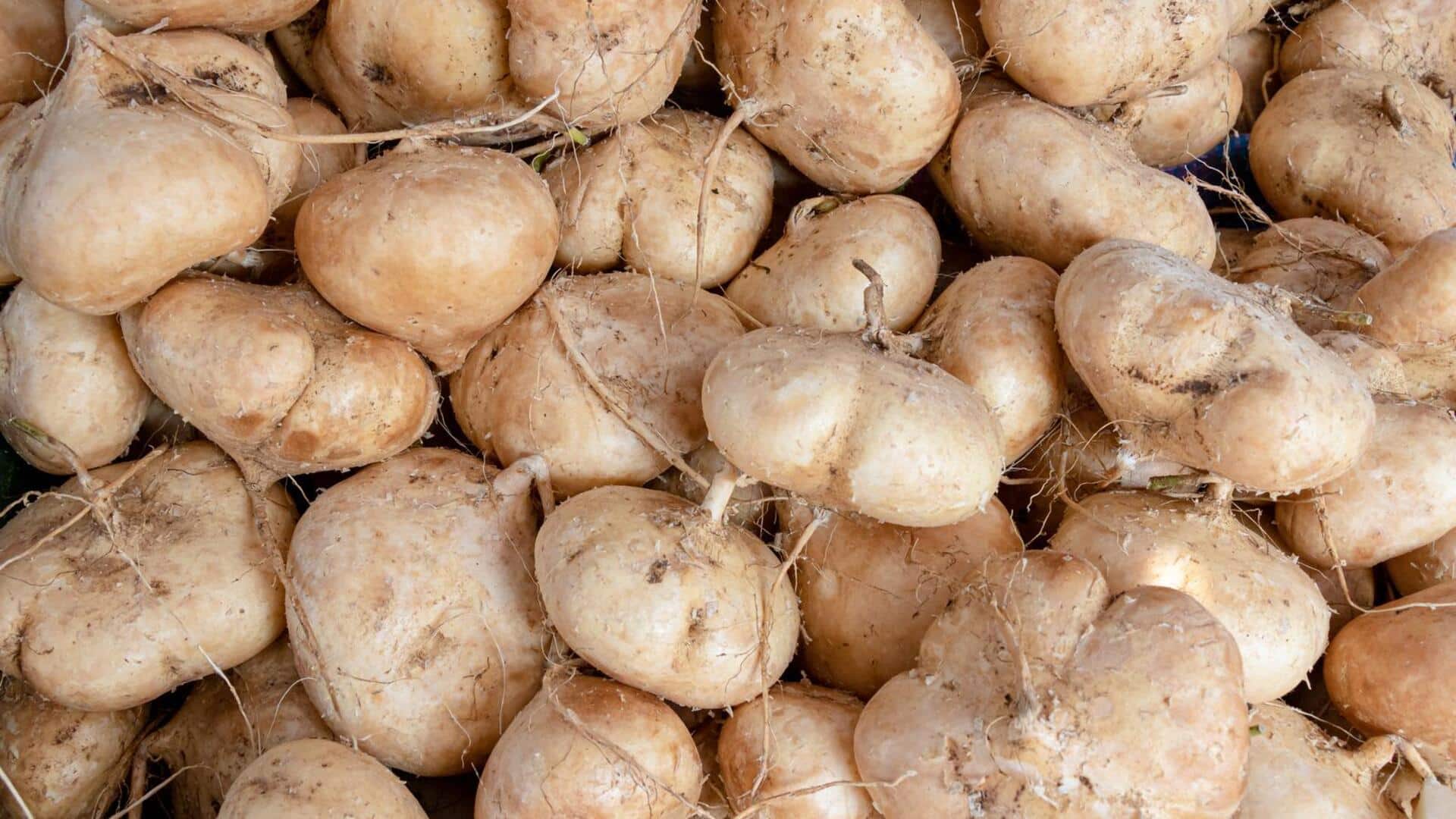
Jicama and water chestnut are two popular crunchy vegetables often used in salads and stir-fries. Both provide unique textures and flavors, making them ideal for a variety of dishes. While jicama is a root vegetable with a slightly sweet taste, water chestnut is an aquatic vegetable that has a mild flavor. Here, we compare their nutritional profiles to see what each brings to the table.
#1
Fiber content in jicama and water chestnut
Jicama is loaded with fiber, offering around six grams per cup. This makes it an excellent option for those looking to up their daily fiber intake. Water chestnuts, on the other hand, provide about three grams of fiber per cup. While both vegetables can help with digestion and keeping you full, jicama has the upper hand when it comes to fiber content.
#2
Vitamin C levels compared
Both jicama and water chestnuts are rich sources of vitamin C, which is important for boosting immunity and skin health. Jicama offers around 44% of the recommended daily intake of vitamin C per cup, while water chestnuts provide approximately 8%. If you're looking to up your vitamin C intake through vegetables, jicama would be a better option.
#3
Caloric value differences
When it comes to calorie count, both jicama and water chestnuts are low-cal options for those watching their weight. Jicama has roughly 50 calories per cup, while water chestnuts have about 119 calories for the same serving size. If you're looking for lower-calorie options without compromising on volume in meals or snacks, jicama wins.
Tip 1
Mineral content insights
Jicama is a great source of potassium, which is good for heart health and blood pressure regulation. It has around 12% of the daily recommended intake per cup. Water chestnuts also provide potassium but in lesser amounts than jicama. Both vegetables provide small amounts of other minerals such as magnesium and phosphorus, making them healthy additions to a balanced diet.