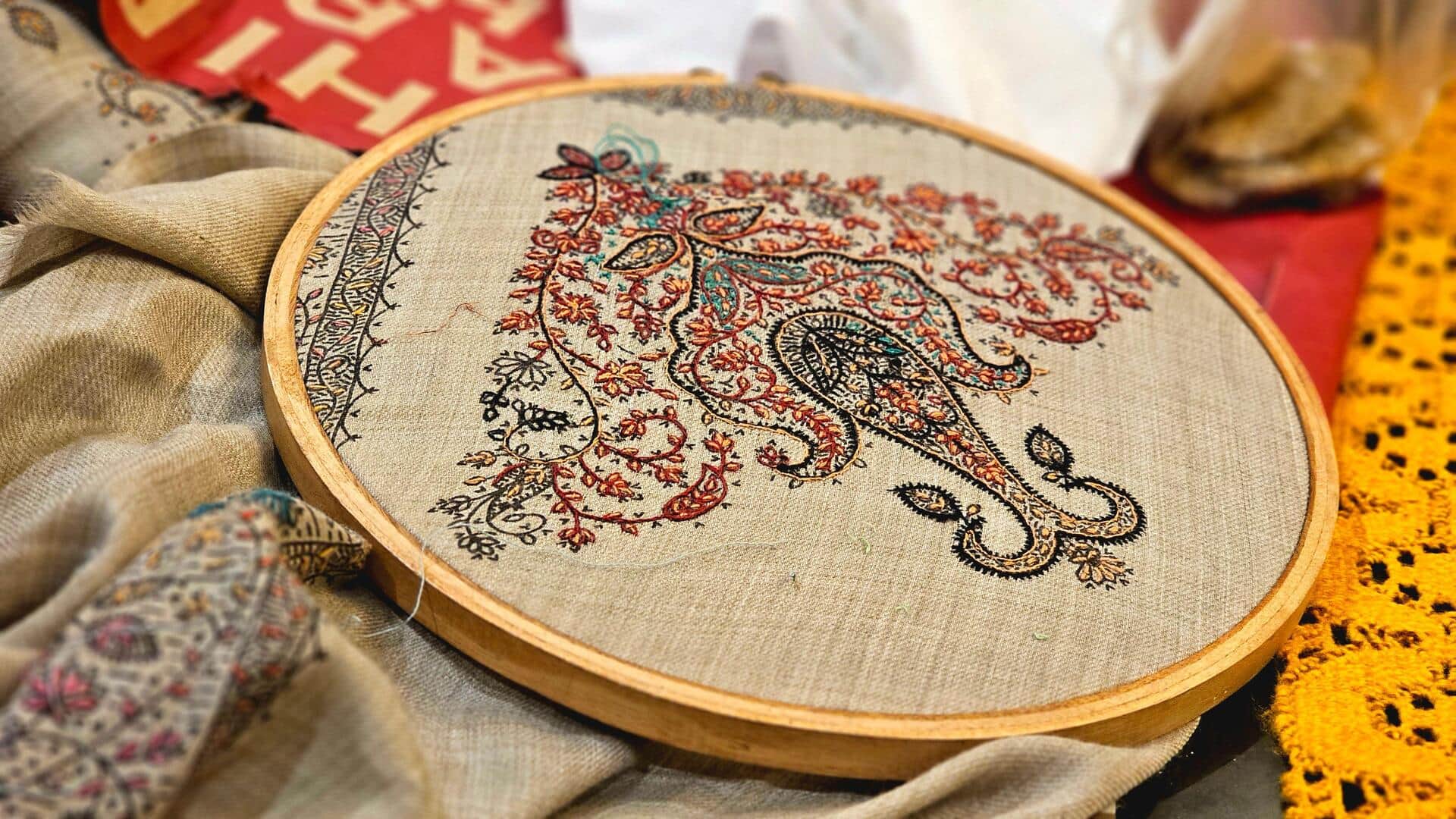
Kalamkari: The story of India's ancient fabric art
What's the story
Kalamkari is an ancient Indian art form that involves hand-painting or block-printing on fabric. It is mostly practiced in Andhra Pradesh and Telangana and is famous for its intricate designs and mythological themes. The word "kalamkari" comes from the Persian words kalam (pen) and kari (work), meaning pen work. This tradition dates back over three thousand years and continues to be an integral part of India's cultural heritage.
#1
Historical roots of Kalamkari
Kalamkari's history dates back to ancient India, where it was used to make decorative pieces. The art form was also used to narrate stories from epics like Ramayana and Mahabharata. The craft was patronized by kings who used kalamkari textiles in royal attire and decor. Over the centuries, it evolved with regional influences but retained its traditional techniques.
#2
Techniques involved in Kalamkari
There are two main techniques of kalamkari: hand-painted and block-printed. In hand-painted kalamkari, artisans use bamboo sticks with natural dyes to draw intricate designs on cloth. Block-printing involves carving patterns on wooden blocks, which are then stamped on fabric with dye. Both methods require immense skill and patience to achieve the detailed work kalamkari is known for.
#3
Themes depicted in Kalamkari art
Kalamkari art is famous for its depiction of themes from ancient stories. Common motifs include scenes from the Ramayana or Krishna's life, floral patterns, or geometric designs. The colors used are derived from natural sources like turmeric or indigo, adding to the beauty and authenticity of each piece.
#4
Modern adaptations of Kalamkari
In recent years, kalamkari has made a comeback in contemporary fashion as designers incorporate it into modern apparel like sarees or tops. The revival has led to a renewed interest among younger generations who appreciate traditional crafts with a modern twist. This adaptation ensures that kalamkari remains relevant while preserving its rich heritage for future generations.