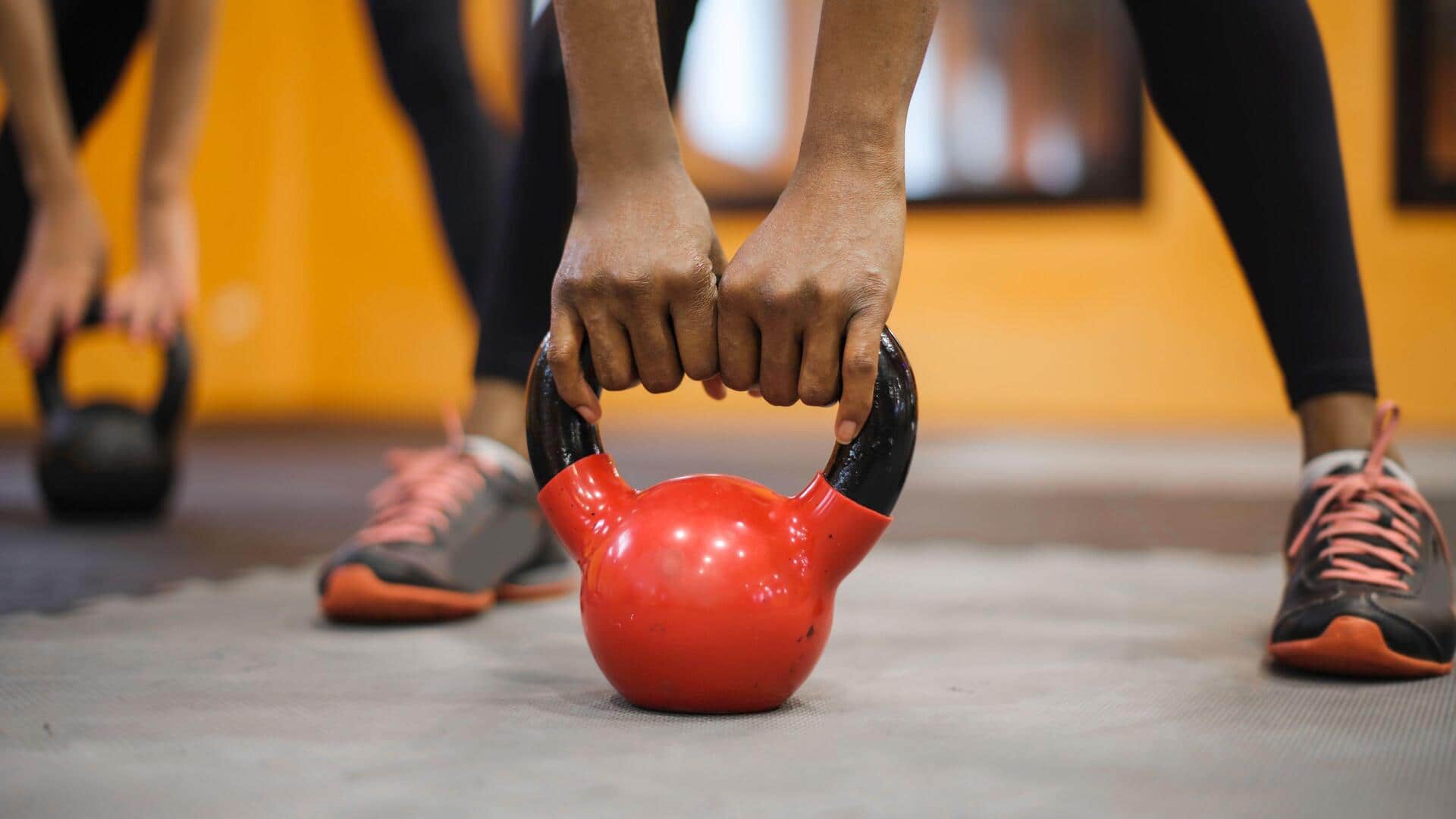
Kettlebells: The simple tool that delivers big results
What's the story
Kettlebell workouts are becoming increasingly popular, and for good reason. These versatile tools can be used for a variety of exercises, targeting different muscle groups, and improving overall fitness. While many people are aware of the basic benefits of kettlebell training, some lesser-known advantages make it a valuable addition to any workout routine. Here are five surprising benefits of kettlebell workouts.
Core Power
Enhances core strength
Kettlebell exercises often involve dynamic movements that engage the core muscles more than traditional weightlifting.
The swinging and balancing actions require constant stabilization, which strengthens the abdominal muscles and lower back over time.
A stronger core improves posture, balance, and overall functional strength.
Heart health
Boosts cardiovascular fitness
Unlike traditional strength training, kettlebell workouts can be performed in a way that elevates your heart rate, giving you a cardiovascular workout.
The continuous movement patterns keep your heart pumping, improving your endurance and heart health.
Regular kettlebell sessions can lead to better circulation and increased stamina.
Flexibility gain
Improves flexibility
Kettlebell workouts also include a range of motion that can improve your flexibility.
The dynamic swings and lifts stretch different muscle groups, promoting a greater range of motion in joints.
This increased flexibility can reduce the risk of injury during other physical activities.
Metabolism boost
Increases metabolic rate
The high-intensity nature of kettlebell training can increase your metabolic rate even after you have finished working out.
This phenomenon, known as excess post-exercise oxygen consumption (EPOC), means your body continues to burn calories at an elevated rate for hours after the session ends.
This can help with weight management.
Coordination skills
Enhances coordination and balance
Kettlebell workouts require coordination between different muscle groups, which improves motor skills and balance over time.
The need for precise movements helps develop neuromuscular connections that enhance coordination in daily activities, as well as sports performance.