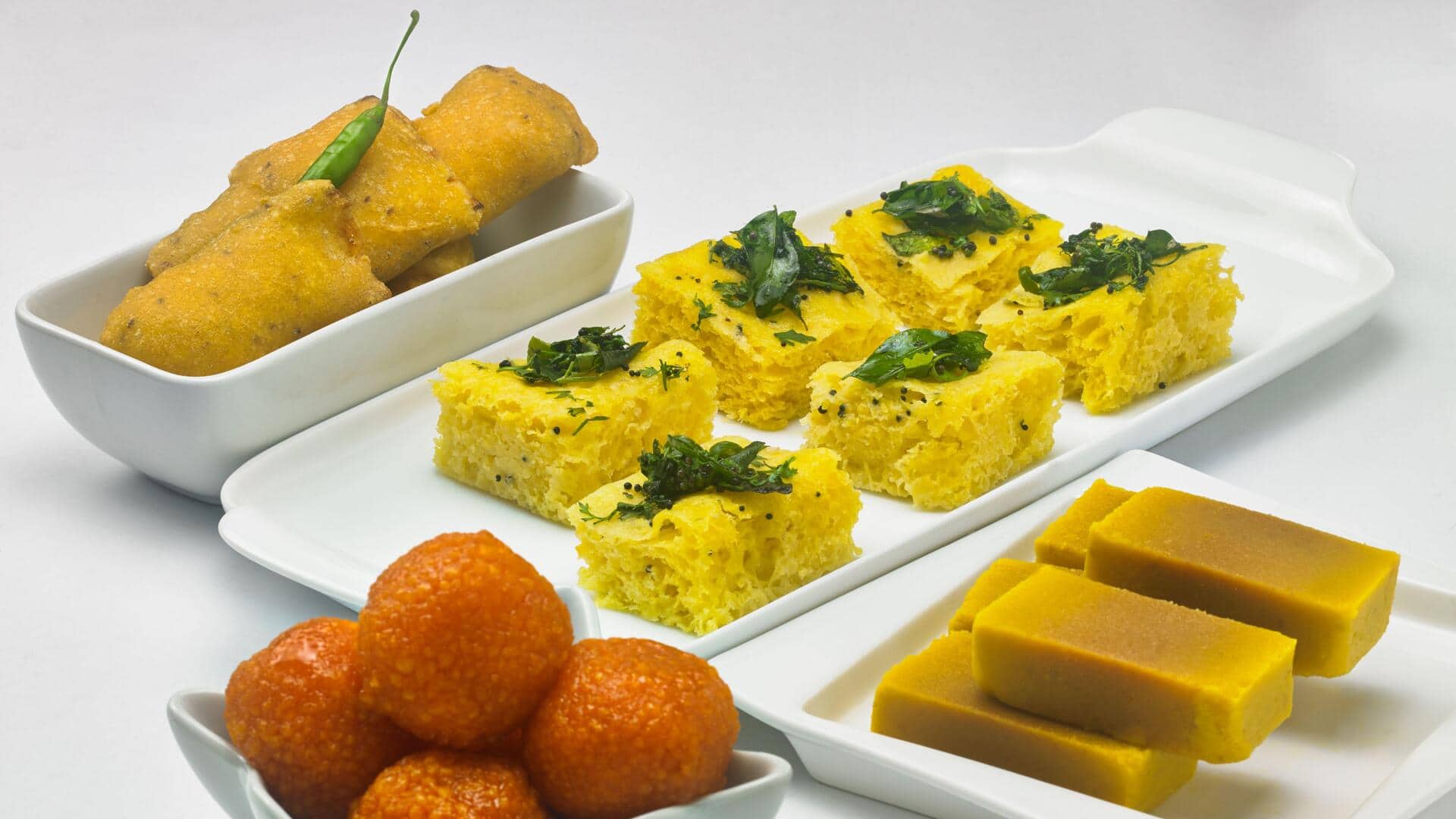
The story behind khaman dhokla's global rise
What's the story
Khaman dhokla, a popular snack from Gujarat, has traveled from local kitchens to global menus. This steamed, spongy cake made from chickpea flour is a testament to the culinary journey that has crossed borders and cultures. From its humble beginnings in Indian households, khaman dhokla has become a favorite in restaurants and homes around the world. Here's how this dish became a global sensation.
#1
Origins in Gujarati kitchens
Khaman dhokla originates from Gujarat, where it is a staple breakfast or snack option.
Traditionally, it is made with fermented chickpea batter, steamed to perfection.
The dish is usually garnished with mustard seeds and coriander leaves, giving it a burst of flavor.
Its popularity in local markets paved the way for its journey beyond regional boundaries.
#2
Adaptations across cultures
As khaman dhokla made its way to different parts of the world, it underwent several adaptations to suit local palates.
In some places, it is served with different chutneys or accompanied by different sides to give a unique twist to the traditional recipe.
These adaptations have made the dish more accessible and appealing to a wider audience.
#3
Impact of globalization
Globalization has played a key role in popularizing khaman dhokla outside India.
With Indian restaurants sprouting up around the world, this dish has become a part of many international menus.
Food festivals and cultural events have also contributed to its visibility, allowing people from different backgrounds to savor this delightful snack.
#4
Modern twists on traditional recipes
In recent years, chefs have experimented with modern twists on traditional khaman dhokla recipes.
Some variations include adding ingredients like spinach or quinoa for added nutrition and flavor diversity.
These innovations cater to contemporary dietary preferences while preserving the essence of the original dish.