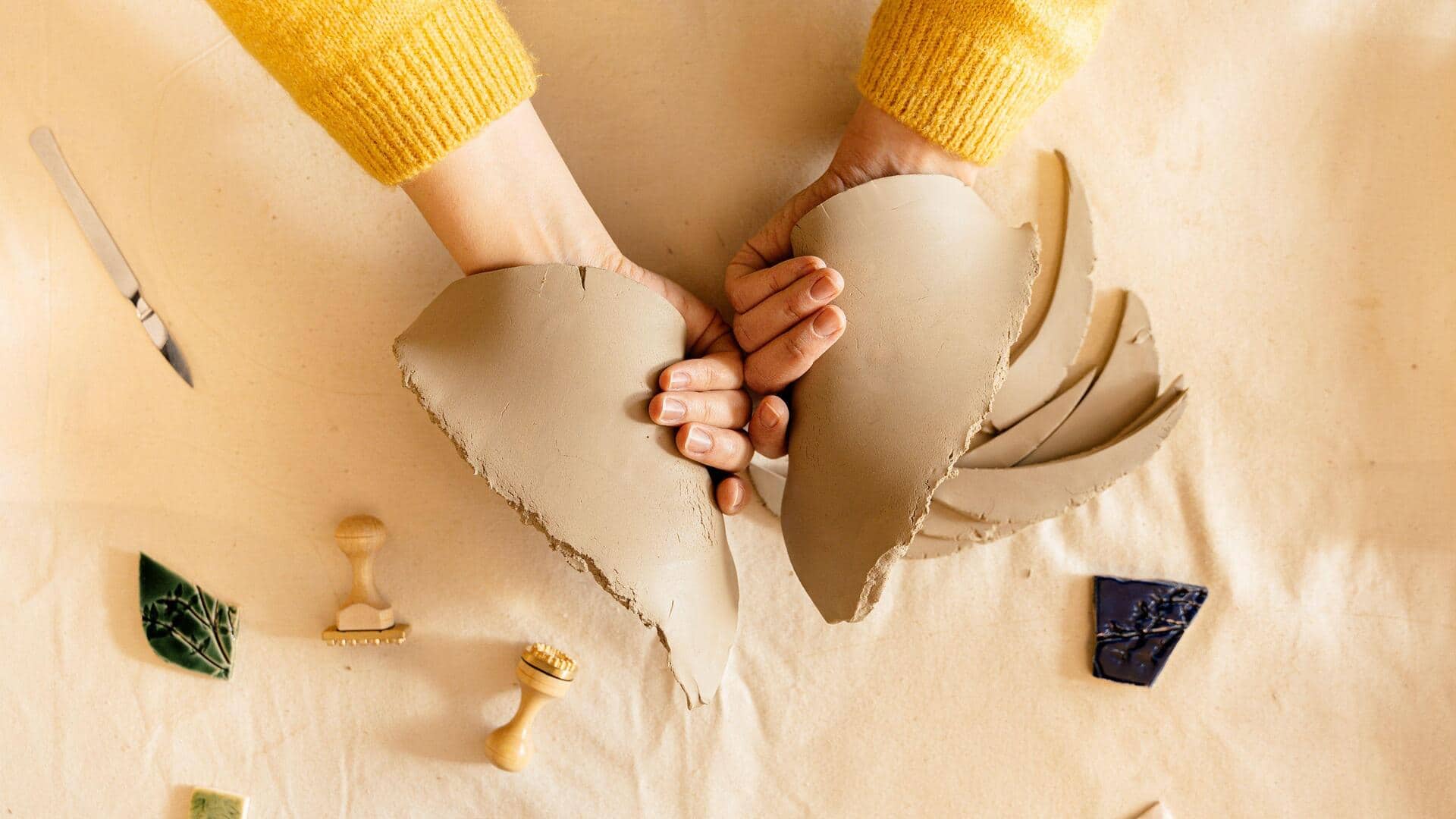
Kintsugi: The Japanese art of making broken pottery beautiful
What's the story
Kintsugi is a centuries-old Japanese art that involves repairing broken pottery with lacquer mixed with powdered gold, silver, or platinum. This practice not only restores the functionality of the item but also highlights its imperfections, turning cracks and breaks into beautiful, unique patterns. The philosophy behind kintsugi emphasizes embracing flaws and imperfections as part of an object's history and beauty.
#1
The philosophy behind Kintsugi
Kintsugi is rooted in the Japanese philosophy of wabi-sabi, which finds beauty in imperfection and transience.
Rather than hiding the damage, kintsugi celebrates it as a significant part of an object's life story.
This philosophy encourages people to appreciate the past experiences that have shaped an item, rather than seeing damage as a loss.
#2
Materials used in Kintsugi
The materials used in kintsugi are simple yet effective.
Traditionally, lacquer is used to bind the broken pieces together. The lacquer is mixed with powdered metals like gold or silver to fill the cracks and highlight them.
These materials not only restore but also embellish the piece, making it more valuable than before.
#3
Techniques involved in Kintsugi
The process of kintsugi requires patience and precision.
First, broken pieces are carefully reassembled using adhesive lacquer.
Once set, cracks are filled with a mixture of lacquer and powdered metal.
The final step involves polishing the repaired areas for a smooth finish.
Each step requires meticulous attention to detail to ensure durability and aesthetic appeal.
#4
Cultural significance of Kintsugi
Kintsugi has deep cultural significance in Japan as it reflects resilience and acceptance of change.
It teaches that breakage can lead to new forms of beauty, resonating with broader life lessons about overcoming adversity.
The art form has gained international recognition for its philosophical depth and artistic value, influencing contemporary art and design worldwide.