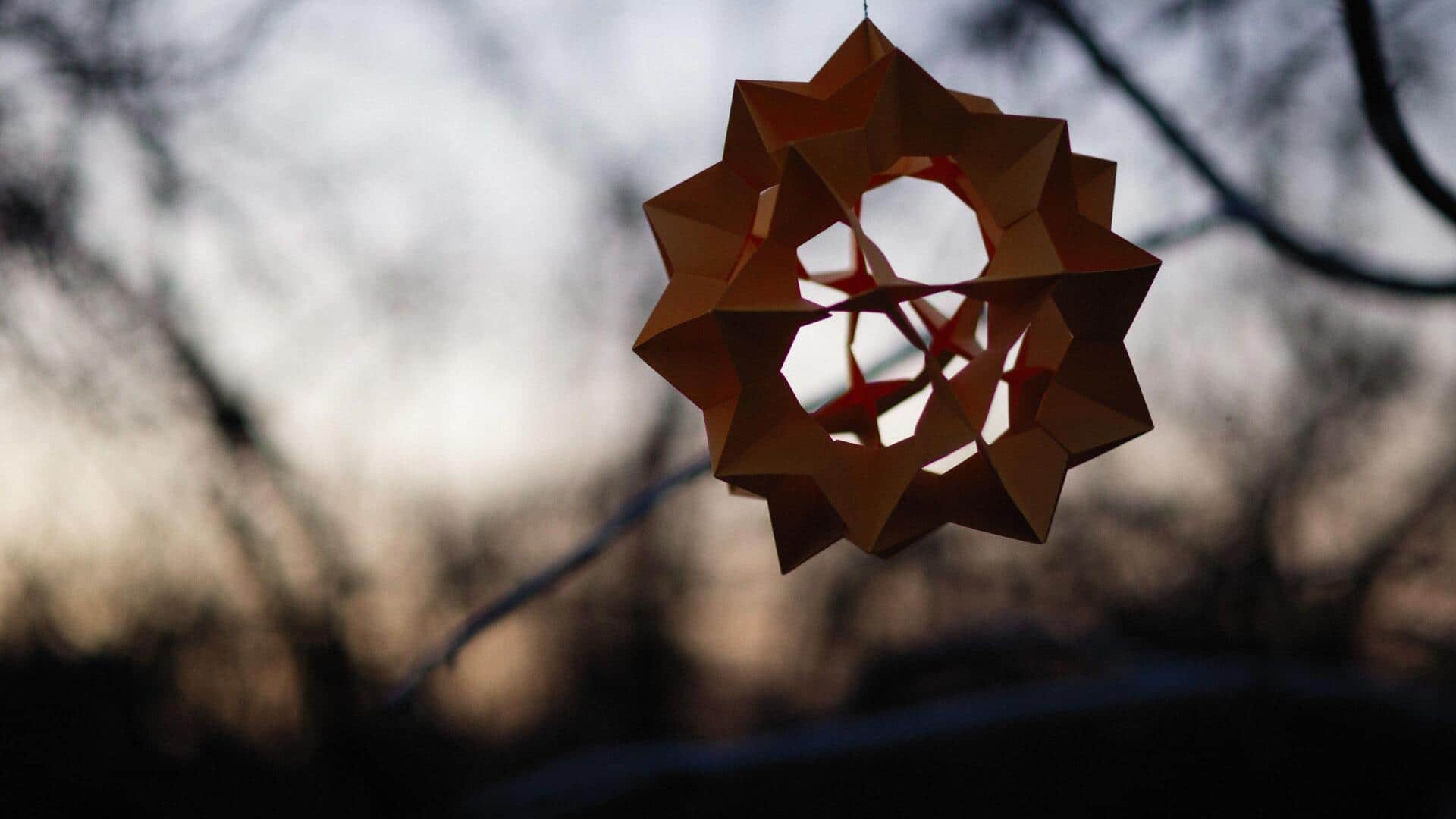
Kirigami: The Japanese art of turning paper into intricate designs
What's the story
Kirigami, the Japanese art of folding and cutting paper, is a unique craft that combines precision with creativity. Unlike origami, which focuses on folding only, kirigami incorporates cutting to create intricate designs. This art form has been practiced for centuries, evolving from simple patterns to complex structures. Today, kirigami is not just an artistic expression but also a way to explore geometry and design principles.
#1
Historical roots of kirigami
Kirigami has its roots in ancient Japan, where it was used in religious ceremonies and celebrations.
The word "kirigami" translates to "cut paper" in Japanese. Initially, it was used to create ceremonial decorations and later evolved into an art form.
Over the years, kirigami spread across the globe, influencing various cultures and adapting to different artistic styles.
#2
Tools and materials needed
To get started with kirigami, you need basic tools like scissors or a craft knife, along with a cutting mat for safety.
Thin paper works best as it allows for precise cuts without tearing easily. Some artists also use colored paper or patterned sheets to add visual interest to their designs.
Having these materials ready makes the process smoother and more enjoyable.
#3
Techniques for creating designs
Kirigami involves various techniques that require careful planning and execution.
Symmetry is key in many designs, as it adds balance and harmony.
Artists often start by sketching their patterns before making any cuts or folds. This planning phase helps in visualizing the outcome and ensuring accuracy in each step of the process.
#4
Applications beyond traditional art
While traditionally associated with decorative art forms such as cards or ornaments, kirigami has found applications in modern fields such as architecture and engineering design processes.
Here, it aids in visualizing structural elements before actual construction takes place.
This crossover illustrates how traditional arts can inform contemporary practices effectively.