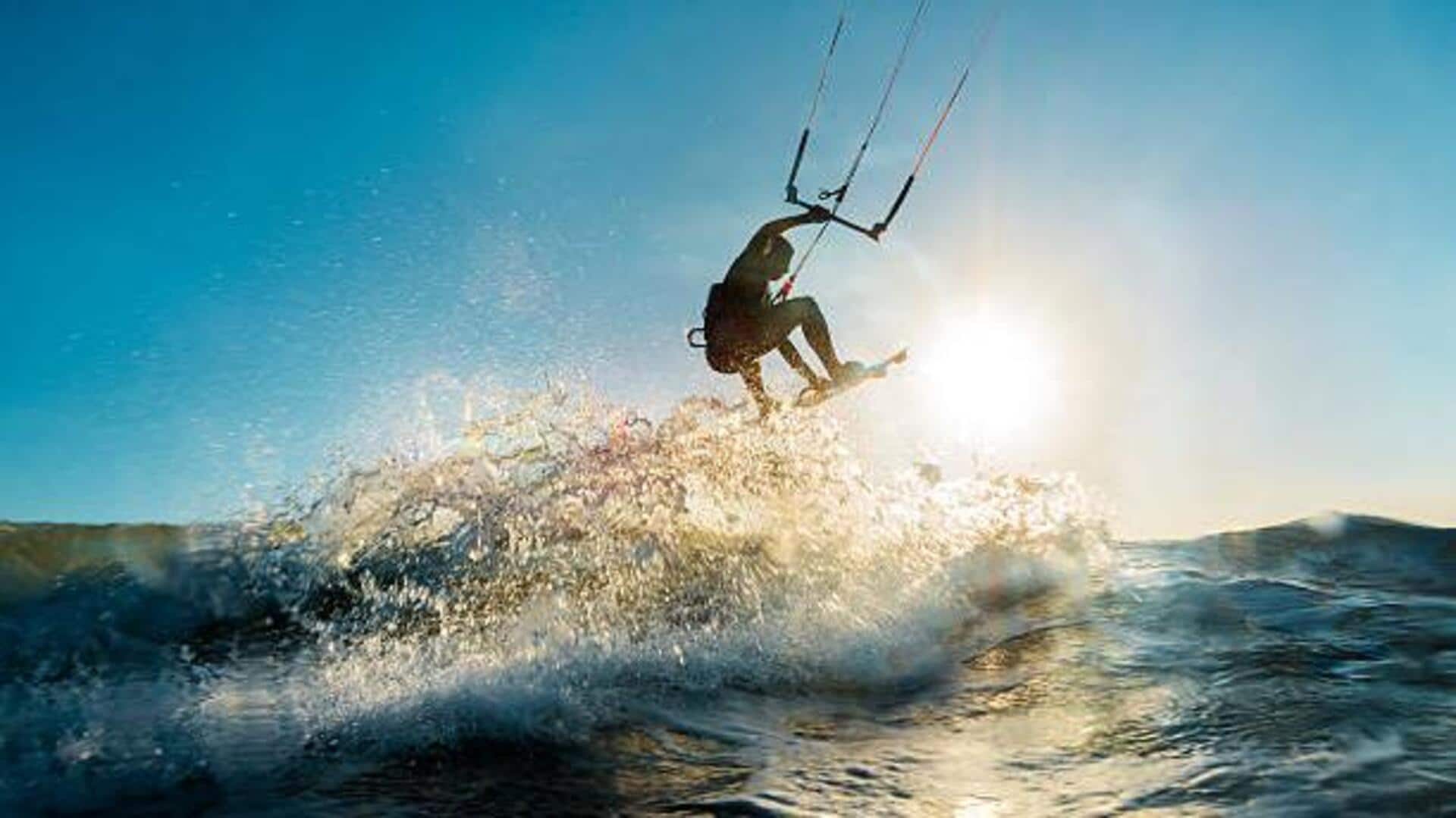
Zanzibar: An paradise for kite surfing
What's the story
Zanzibar, an archipelago off the coast of Tanzania, is famous for its beautiful beaches and rich culture. The place is also a kite surfing paradise, with its crystal-clear waters and perfect winds. Kite surfing in Zanzibar gives you an opportunity to explore the stunning landscapes while enjoying an exhilarating sport. Whether you are a pro or a beginner, the island's conditions are perfect for all.
#1
Best spots for kite surfing
Zanzibar has some of the best spots for kite surfing. Paje Beach is famous for its shallow waters and consistent winds, making it an ideal spot for beginners. Kite surfers can practice their skills without worrying about deep waters.
Kite Beach in Jambiani is another favorite, offering a more relaxed vibe with fewer crowds.
These spots guarantee an unforgettable experience with their stunning views and perfect conditions.
#2
Ideal time to visit
The best time to go kite surfing in Zanzibar is during the two windy seasons: from June to October, and from December to March.
During these months, you get reliable wind patterns that are perfect for kite surfing.
The average wind speed during this time is between 20 and 30 knots, which is perfect for both beginners and advanced surfers looking for some action.
#3
Equipment rental options
If you do not want to lug your own gear, Zanzibar has plenty of rental options.
Many local schools provide equipment rentals at reasonable rates, along with lessons for beginners, or those who want to refine their skills.
Renting equipment locally also gives you the opportunity to try out different types of kites and boards, depending on your skill level and preferences.
Tip 1
Safety tips while kite surfing
Safety should always be the priority while kite surfing in Zanzibar's waters.
Always check weather conditions before heading out; sudden changes can affect wind patterns significantly.
Make sure your equipment is in good condition before use; regular checks can prevent accidents on water.
Lastly, stay within designated areas where lifeguards are present, if available; this ensures safety among surfers sharing space with swimmers or other watercraft nearby.