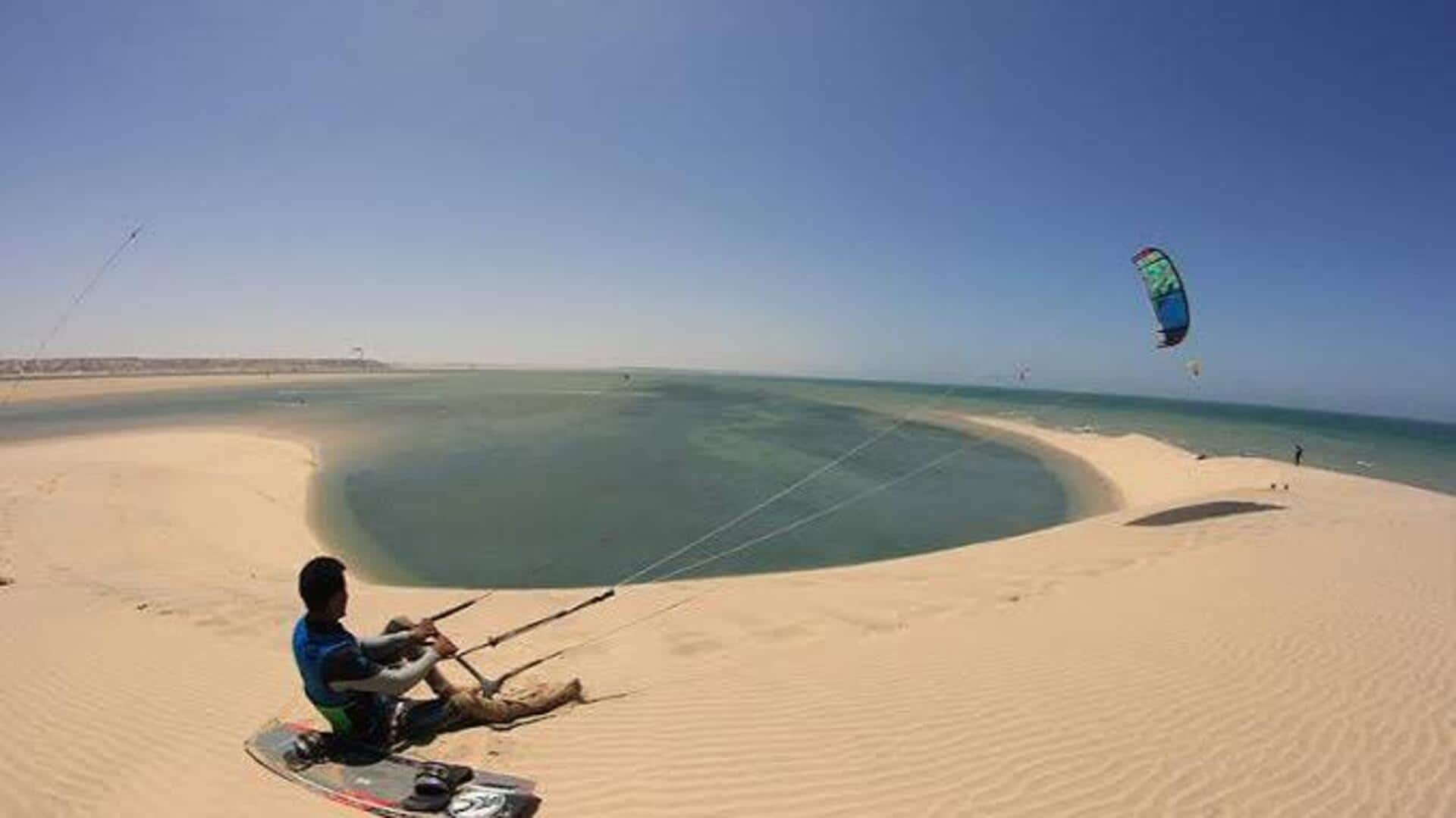
How to prepare for kitesurfing in the Sahara
What's the story
Kitesurfing in the Western Sahara is a thrilling experience that combines the vastness of desert landscapes with the excitement of ocean waves. This unique sport allows adventurers to glide over both sand and sea, making it an unforgettable journey. With its expansive dunes and consistent winds, the region offers ideal conditions for kitesurfing enthusiasts. Whether you are a seasoned pro or a beginner looking for adventure, Western Sahara promises an exhilarating escape into nature's wonders.
#1
Discovering the perfect spot
The Western Sahara is dotted with several ideal kitesurfing spots, each with its own unique features.
Dakhla Lagoon is one of the most popular spots, thanks to its shallow waters and steady winds. The lagoon offers a safe environment for beginners to learn and practice their skills.
For more experienced surfers, the nearby Atlantic coast offers bigger waves and more challenging conditions. Exploring these spots gives you an opportunity to find your perfect wave.
#2
Understanding wind conditions
Wind conditions are crucial for kitesurfing, and Western Sahara does not disappoint.
The region enjoys consistent trade winds throughout the year, making it a reliable destination for this sport.
The best time to visit is between April and October, when wind speeds reach up to 30 knots on average.
Knowing how these winds work can help you plan your sessions better and make the most of your kitesurfing adventure.
#3
Gear essentials for kitesurfing
Having the right gear is essential for a safe and enjoyable kitesurfing experience in Western Sahara.
A sturdy kite with a suitable size according to your weight and skill level is essential.
A reliable board that suits your riding style will also enhance performance on both sand dunes and water surfaces.
Safety equipment, such as harnesses, helmets, and impact vests, should not be overlooked to ensure protection during rides.
Tip 1
Tips for beginners
For beginners venturing into kitesurfing in Western Sahara, starting lessons with experienced instructors can be invaluable.
They provide guidance tailored to individual needs, while ensuring safety measures are followed rigorously.
Practicing basic maneuvers on flat water before attempting more advanced tricks helps build confidence gradually over time, without overwhelming new surfers unnecessarily during initial outings.