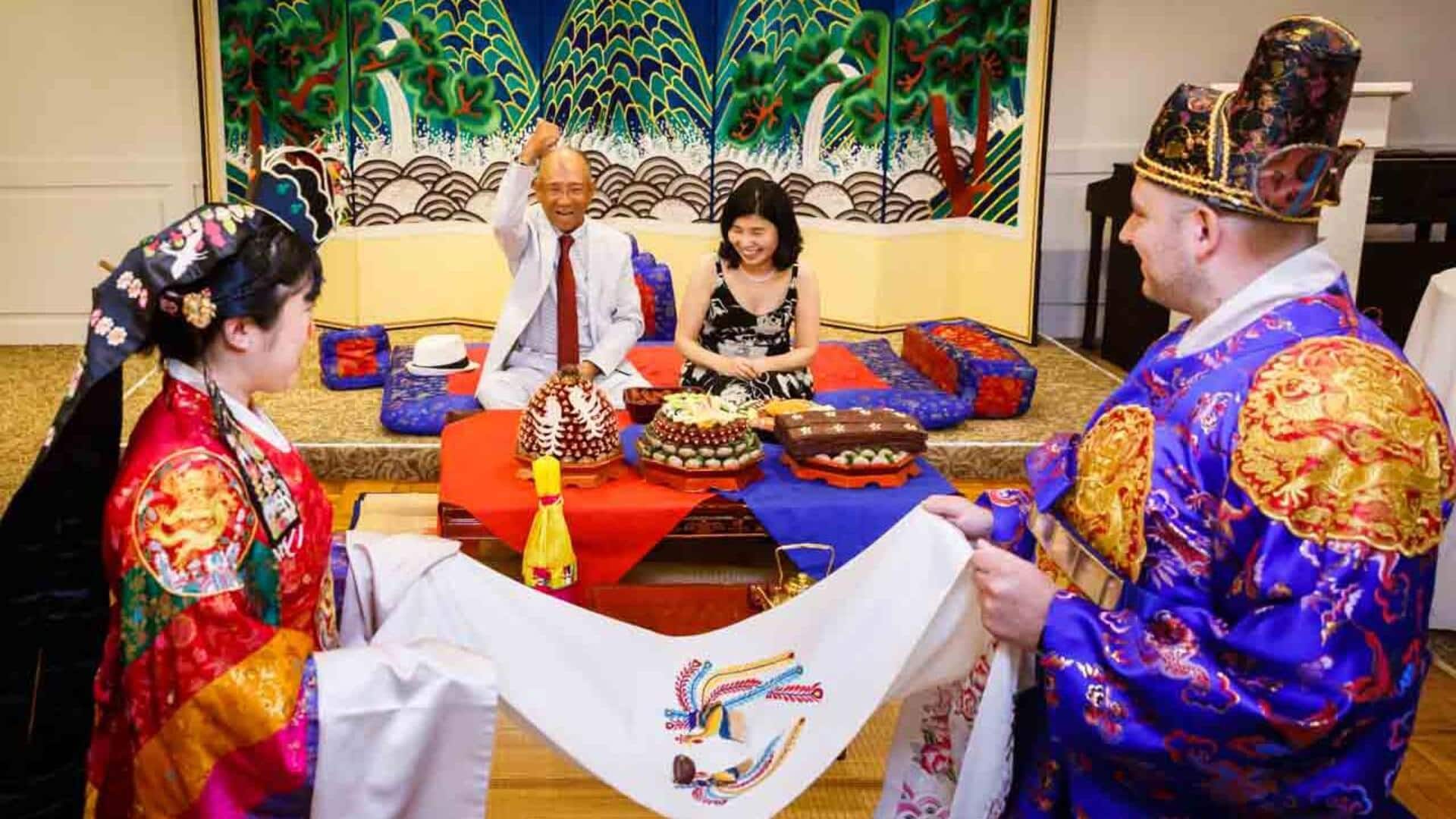
All about the Korean wedding bowing ritual
What's the story
Korean weddings are steeped in tradition, with bowing being an integral part of the ceremony. Known as Keunjeol, this act is not just a formality but a deep-rooted cultural practice that denotes respect, gratitude, and humility. The bowing rituals differ slightly depending on the region and family customs, but they remain an integral part of the wedding. Knowing these traditions can give you better insight into Korean culture and its values.
Cultural importance
The significance of bowing in Korean culture
Bowing is an important gesture in Korean culture, denoting respect and humility.
In weddings, it is a way for both families to acknowledge each other's presence and support.
The act of bowing is ingrained in daily life in Korea, used as a sign of greeting or gratitude.
This tradition is especially emphasized during weddings, where it symbolizes the union of two families.
Bowing rituals
Types of bows performed during ceremonies
There are mainly three bows performed during Korean wedding ceremonies:
The first bow is performed by the bride and groom towards their parents, thanking them for their upbringing.
The second bow is performed towards each other, promising loyalty and respect in their new life together.
The third bow is performed towards ancestors, seeking blessings for their future.
Traditional attire
Attire worn during bowing rituals
The attire worn during these bowing rituals is also steeped in tradition.
The bride usually wears a hanbok, a traditional Korean dress characterized by vibrant colors and simple lines.
The groom also wears a hanbok or other traditional attire appropriate for men.
These outfits not only represent cultural heritage but also add to the solemnity of the occasion.
Regional differences
Regional variations in bowing practices
While the basic bowing rituals remain the same across Korea, there are regional variations in how they are performed.
In some areas, additional bows may be included, or certain customs may be emphasized more than others.
These variations reflect local traditions and family preferences while still adhering to the core principles of respect and humility.