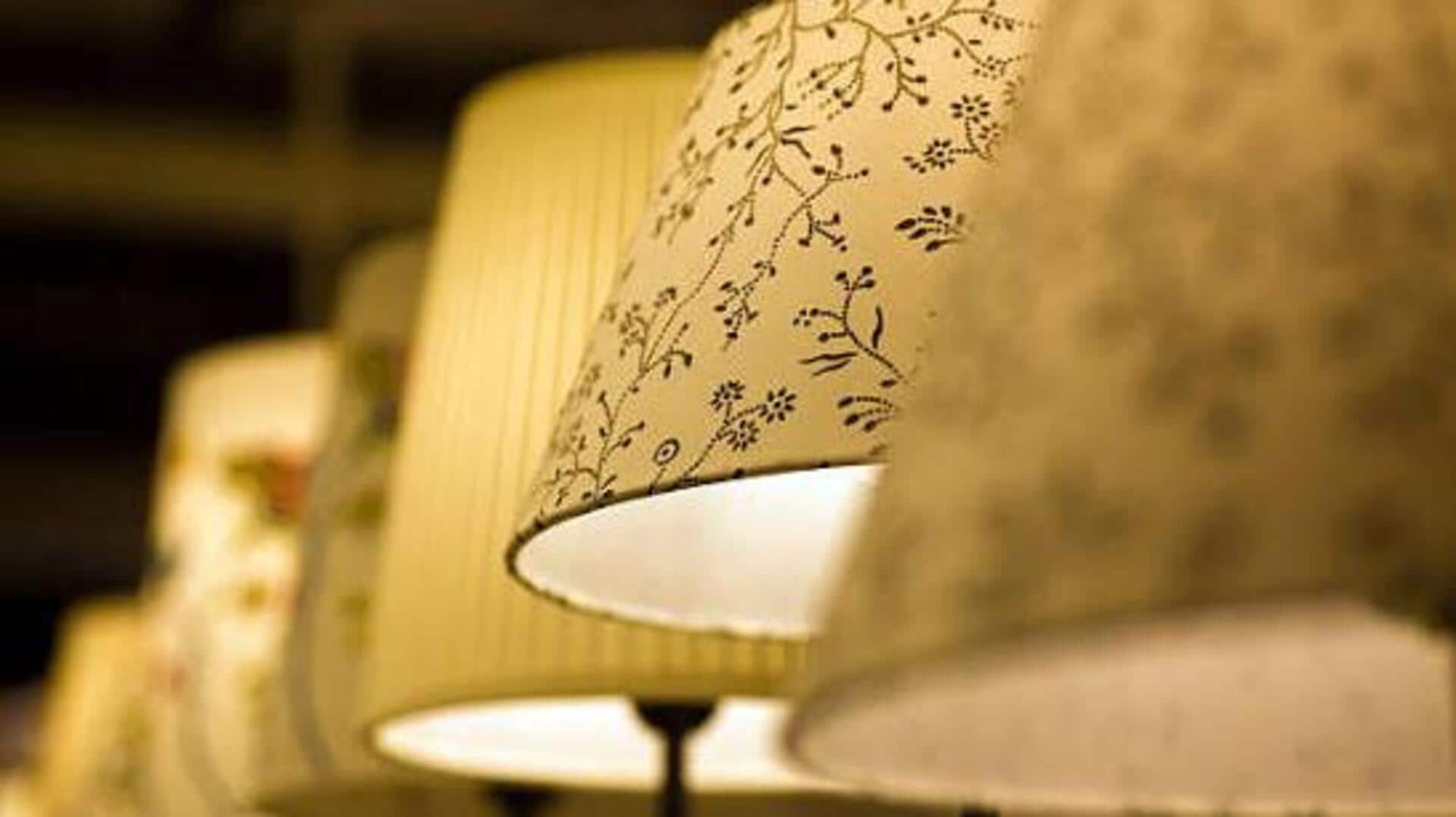
How to make a statement lampshade
What's the story
Kuba cloth, a traditional textile from Central Africa, is known for its unique patterns and textures. Made from the fibers of the raffia palm, this cloth is often used in various forms of art, decoration, and design. Today, we explore how kuba cloth can be creatively used to design modern lampshades. Its rich history and distinct appearance make it an intriguing material for contemporary home decor.
Weaving techniques
The art of kuba cloth weaving
Kuba cloth is woven with intricate techniques that have been passed down through generations.
The process involves stripping raffia leaves and weaving them into geometric patterns.
The result is a durable fabric with a unique texture that adds depth to any design project.
The traditional methods used in creating kuba cloth contribute to its authenticity and appeal as a decorative element.
Design integration
Incorporating kuba cloth in lampshade design
Integrating kuba cloth into lampshade design can add an element of cultural richness to modern interiors.
Designers can use the fabric's bold patterns as inspiration for lampshade covers or even incorporate it directly into the lampshade structure.
This integration allows for a seamless blend of traditional artistry with contemporary aesthetics, creating unique lighting solutions.
Material advantages
Benefits of using natural materials
Using natural materials like kuba cloth in lamp design has its benefits.
Not only does it add to the aesthetic appeal, but it also promotes sustainability by reducing the use of synthetic materials.
Natural fibers are usually more breathable and can improve indoor air quality when used in home decor.
Plus, the unique textures of natural materials can make even the simplest designs stand out.
Care instructions
Tips for maintaining kuba cloth lampshades
To keep your kuba cloth lampshades looking their best, regular dusting with a soft cloth is a must.
Avoid direct sunlight exposure to prevent fading over time.
If necessary, lightly clean with a damp cloth, but avoid soaking the fabric completely.
Proper care will ensure that the vibrant patterns and textures of the kuba cloth are preserved for years to come.