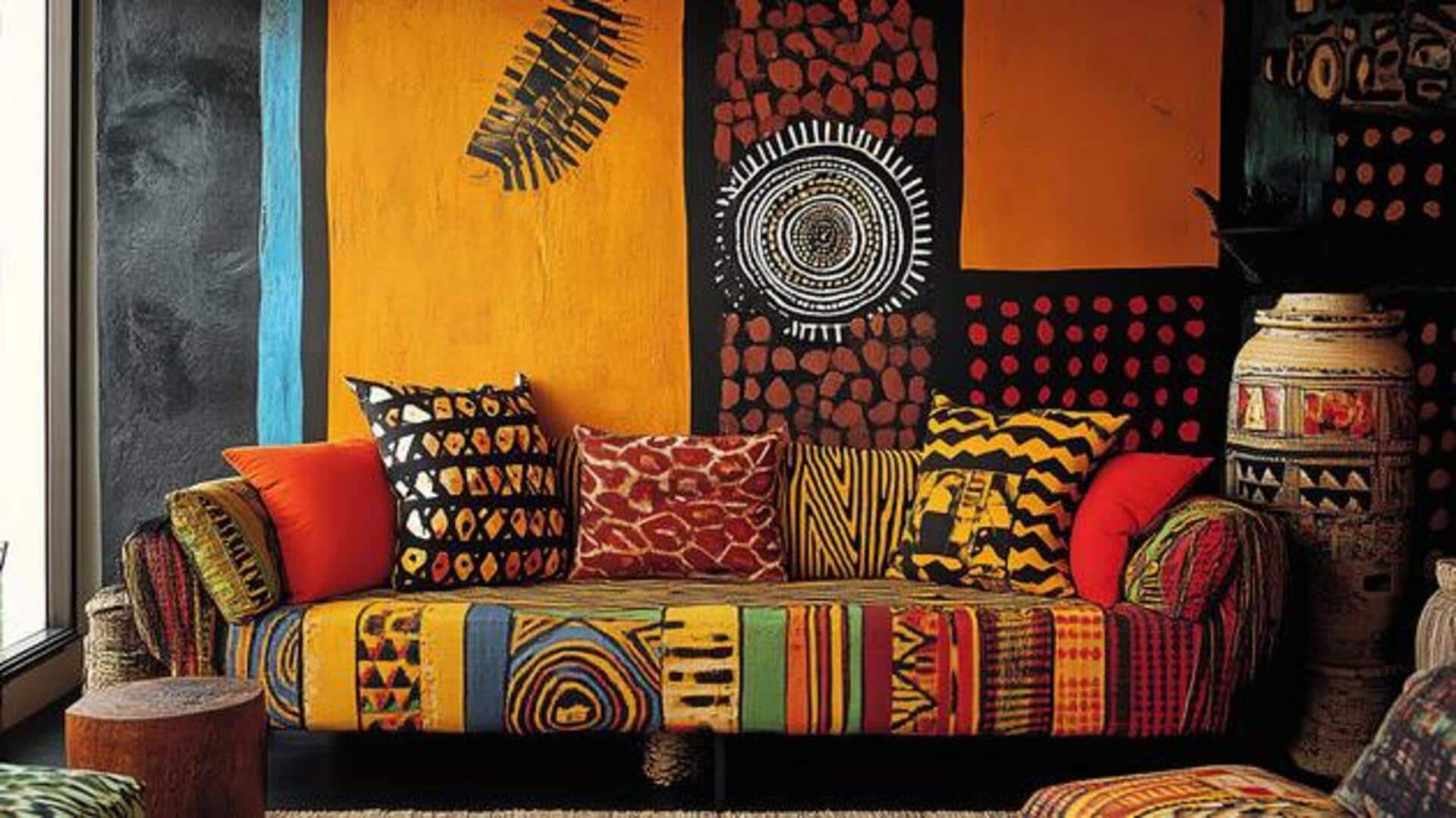
How to elevate your decor with Kuba textiles
What's the story
Kuba textiles, the traditional fabrics of the Kuba people of the Democratic Republic of Congo, are known for their intricate designs and vibrant colors. These textiles are not just pieces of art, but also carry cultural significance, representing the history and identity of the Kuba community. Using Kuba textiles in home decor can add a unique touch to your living space, blending tradition with modern aesthetics.
#1
Understanding Kuba textile patterns
Kuba textiles are famous for their geometric patterns, which are made using a combination of embroidery and weaving techniques.
The patterns usually symbolize different aspects of life, such as social status or personal achievements. Each design is unique and tells its own story.
By adding these patterns to your home, you can introduce a conversation starter that also pays homage to cultural heritage.
#2
Incorporating Kuba textiles in decor
Incorporating Kuba textiles into home decor can be done in several ways.
You can use them as wall hangings or cushion covers to add color and texture to a room. They can also be used as table runners or even framed art pieces.
The versatility of these fabrics makes them suitable for various settings, from traditional to contemporary homes.
#3
Caring for Kuba textiles
Proper care is essential to preserve the beauty and longevity of Kuba textiles.
Handwashing with mild soap is recommended to avoid damaging the fabric's intricate designs.
Avoid direct sunlight exposure to prevent fading over time.
By following these care instructions, you can ensure that your Kuba textile pieces remain vibrant and intact for years.
#4
Supporting artisans behind Kuba textiles
Purchasing Kuba textiles also supports the artisans who create them, preserving traditional craftsmanship, and providing economic opportunities in their communities.
By choosing authentic pieces over mass-produced alternatives, you contribute directly to sustaining these valuable cultural practices while enriching your home decor with meaningful art.