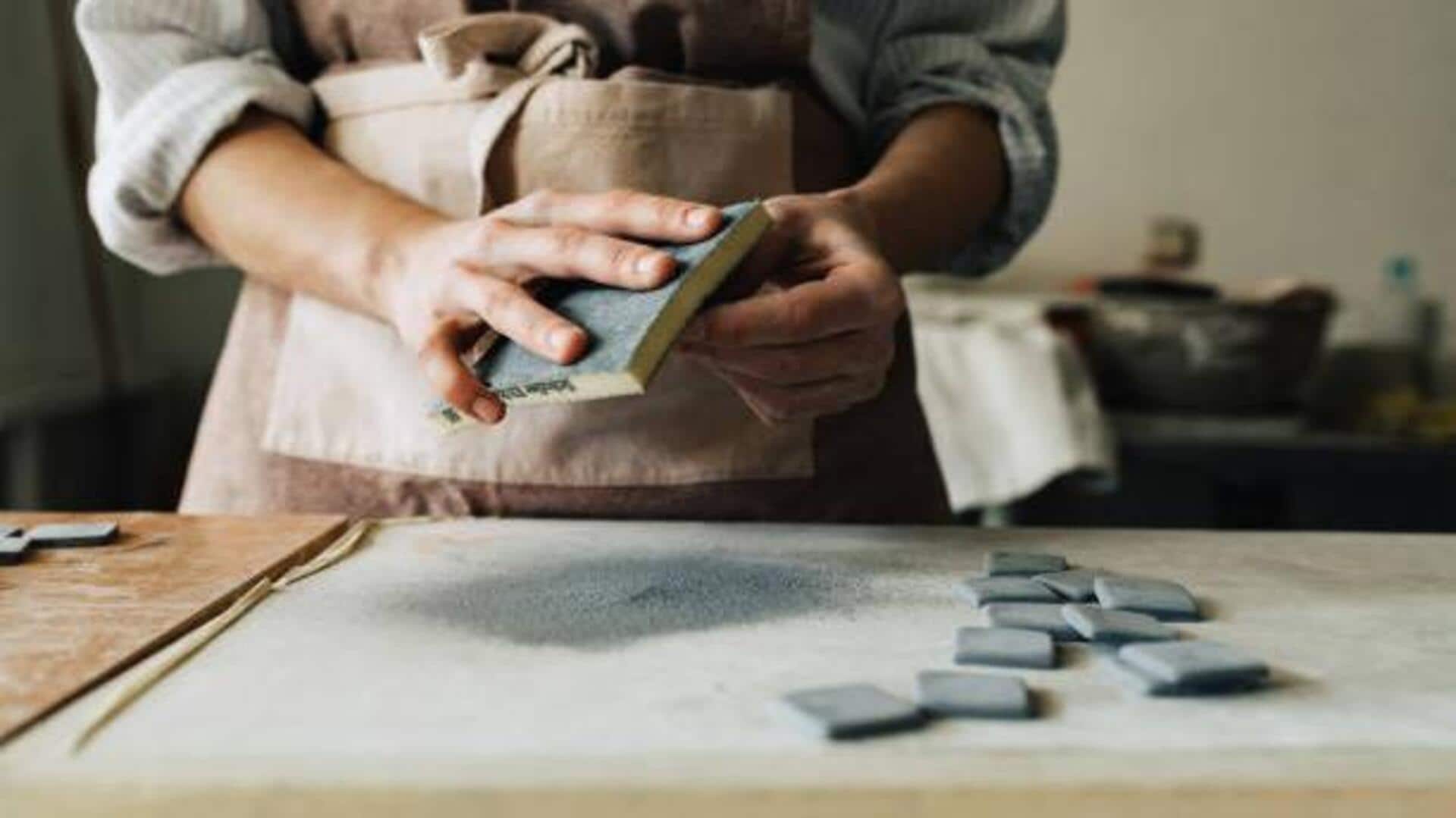
How to make hand-stamped clay tiles
What's the story
African hand-stamped clay tiles are a unique art form that combines tradition with creativity. These tiles are made by stamping patterns onto clay before it hardens, resulting in intricate designs that reflect cultural heritage. The process is not only an artistic expression but also a way to preserve and share African history and traditions. Learning this technique can offer insights into the rich tapestry of African art.
#1
Understanding the basics of clay tile making
The first step in creating hand-stamped clay tiles is preparing the clay.
The clay has to be kneaded well to remove air bubbles and make it smooth.
Once prepared, it is rolled out into flat sheets of uniform thickness. This forms the base for stamping patterns.
Using consistent pressure while rolling ensures even surfaces, which is important for the next steps.
#2
Choosing traditional patterns and designs
Selecting traditional African patterns is key to making authentic tiles.
These designs often have cultural significance and tell stories or convey messages.
Common motifs include geometric shapes, animal figures, and plant life.
Artists should research various patterns to understand their meanings and choose ones that resonate with them or their intended audience.
#3
Techniques for stamping patterns onto clay
Stamping is done using tools made from wood or metal with carved designs on their surfaces.
The artist presses these tools into the soft clay sheet to leave an impression of the pattern.
Consistency in depth and pressure while stamping is important to ensure clear impressions without damaging the tile's integrity.
#4
Drying and finishing your clay tiles
After stamping, the tiles must be dried properly before firing them in a kiln or oven at appropriate temperatures for clay materials used in making them.
Once fired, artists can choose to paint or glaze their tiles if they want, adding color while preserving the detailed work underneath.