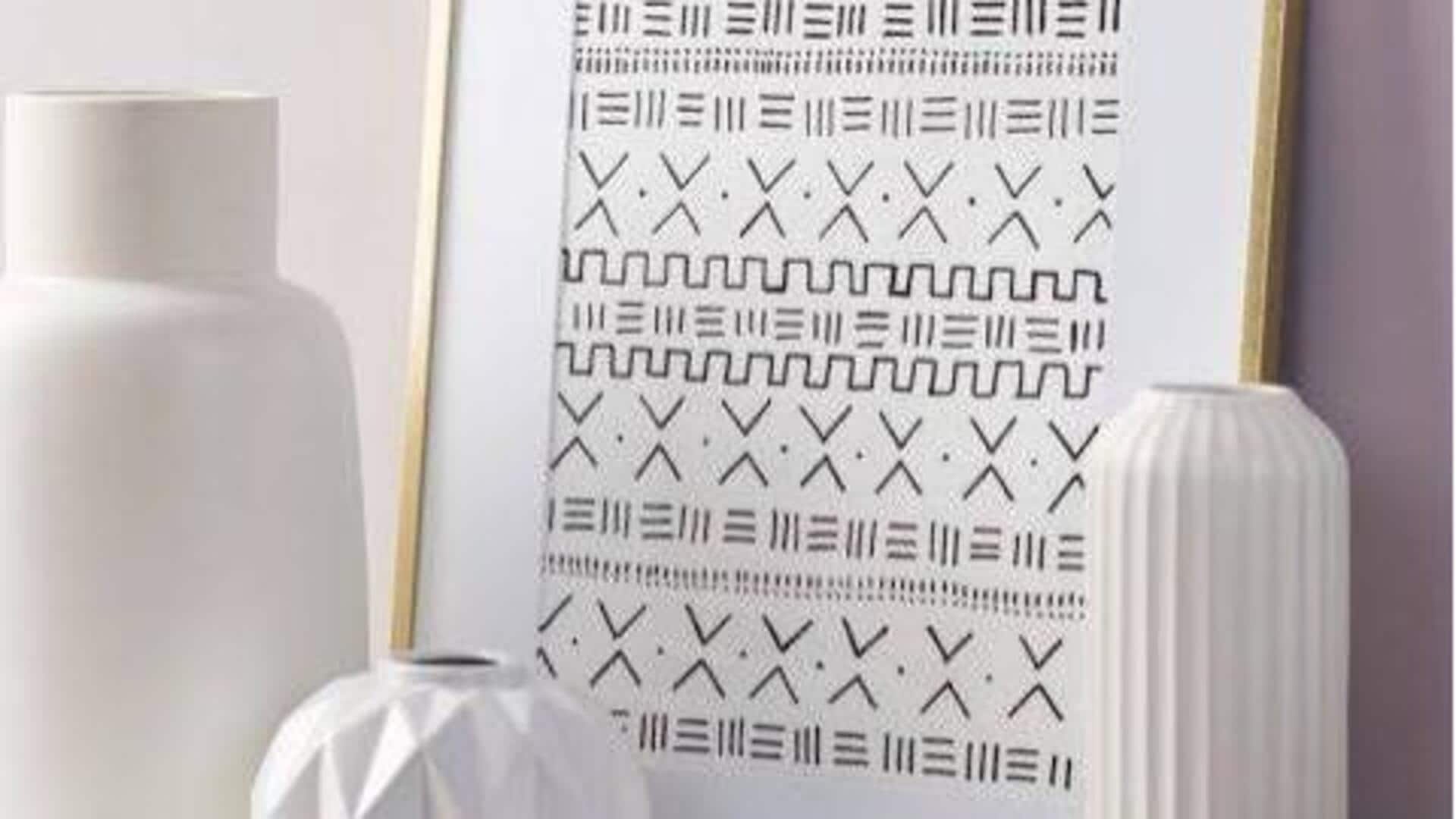
How to make mudcloth art on paper
What's the story
African mudcloth art is a unique and beautiful craft that has its roots in the traditions of West Africa. The art form uses handmade paper to replicate the intricate designs of traditional mudcloth. This technique not only preserves the cultural heritage but also gives artists a new medium to explore their creativity. By learning this craft, one can appreciate the rich history and artistry involved in creating stunning visual pieces.
#1
Understanding mudcloth's cultural significance
Mudcloth, or bogolanfini, is an ancient textile from Mali.
Traditionally, the cloth is made from cotton strips dyed with fermented mud and plant-based dyes.
The patterns on the cloth are symbolic, telling stories or representing proverbs.
Each design is unique and holds cultural significance, making it an important part of African heritage.
#2
Materials needed for creating mudcloth art
To create mudcloth art on handmade paper, you will need some basic materials: handmade paper, natural dyes, such as indigo or bark, brushes or sticks for applying dye, and water containers for rinsing.
These materials are easily available at craft stores or online marketplaces.
Using natural dyes also ensures that your artwork remains eco-friendly.
#3
Techniques for applying designs
Applying designs on handmade paper is similar to working on fabric, but it requires a lighter touch to avoid tearing the paper.
Start by sketching your design lightly with a pencil before applying dye with a brush or stick.
Practice different patterns on scrap pieces before moving onto your final piece to gain confidence in your technique.
Tip 1
Preserving your artwork effectively
Once you have created your mudcloth art on handmade paper, preserving it is important to keep it looking fresh and vibrant for years to come.
Use acid-free frames or protective sleeves to keep your artwork safe from dust and direct sunlight exposure, which can cause fading over time.