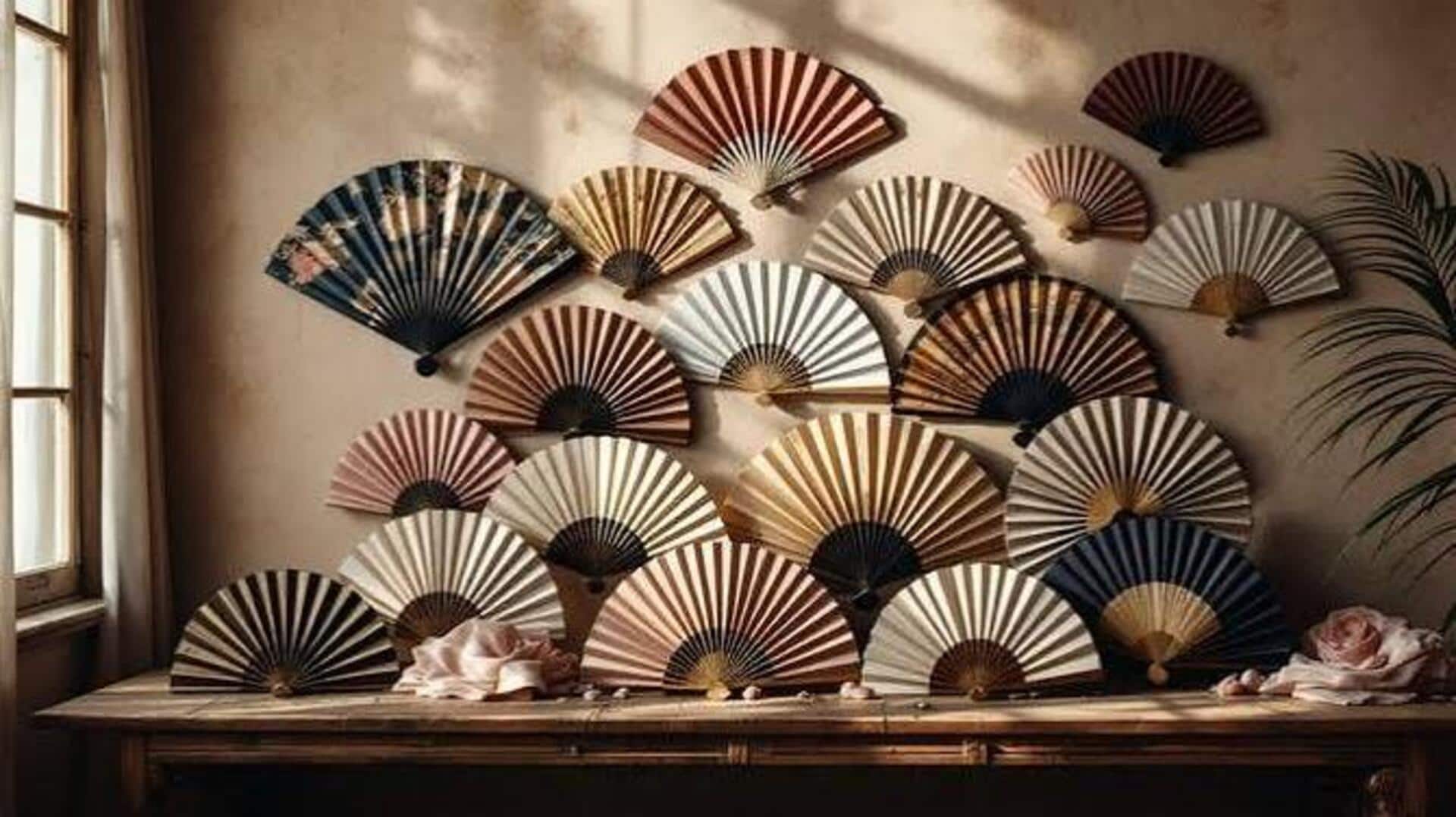
DIY: How to make raffia fans
What's the story
African raffia fans are not just functional but also an integral part of cultural heritage across the continent. These handmade fans are made from raffia palm leaves and are often adorned with intricate designs and patterns. Crafting these fans requires skill, patience, and a deep understanding of traditional techniques. In this article, we explore the art of making African raffia fans, providing insights into materials, techniques, and cultural significance.
Materials
Selecting the right materials
Choosing the right materials is essential for crafting authentic African raffia fans.
The primary material is raffia palm leaves, which are flexible yet sturdy.
These leaves are usually harvested from local palms and dried under the sun to enhance their durability.
Other materials may include natural dyes for coloring, and strings or fibers for binding the fan together.
Techniques
Traditional weaving techniques
Weaving techniques vary across regions but generally involve braiding or twisting the raffia strands into desired shapes.
Artisans often employ simple knots or braiding methods to create intricate patterns on the fan's surface.
Mastering these techniques requires practice and a keen eye for detail, as each pattern holds cultural significance.
Designs
Incorporating cultural designs
Designs on African raffia fans often reflect cultural symbols or motifs unique to different communities.
These could be geometric shapes, animal figures, or abstract patterns that tell a story or represent beliefs.
Incorporating these designs requires an understanding of their meanings within the community's context.
Tips
Final touches and preservation tips
Once woven, fans need to be finished with care.
This could mean trimming excess material, or applying natural oils to preserve the quality of the fan over time.
Storing them in cool places away from direct sunlight can also help maintain their appearance and longevity.