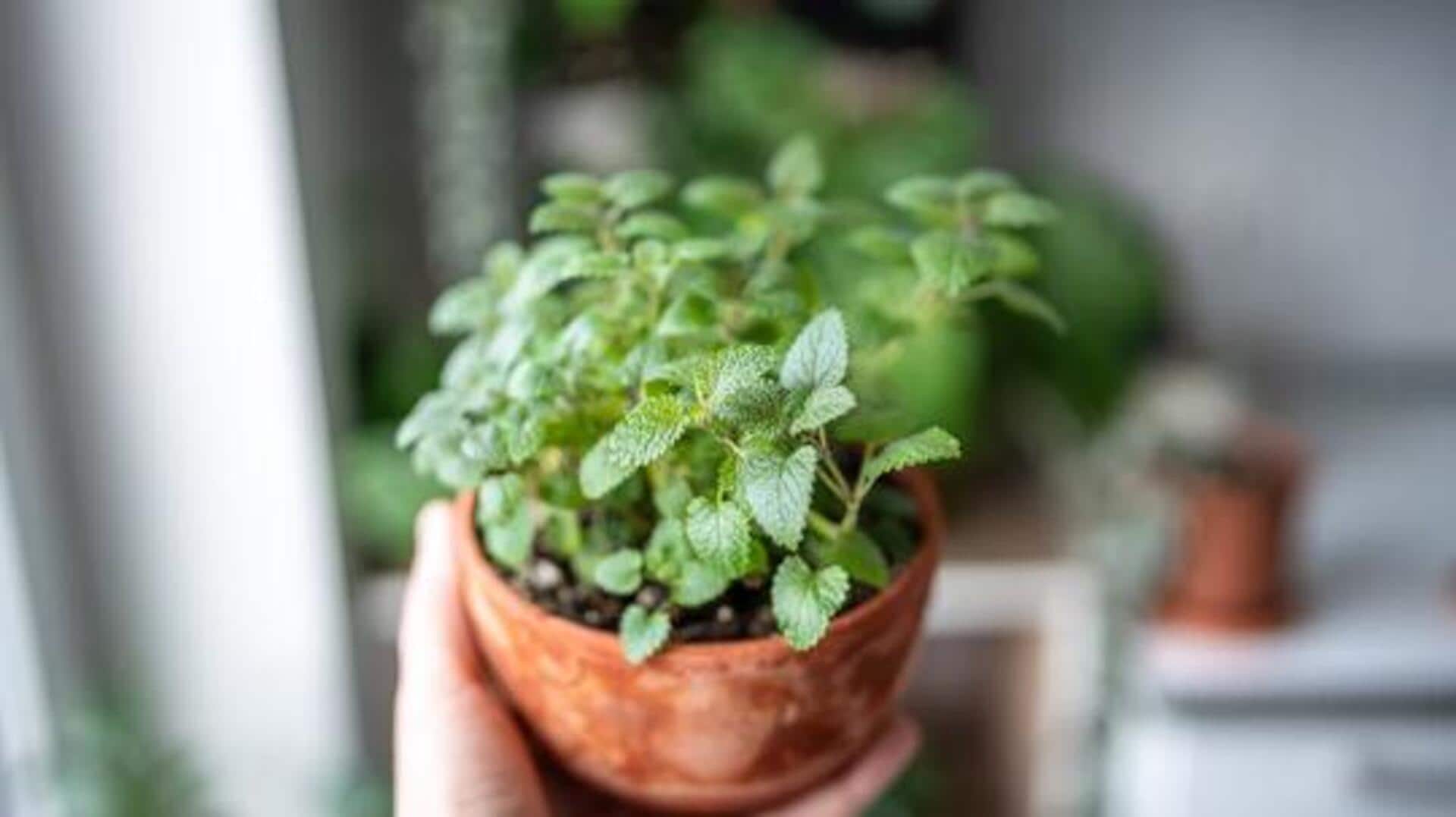
How to grow lemon balm in pots
What's the story
Growing lemon balm in container pots is an easy way to enjoy the refreshing aroma and potential health benefits of this herb. Lemon balm, a member of the mint family, is known for its calming properties. By growing it in containers, you can manage its growth and keep it from overtaking your garden. Here are some practical tips to successfully grow lemon balm in pots.
Tip 1
Choosing the right container
Selecting the right container is key to growing lemon balm.
Pick pots that are at least 12 inches deep, with drainage holes, to avoid waterlogging.
Clay or ceramic pots are good options, as they allow air to circulate through the roots.
Make sure each pot has a saucer underneath to catch excess water and protect surfaces.
Tip 2
Soil and drainage essentials
Lemon balm thrives in well-draining soil rich in organic matter.
Use a potting mix combined with compost or well-rotted manure to provide nutrients.
Ensure good drainage by placing a layer of small stones or broken pottery pieces at the bottom of the pot before adding soil.
This prevents roots from sitting in waterlogged conditions, which can lead to root rot.
Tip 3
Light and temperature requirements
Lemon balm prefers bright but indirect sunlight for about six hours a day.
Place your containers near a window or outdoors, where they get filtered sunlight during peak hours.
The ideal temperature range for lemon balm is between 65 degrees Fahrenheit and 75 degrees Fahrenheit (18 degrees Celsius and 24 degrees Celsius).
Protect your plants from extreme heat or cold by moving them indoors if necessary.
Tip 4
Watering techniques for healthy growth
Consistent watering is key to keeping lemon balm healthy, but be careful not to overwater.
Let the top inch of soil dry out before watering again, which usually means watering every week or so, depending on your climate and season.
Water evenly around the pot's circumference instead of just pouring it in one spot, so that all roots get moisture evenly.
Tip 5
Pruning tips for bushy plants
Regular pruning encourages bushier growth and prevents lemon balm from becoming leggy over time.
Trim back stems by one-third every few weeks during the growing season using sharp scissors or pruning shears.
This encourages new shoots to emerge from the base of the plant, resulting in fuller foliage.