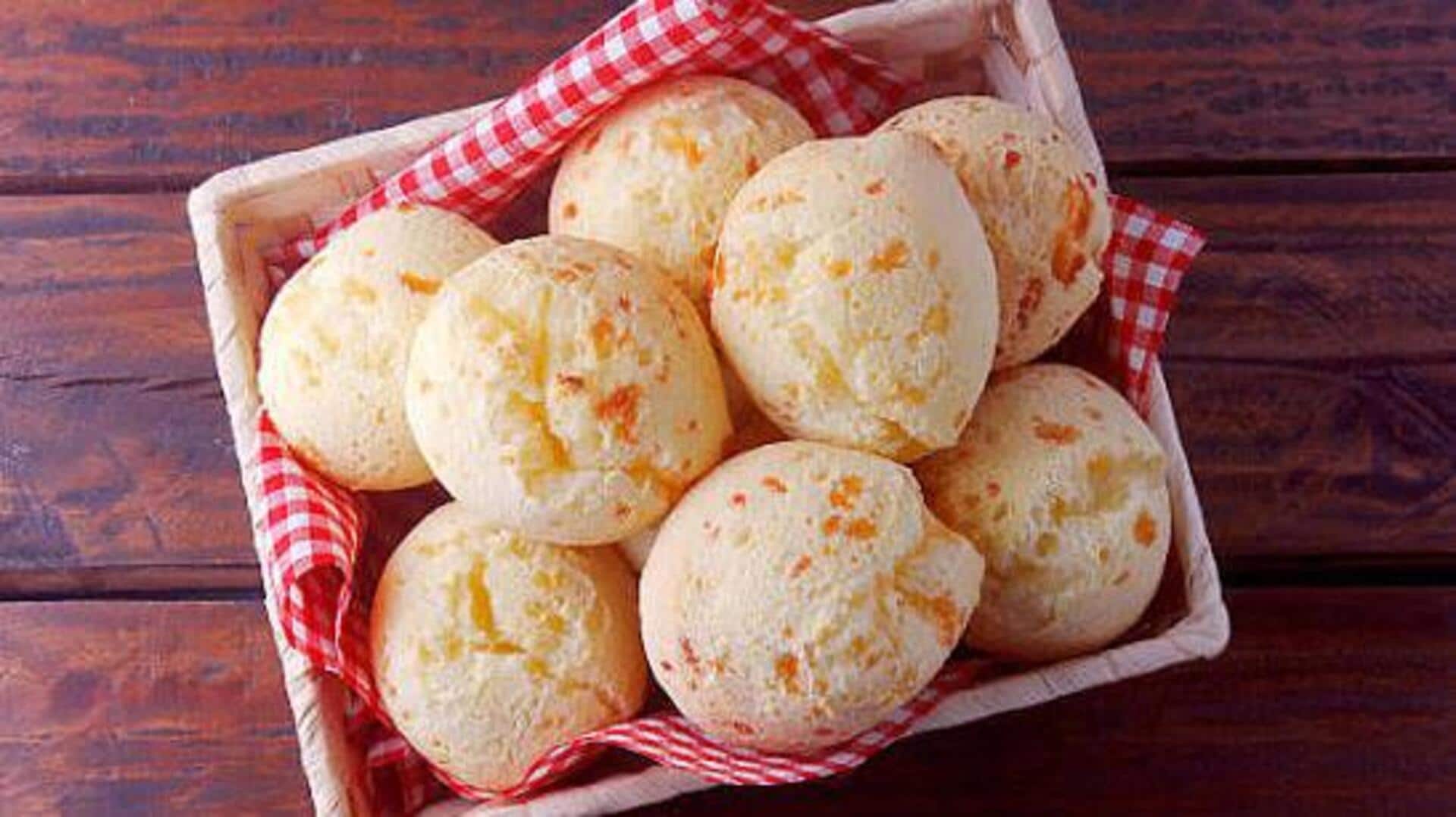
Meet pao de queijo, the Brazilian cheese bread
What's the story
Pao de queijo, a Brazilian delicacy, is a must-try for cheese lovers. These small, chewy bread balls made from tapioca flour and cheese are a staple in Brazilian cuisine. With their unique texture and flavor, they have become popular across the globe. They are gluten-free and easy to make at home with just a few ingredients. Their versatility makes them perfect for any occasion, be it breakfast or a snack.
#1
The history behind pao de queijo
Pao de queijo has its roots in the state of Minas Gerais in Brazil.
It dates back to the 18th century when Portuguese settlers introduced cheese-making techniques to the region.
Locals adapted these methods using readily available ingredients like tapioca flour, milk, and cheese.
The result was a distinct bread that quickly became popular throughout Brazil for its delicious taste and chewy texture.
#2
Ingredients that make it special
The key ingredients of pao de queijo are tapioca flour, cheese, milk, oil or butter, and salt.
Tapioca flour gives the bread its signature chewiness, while cheese lends richness and flavor.
Milk adds moisture to the dough, making it easier to shape into small balls before baking them until golden brown perfection.
Tip 1
Baking tips for perfect texture
To get that perfect texture when baking pao de queijo at home, make sure you use freshly grated cheese, as it melts better than pre-packaged ones.
Also, use warm milk while mixing your dough; this helps activate starches in tapioca flour for better elasticity.
Bake them at high temperatures (around 180 degrees Celsius) until puffed up with slightly crispy exteriors.
#3
Variations around the world
While traditional pao de queijo uses Minas cheese or similar varieties like Parmesan or Gruyere, some variations around the world experiment with different types like cheddar or mozzarella for unique flavors.
In some places, herbs such as rosemary or thyme are added for an extra twist.
These variations cater to diverse palates, making this beloved Brazilian snack adaptable globally.