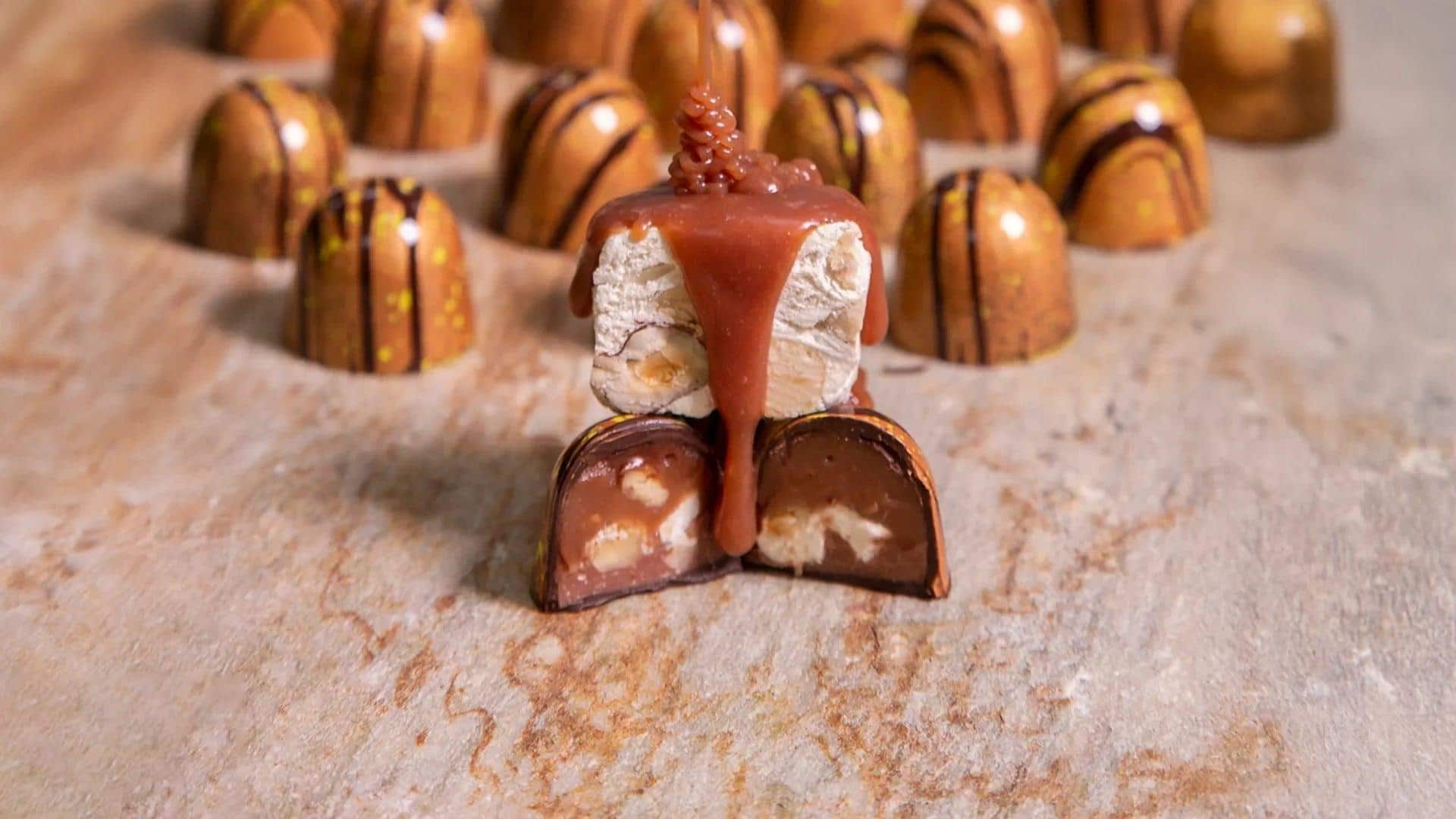
Why everyone loves these French praline snacks
What's the story
French praline snacks are a delicious treat that combines the sweetness of sugar with the nutty flavor of almonds or hazelnuts. These crunchy confections are a staple in French cuisine and can be enjoyed on their own or as an ingredient in various desserts. Famous for their rich taste and satisfying crunch, they offer a unique experience for those looking to indulge in something sweet yet sophisticated.
#1
The origins of French pralines
French pralines originated in France, where they were first created by a chef named Clement Lassagne in the 17th century.
He coated almonds with sugar, creating a sweet treat that quickly became popular.
The name "praline" is derived from the French diplomat Marshal du Plessis-Praslin, although he had nothing to do with the creation of the confection.
Today, French pralines are made using a variety of nuts and are enjoyed worldwide.
#2
Making traditional French pralines at home
Making traditional French pralines at home is simple and requires just a few ingredients: sugar, water, and nuts (almonds or hazelnuts).
Start by heating sugar and water until it forms a syrup. Add nuts and cook until they are coated in caramelized sugar.
Let them cool on parchment paper before breaking them into pieces.
This homemade version allows you to control sweetness and experiment with different nut combinations.
#3
Uses beyond snacking
Apart from being enjoyed as a standalone snack, French pralines have several culinary applications.
They can be crushed and used as toppings for desserts like cakes or ice creams, adding texture and flavor contrast.
In baking, they can be incorporated into cookies or pastries for an added layer of complexity.
Their versatility makes them an excellent ingredient for both professional chefs and home cooks alike.
Tip 1
Tips for storing pralines properly
To keep your homemade or store-bought French pralines fresh longer, it is important to store them properly.
Keep them in an airtight container at room temperature away from direct sunlight to prevent them from melting or becoming too soft due to humidity changes.
If you want them to last longer than usual, you can refrigerate them, but keep in mind this may change their texture slightly over time.