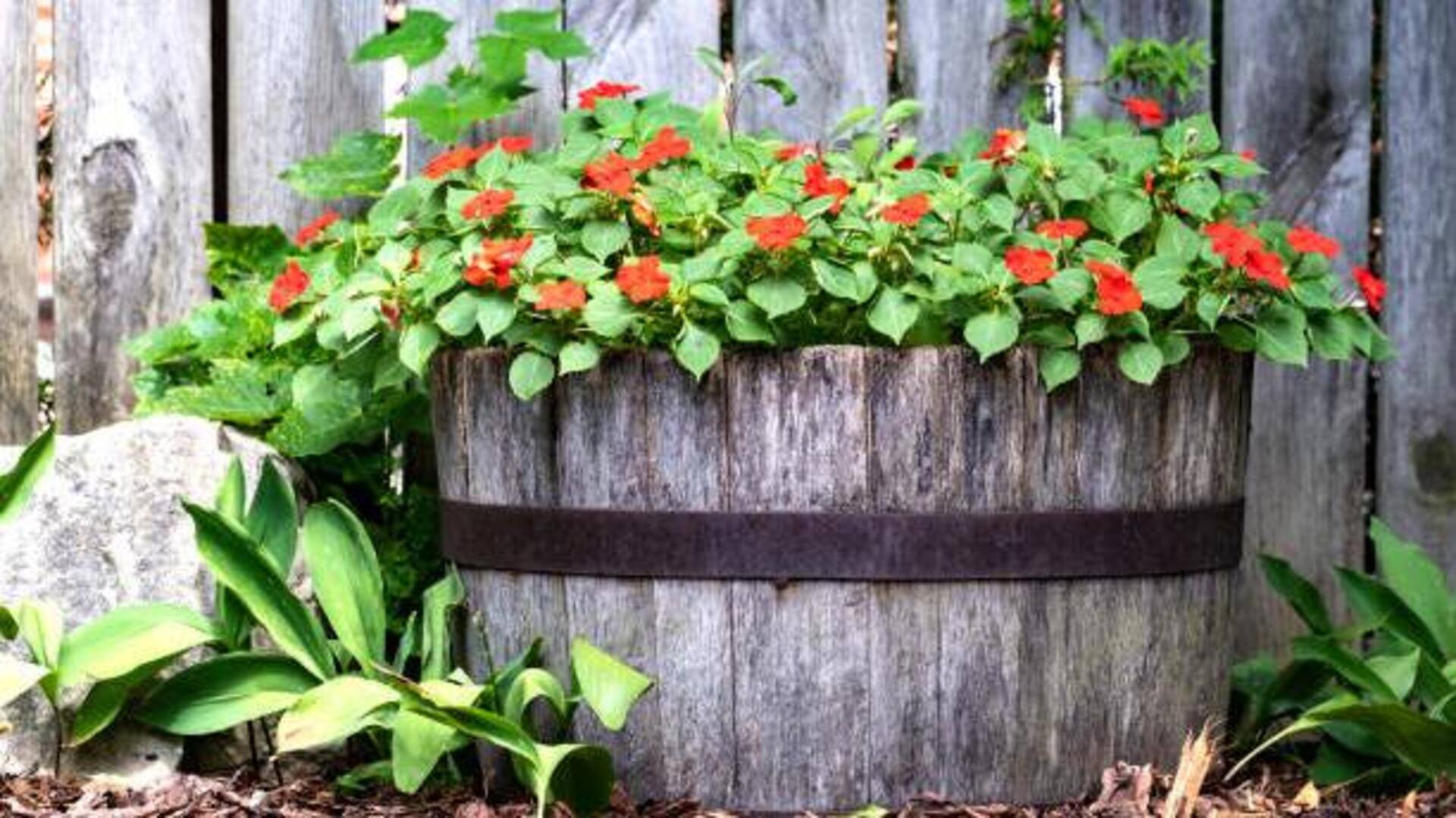
Refresh your garden decor with drum planters
What's the story
African djembe drums are a cultural icon and a unique way to add some rhythm to your garden. These handmade planters, inspired by the traditional drums, give a rustic, yet artistic, touch to any outdoor space. Not only do they serve as decorative pieces, but they also provide an innovative way to grow plants. Here's how you can use these planters in your garden.
Size matters
Choosing the right size and style
Selecting the right size and style of djembe drum planter is important for both aesthetics and functionality. Consider the space available in your garden, as well as the types of plants you want to grow. Smaller drums can be used for herbs or flowers, while larger ones can accommodate shrubs or small trees. The style should complement your existing garden decor, whether it is modern or traditional.
Plant pairing
Plant selection for jembe drums
Choosing the right plants for your djembe drum planters is key to their success. Opt for plants that thrive in similar conditions, be it sunlight or soil type. Succulents and drought-resistant plants are great for low-maintenance options, while ferns and small flowering plants can add a splash of color and texture. Make sure the plants' root systems can adapt to the planter's depth.
Care Essentials
Maintenance tips for longevity
To keep your djembe drum planters looking good and functional, regular maintenance is a must. Watering should be done according to the needs of the plants inside, but make sure there's good drainage to avoid waterlogging. Periodically check for any signs of wear on the drum's exterior, and make repairs if needed. This will keep them from deteriorating over time.
Design integration
Incorporating jembe drums into garden design
Integrating djembe drum planters into your garden design can create focal points or define spaces within larger landscapes. Use them as standalone features, or group them together for a more dramatic effect. Positioning them near pathways or seating areas allows you to enjoy their visual appeal up close while adding texture underfoot.