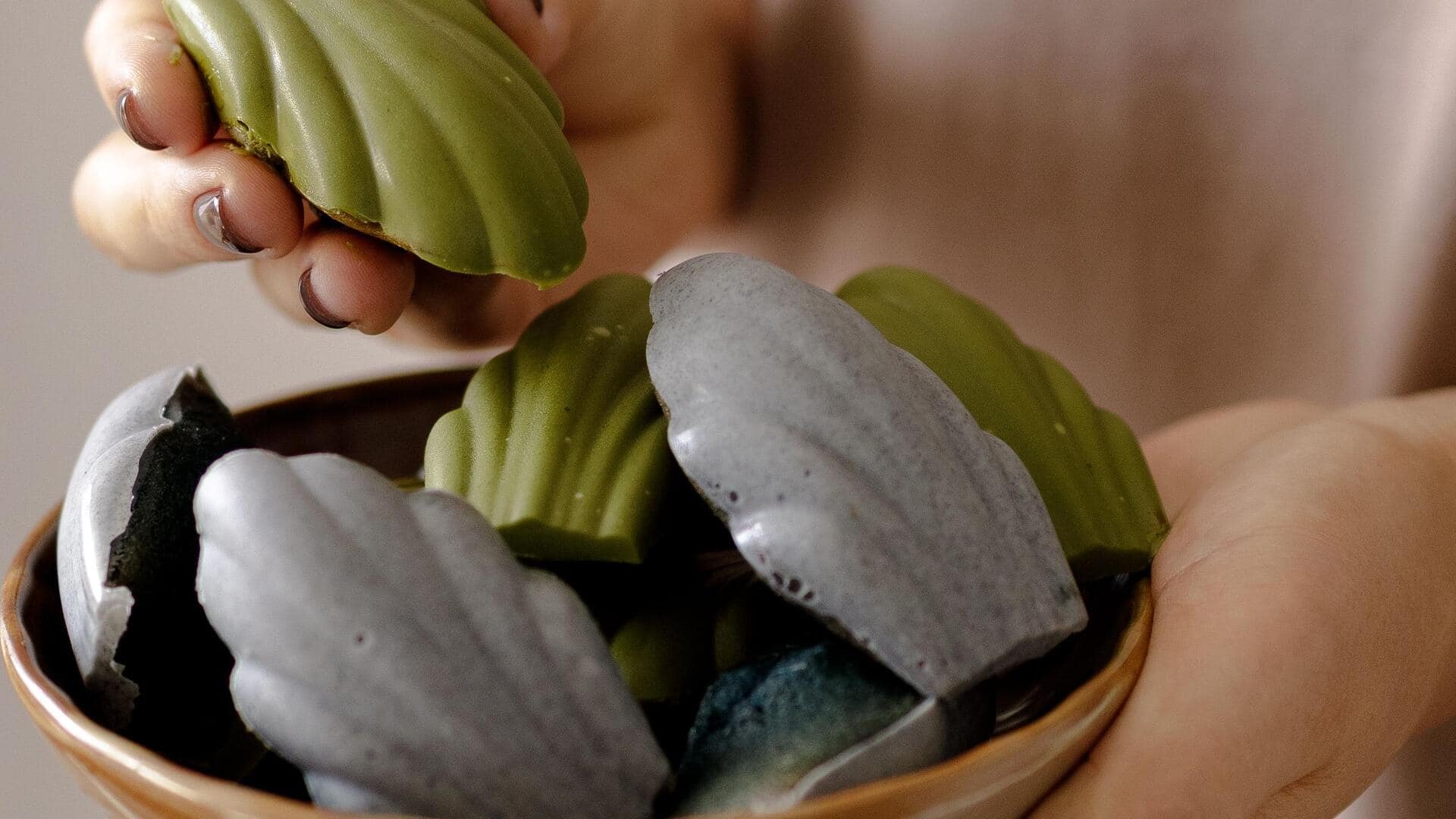
This is how you can easily make soap at home
What's the story
Making soap at home can be a fun, creative activity that does not require a lot of money. With a few basic kitchen staples, you can make your own soap without shelling out a fortune. This article gives you an insight into the world of homemade soaps using easily available ingredients. From the process to the benefits, here is everything you need to know about making cost-effective, natural soaps.
Ingredients
Basic ingredients for soap making
To make soap at home, you need some basic ingredients like olive oil, coconut oil, and distilled water.
These oils serve as the base of your soap and give it moisturizing properties.
Lye is also an important ingredient that helps in *saponification*, the chemical reaction that turns oils into soap.
All these ingredients are easily available and inexpensive, making them perfect for budget-friendly projects.
Process
Simple soap-making process
The process of making soap at home includes mixing oils with lye and letting the mixture cure over a period of time.
First, heat the oils until they are liquid, and mix them with lye carefully.
Pour the mixture into molds, and let it sit for 24 hours before removing it from molds.
The soap should cure for four to six weeks before it can be used.
Benefits
Benefits of homemade soap
Homemade soap has a number of benefits over store-bought ones.
It is customizable, so you can add essential oils or natural colorants as per your liking.
It is also chemical-free, which makes it ideal for sensitive skin types.
Plus, making your own soap can save you money in the long run, as you will not have to buy expensive commercial products.
Tips
Tips for successful soap making
To ensure successful soap making, always use accurate measurements when mixing ingredients.
Use a digital scale for precision in weighing oils and lye.
Safety is paramount; always wear gloves and goggles when handling lye to protect yourself from its caustic properties.
Experiment with different scents by adding essential oils after achieving the desired consistency in your mixture, before pouring into molds.