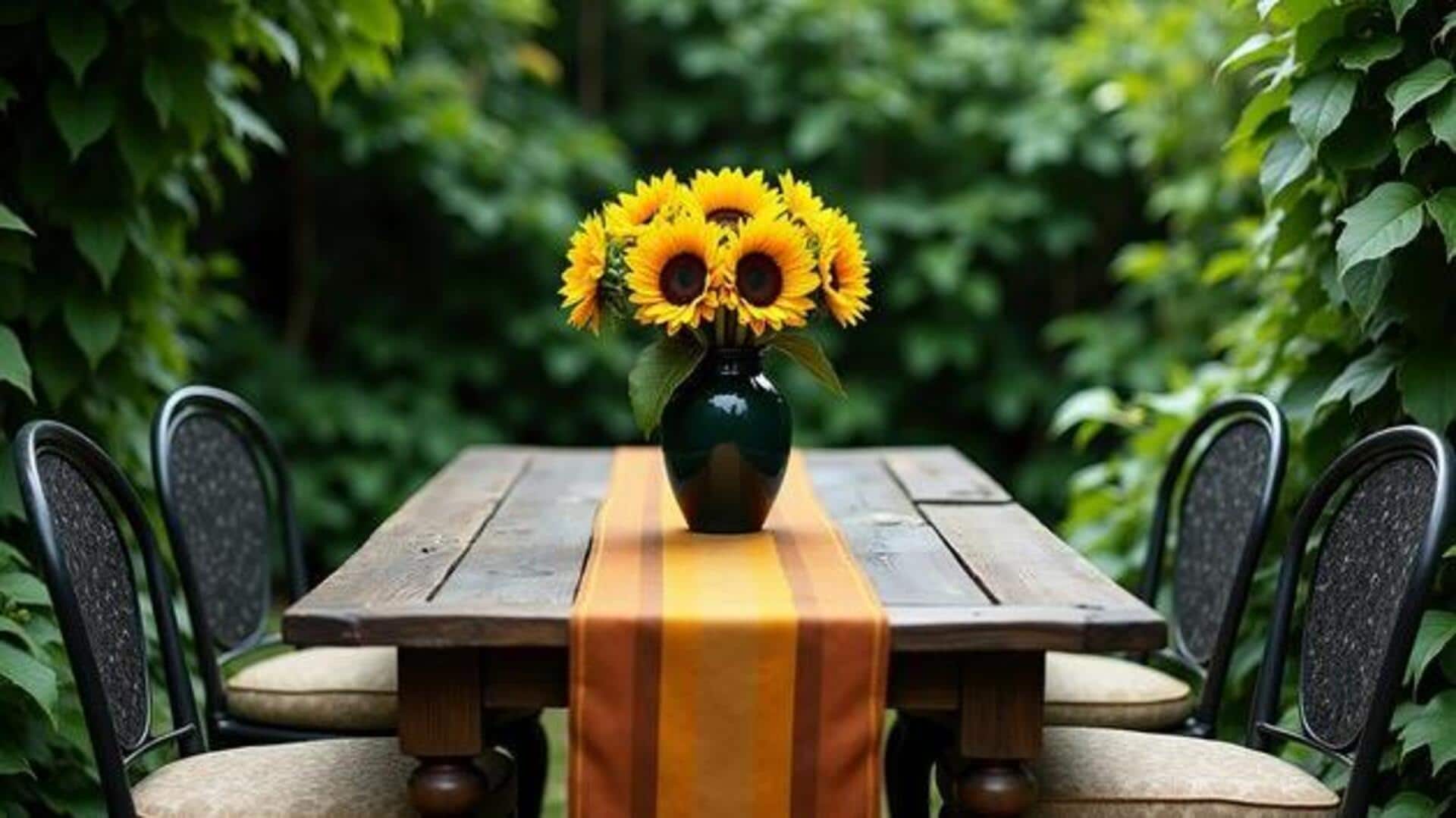
Create beautiful table runners, we tell you how
What's the story
African batik is a traditional art form that uses wax and dye to create intricate patterns on fabric. This technique can be used to make beautiful table runners, adding a unique touch to any dining space. By following simple steps, you can create your own African batik table runner at home. The process involves selecting fabrics, applying wax, dyeing the fabric, and finishing the piece. Here are some practical insights on making your own African batik table runner.
Fabric selection
Choosing the right fabric
Selecting the right fabric is important for your batik project.
Cotton is a popular choice because of its absorbent nature and durability. It easily takes up dye and holds the wax well.
Linen is another option, but it may be more expensive than cotton.
Make sure the fabric is pre-washed to remove any sizing or chemicals that may interfere with dye absorption.
Wax application
Applying wax patterns
The key to creating intricate designs in batik is the application of wax.
Use a tjanting tool or brush to apply hot wax on the fabric in desired patterns.
The wax acts as a resist, preventing dye from penetrating those areas.
Be careful while handling hot wax to avoid burns or spills on unwanted areas of the fabric.
Dyeing process
Dyeing techniques explained
Once the wax has cooled and hardened, it's time to dye your fabric.
Prepare your dye bath according to instructions on the dye package.
Submerge your fabric in the dye bath for a specified time, depending on how deep you want the color to be.
Rinse thoroughly after removing it from the dye bath to stop further dye absorption.
Final steps
Finishing touches for your runner
After rinsing out excess dye and removing wax by ironing between paper towels, trim any loose threads from your runner if required.
Hem edges securely using either a sewing machine or fabric glue, ensuring longevity during use on dining tables.
Optionally, add decorative elements like fringes or tassels at both ends for added flair.