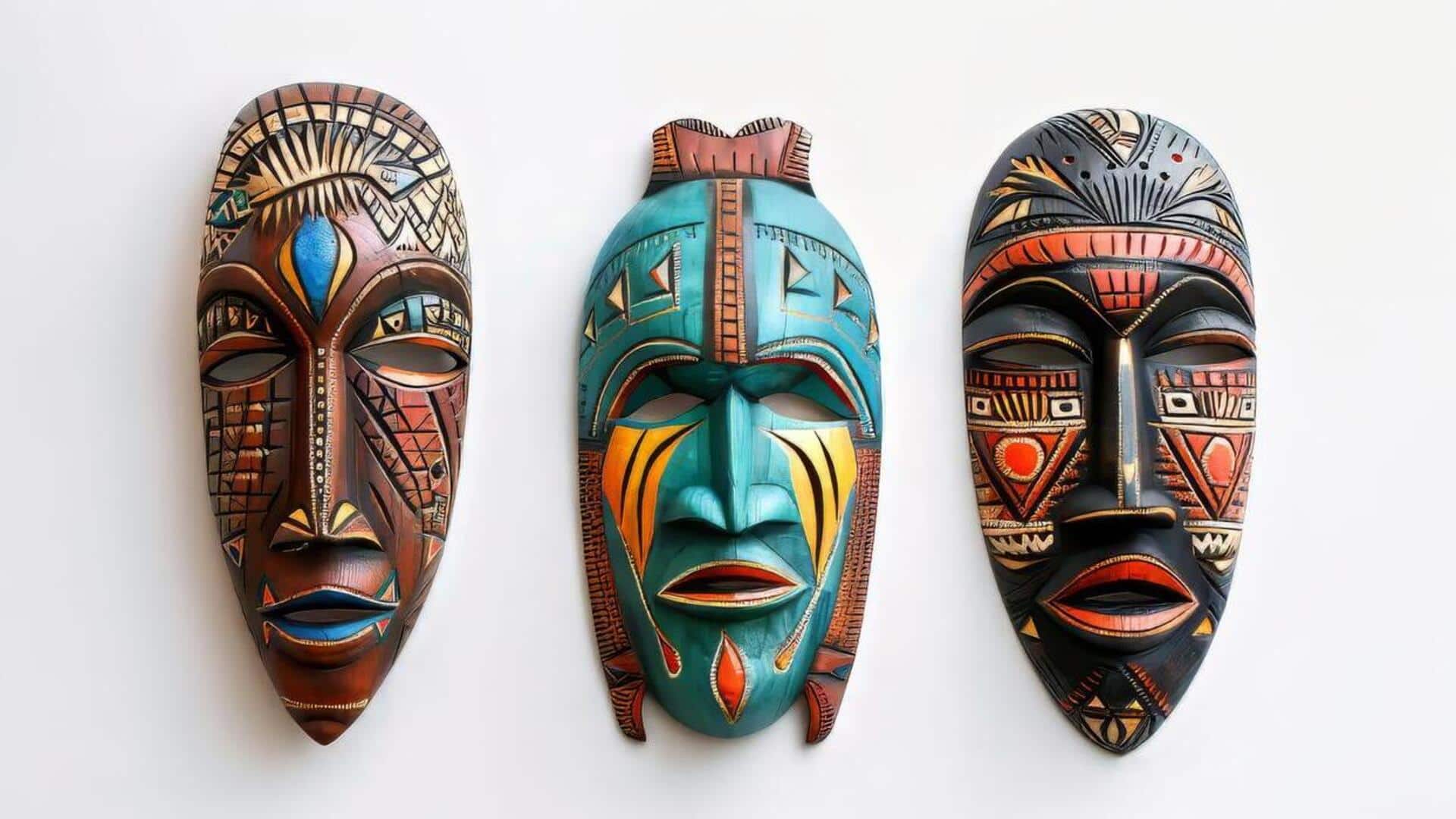
How to create decorative clay masks
What's the story
African masks are famous for their cultural significance and artistic beauty. Sculpting these masks from clay gives you a chance to connect with the rich traditions and histories of Africa. By learning the techniques of sculpting, you can create authentic pieces that reflect the intricate designs and meanings of African art. Here are five sections to help you master clay sculpting.
Symbolism
Understanding African mask symbolism
African masks are not just art; they are steeped in cultural symbolism. Each mask has its own meaning, often representing ancestors, spirits, or deities. Knowing the symbolism behind each design is important for authentic sculpting. Researching different cultures will give you insights into the specific meanings and uses of various masks, ensuring your sculptures are respectful and true to their origins.
Materials
Choosing the right clay materials
Selecting the right clay is key to successful sculpting. Earthenware clay is often preferred for its workability and ability to hold detail. However, stoneware clay can also be used for its durability. Consider the texture and color of the clay, as they affect the final appearance of your mask. Experimenting with different types will help you find what works best for your artistic vision.
Techniques
Mastering basic sculpting techniques
Mastering basic sculpting techniques is essential for creating detailed African masks. Start by learning how to properly shape facial features like eyes, nose, and mouth using simple tools like wooden dowels or metal rods. Practice smoothing surfaces with water or clay slip to achieve a polished look. Consistent practice will improve your skills over time.
Patterns
Incorporating traditional patterns
Traditional patterns are an integral part of African masks, giving them their unique character and identity. Study various patterns used in different regions, such as geometric shapes or tribal motifs, before incorporating them into your sculptures. Use fine tools, like needles or brushes, to etch these designs onto your mask without compromising its structural integrity.
Glazing
Finishing touches: Glazing techniques
Glazing adds color and protection to your sculpted masks, making them visually appealing and durable. Choose natural pigments that are traditionally used in African art, such as ochre or charcoal, for authenticity. Apply glaze evenly, avoiding drips, which can ruin the appearance after firing in a kiln at high temperatures, ensuring the pieces are sturdy and vibrant.