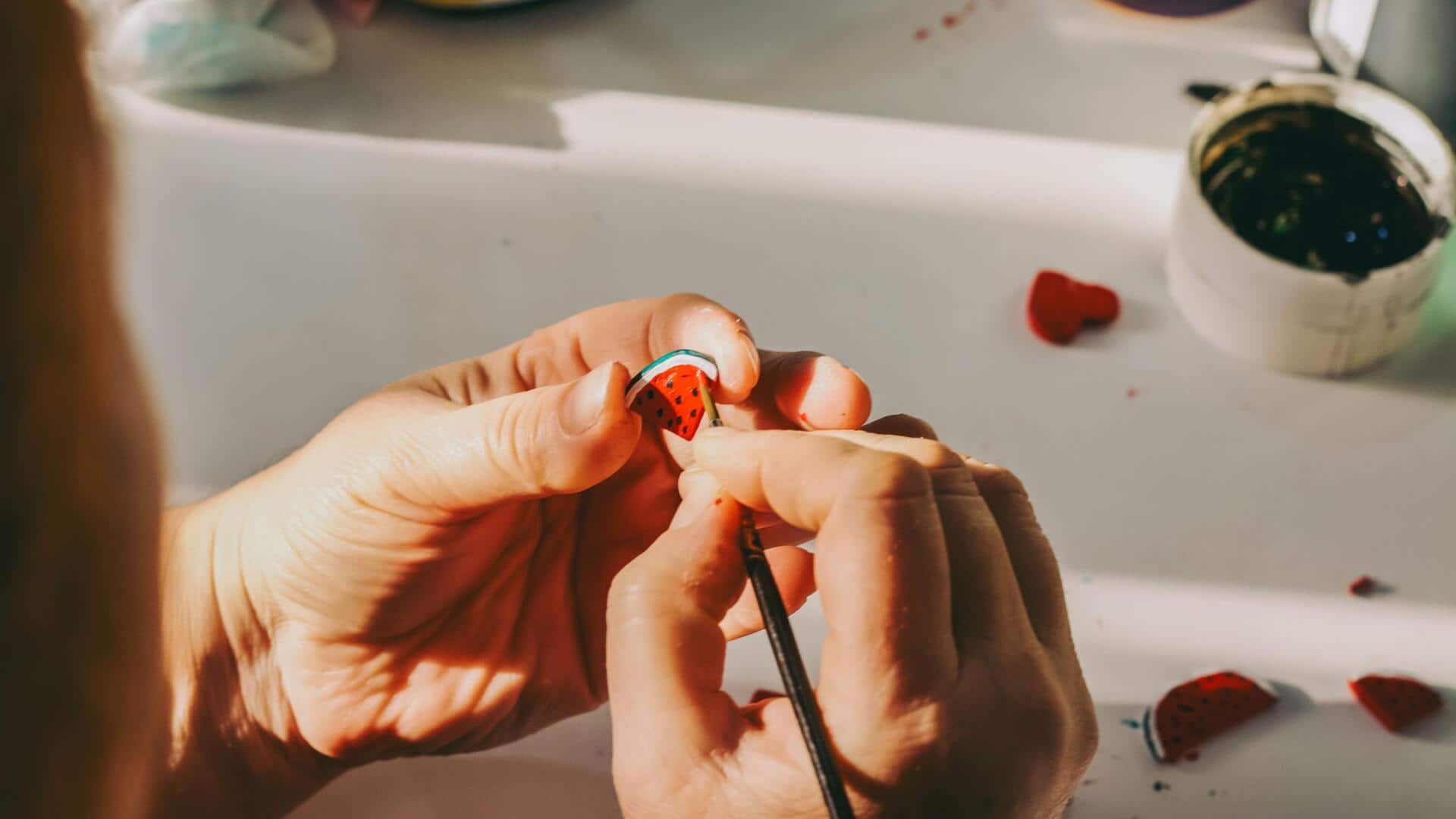
How to create stunning miniature art
What's the story
Creating miniature art can be a rewarding experience, allowing artists to express their creativity in small spaces. Whether you're a beginner or looking to refine your skills, understanding the basics of miniature art is essential. This article provides practical tips and insights into crafting beautiful miniature pieces. It focuses on techniques that enhance detail and precision.
Tip 1
Choosing the right tools
Selecting appropriate tools is critical for creating detailed miniature art.
Invest in high-quality brushes with fine tips, as they allow for precision painting.
Also, keep a set of magnifying glasses handy to see the tiny details clearly.
A good light source also helps illuminate your workspace, making it easier to work on intricate designs.
Tip 2
Understanding scale and proportion
Scale and proportion are the most important aspects of miniature art.
Understanding how to accurately represent objects at a reduced size is key to maintaining realism in your work.
Practice measuring carefully, and consider using reference images to get the proportions right.
This way, you can ensure that every element of your piece is in harmony with the rest.
Tip 3
Mastering painting techniques
Painting in miniature requires different techniques than larger canvases.
Focus on layering colors slowly, allowing each layer to dry before adding more detail.
Use thin washes for subtle shading and highlights, and experiment with different brush strokes to create texture.
Practicing these techniques will improve your ability to bring depth and dimension to your artworks.
Tip 4
Incorporating mixed media elements
Adding mixed media elements can take your miniature art to the next level by adding depth and interest.
Try incorporating materials like paper, fabric, or metal into your pieces for added texture and complexity.
Mixing different mediums lets you explore new creative possibilities while keeping your work unique.
Tip 5
Practicing patience and precision
Patience is key when working on miniature art projects that require a lot of attention to detail.
Take your time with each step of the process, from planning out designs to executing them meticulously with precision tools like scalpels or tweezers if necessary.
This way, you can achieve the best results without compromising quality through haste or carelessness.