
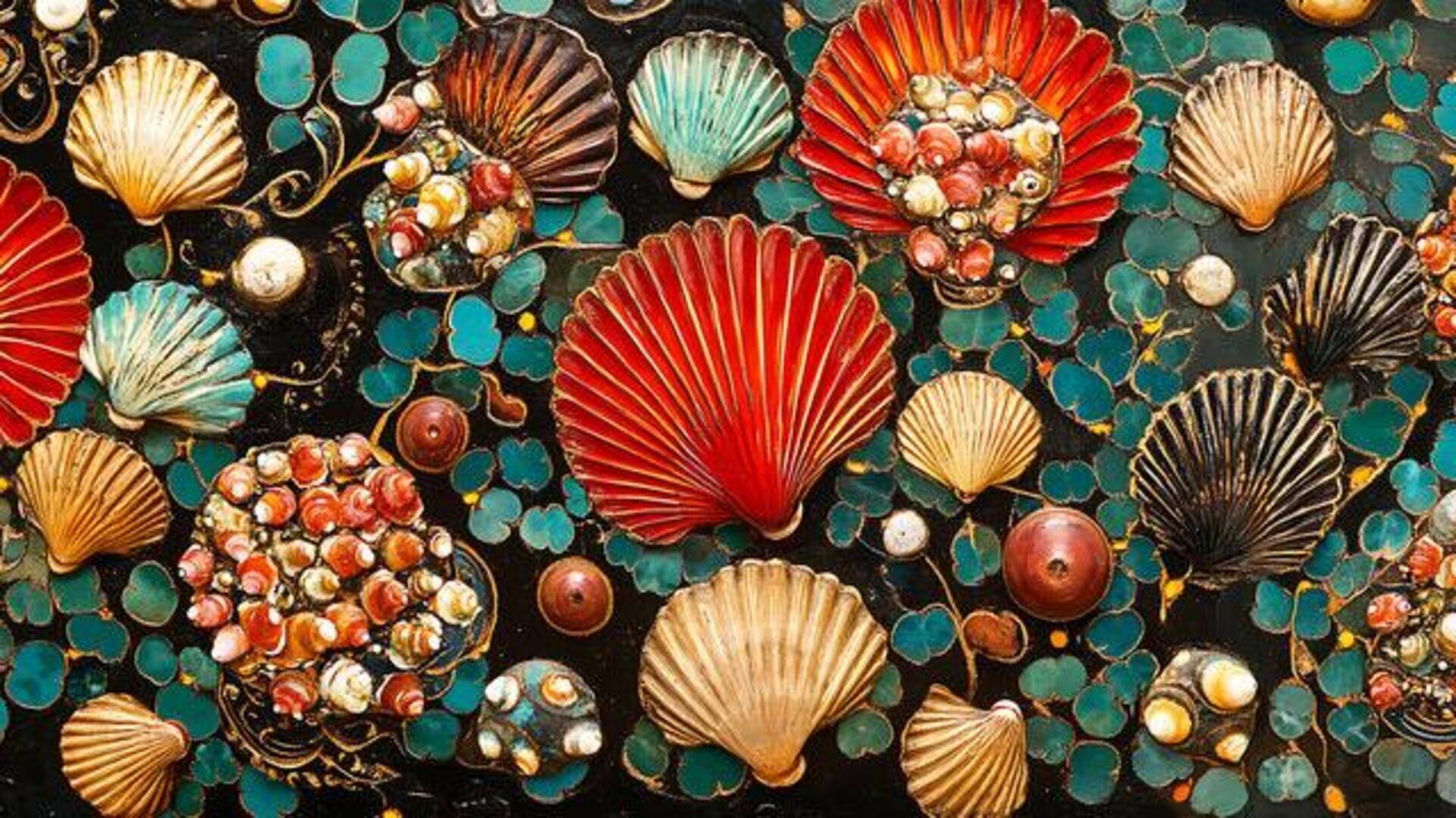
Exploring Africa's shell inlay art
What's the story
African shell inlay art is a fascinating craft that marries tradition with modernity. It employs shells to create intricate designs on various surfaces. The art form is a testament to Africa's rich cultural heritage and its capacity to evolve with time. As artisans continue to innovate, the craft finds itself in a unique position where traditional techniques meet contemporary aesthetics. Here's a look at the evolution of this timeless art form.
#1
Historical roots of shell inlay art
Shell inlay art has been practiced in Africa for centuries, with roots tracing back to ancient civilizations. Traditionally, shells were used to decorate weapons, tools, and ceremonial objects. The practice was not just decorative but also held cultural significance, symbolizing status and power within communities. Over time, these traditional methods have been preserved and adapted by modern artisans who seek to keep the heritage alive.
#2
Modern techniques in shell inlay
Today's artisans employ modern techniques while staying true to traditional practices. The use of precision tools has improved the accuracy and detail of designs. Artisans now also experiment with different types of shells and materials, expanding the possibilities for creativity. This fusion of old and new allows for the creation of unique pieces that appeal to both local and global markets.
#3
Economic impact on local communities
The shell inlay craft also contributes significantly to the economy of local communities across Africa. It provides a source of income for many families, empowering them economically. By selling their work at local markets or online platforms, artisans get a chance to reach a wider audience. This economic activity not only sustains livelihoods but also promotes cultural exchange through art.
#4
Preserving cultural heritage through education
Education is key to preserving the cultural heritage of shell inlay art. Workshops and training programs are being conducted across Africa to teach young people about this traditional craft. By imparting skills and knowledge, these initiatives ensure that future generations can continue practicing this unique form of artistic expression, while appreciating its historical significance.