All about Moroccan zellij tiles
What's the story
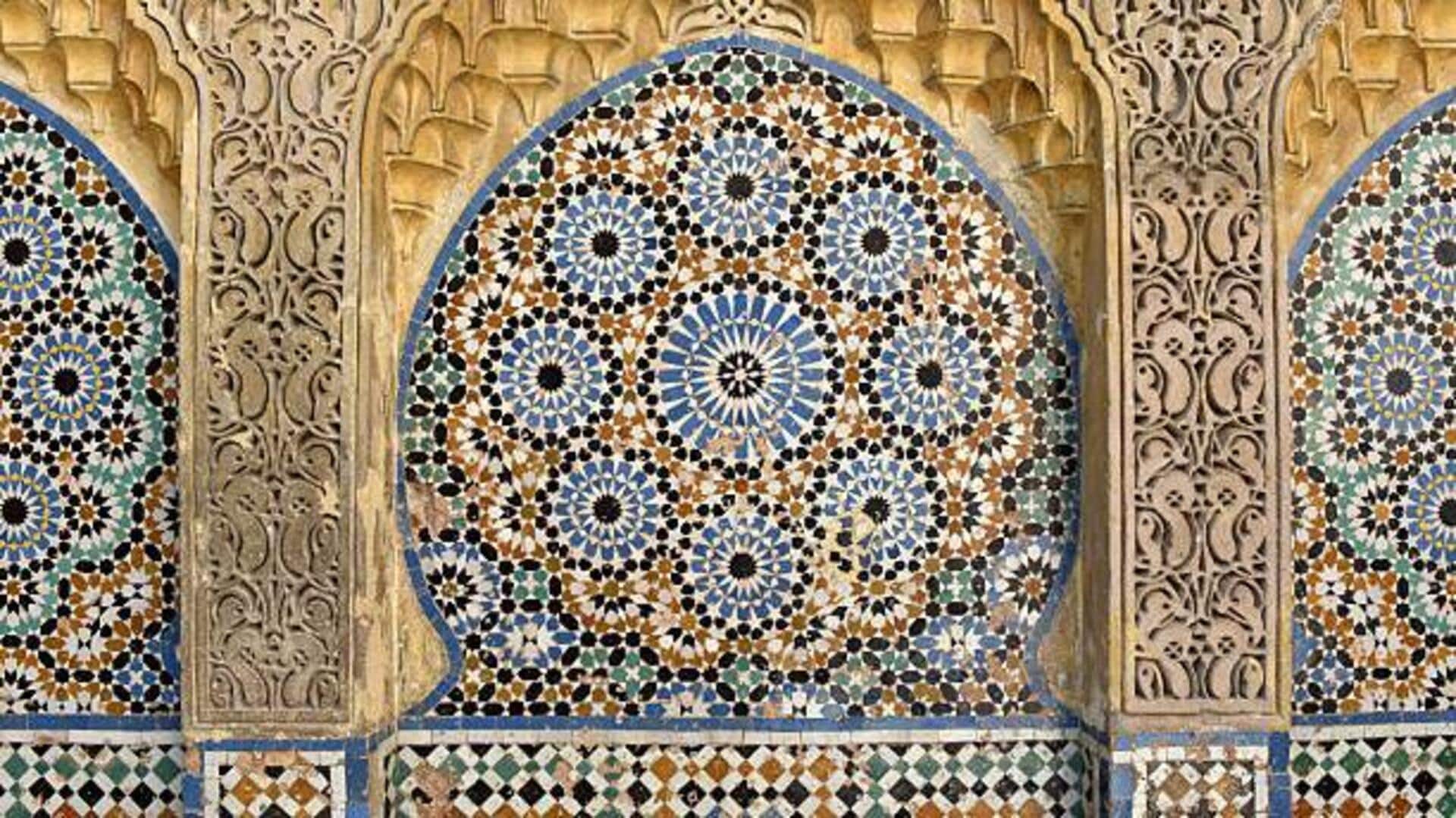
Moroccan zellij tiles are famous for their intricate patterns and vibrant colors. These handcrafted tiles are made from clay, glazed, and cut into geometric shapes. They are widely used in Moroccan architecture, adorning everything from floors to walls. The art of zellij tile-making is a traditional craft that has been passed down through generations. It reflects the rich cultural heritage of Morocco and its love for detailed artistry.
#1
The history of zellij tiles
The history of zellij tiles goes back to the ninth century when they were first introduced in Morocco.
The technique was influenced by Islamic art, which emphasized geometric patterns and symmetry.
Over the centuries, zellij became an integral part of Moroccan architecture, embellishing palaces, mosques, and public spaces.
The craft has survived through centuries due to its cultural significance and aesthetic appeal.
#2
Crafting process of zellij tiles
The crafting of zellij tiles is an elaborate process that requires skill and precision.
First, clay is molded into tile shapes and fired in a kiln to harden them.
Once hardened, the tiles are glazed with vibrant colors.
After drying, artisans carefully cut the tiles into smaller pieces using hand tools or chisels.
Each piece is then arranged into intricate patterns before being installed.
#3
Geometric patterns in zellij design
Geometric patterns are at the heart of zellij tile design.
These patterns are created using simple shapes like squares, triangles, and hexagons, which are arranged in complex motifs.
The designs not only look beautiful but also reflect mathematical precision, as they follow symmetrical rules that can be traced back to ancient Islamic geometry.
#4
Modern applications of zellij tiles
Today, zellij tiles are not just used in traditional Moroccan architecture, but also in contemporary design projects across the globe.
Interior designers employ them for adding a touch of exotic elegance to modern homes or commercial spaces like restaurants or hotels.
Their versatility allows them to be used creatively while still honoring their traditional roots.