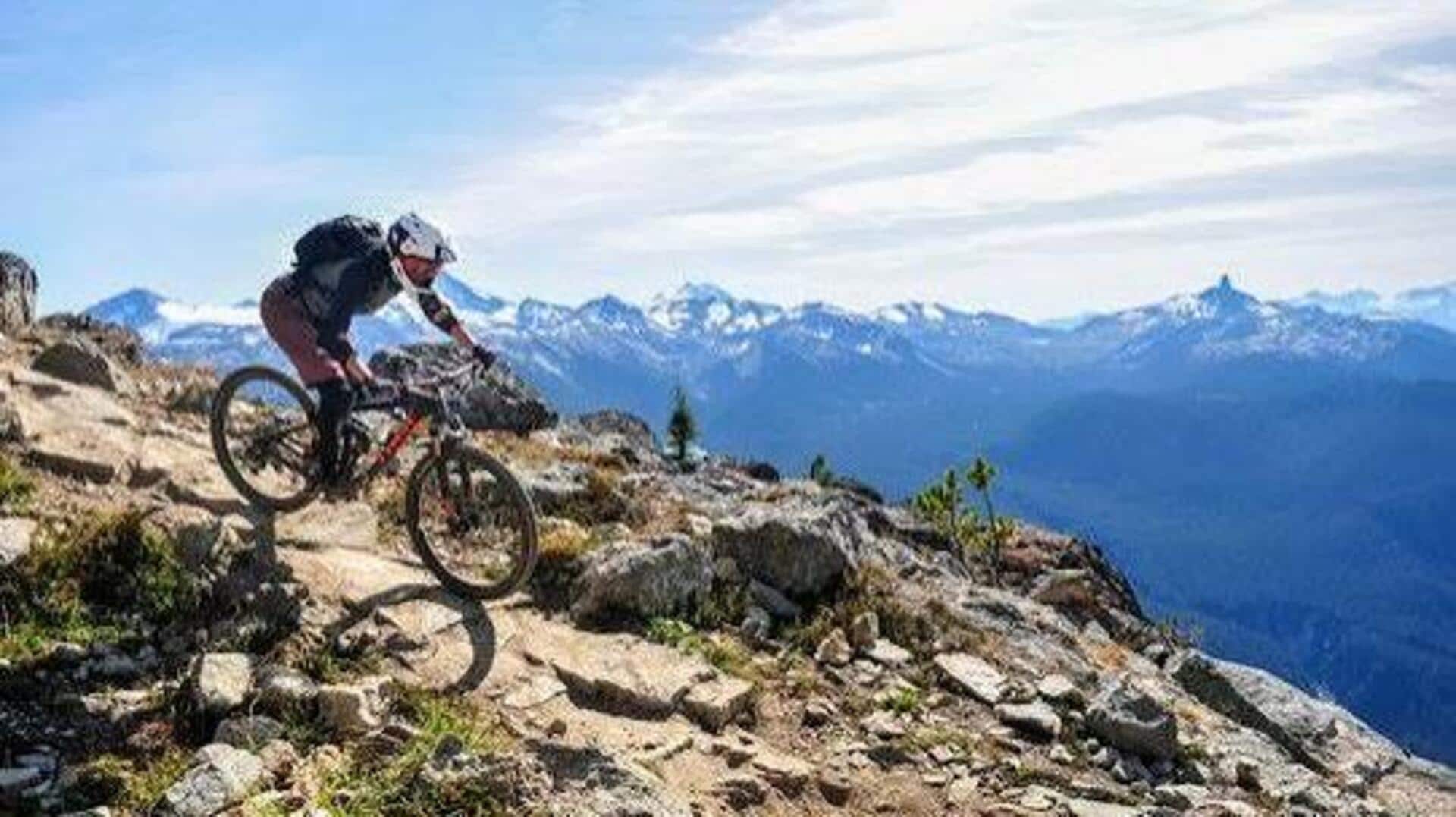
Mountain biking on Kilimanjaro: A guide
What's the story
Exploring Mount Kilimanjaro's volcanic landscapes by mountain biking is an exhilarating way to experience Tanzania's natural beMountauty. The ride offers a unique perspective of the mountain's diverse ecosystems and stunning views. From lush rainforests to barren alpine deserts, the journey promises adventure and discovery. Whether you are an experienced cyclist or a novice looking for a challenge, Kilimanjaro's trails offer something for everyone seeking an unforgettable outdoor experience.
#1
Choosing the right trail
Selecting the right trail is key to having a successful mountain biking experience on Kilimanjaro.
There are various routes, each offering different levels of difficulty and scenery.
Some trails wind through dense forests, while others offer sweeping views of the surrounding landscape.
It's important to consider your fitness level and biking experience when choosing a trail.
Beginners may prefer shorter routes with gentler slopes, while seasoned cyclists can opt for more challenging paths.
#2
Preparing for your ride
Proper preparation is essential for a safe and enjoyable ride on Kilimanjaro.
Cyclists should ensure their bikes are in good condition, checking brakes, gears, and tires before setting out.
Packing essentials like water bottles, snacks, and a first-aid kit can prove useful during long rides.
Dressing in layers is advisable, as temperatures can vary widely from cool mornings to warmer afternoons.
#3
Understanding weather conditions
Weather plays an important role in planning your mountain biking adventure on Kilimanjaro.
The region experiences two main seasons: dry and wet. The dry season, from June to October, is ideal for biking, as trails are less muddy and more accessible.
The wet season brings rain from November to May, which may make some paths slippery but also more vibrant with greenery.
#4
Safety tips for cyclists
Safety should always be a priority when biking on Kilimanjaro's volcanic trails.
Cyclists are advised to ride in groups, where possible, as this provides support in case of emergencies or mechanical issues with bikes.
Wearing helmets is mandatory, as it protects riders from head injuries during falls or collisions on rugged terrain.