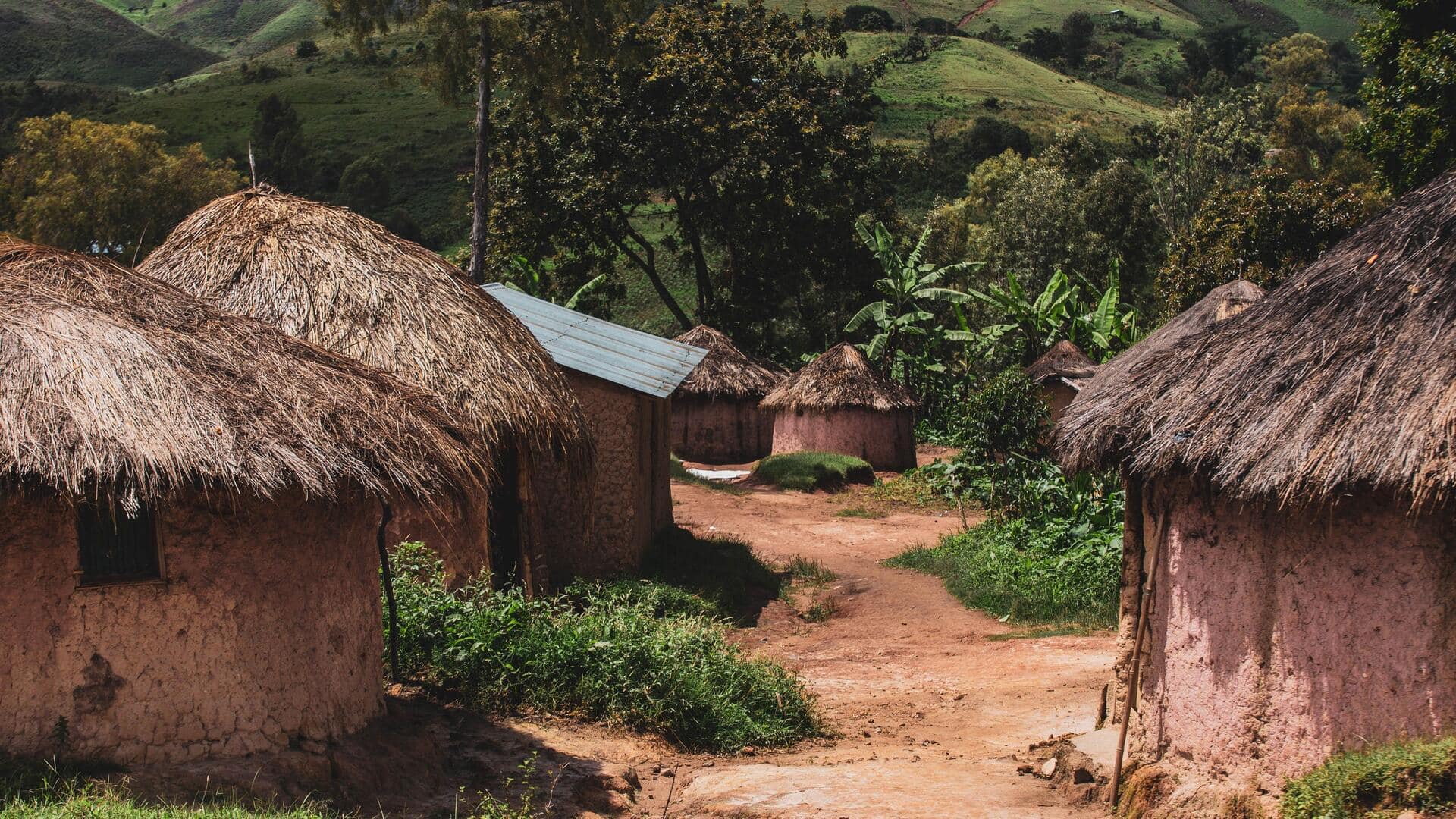
5 surprising facts about traditional mud homes
What's the story
Mud houses are an integral part of India's rich cultural heritage. They are eco-friendly, sustainable, and a perfect example of traditional architecture. These houses are made using locally available materials, which makes them economical and environment-friendly. From the structure to the design, everything about mud houses is unique and tells us about the region's culture and climate. Here are five interesting facts about these traditional homes.
Sustainable building
Eco-friendly construction materials
Mud houses are built using natural materials such as clay, straw, and cow dung.
These materials are biodegradable and have a low carbon footprint, making them an eco-friendly choice.
The use of local resources also minimizes transportation costs and supports the local economy.
Adaptable architecture
Climate-responsive design
The design of mud houses is often adapted to suit local climatic conditions.
Thick walls provide insulation against heat in warm regions, while high ceilings allow for better air circulation in humid areas.
This climate-responsive approach ensures comfort without relying heavily on modern heating or cooling systems.
Cultural expressions
Artistic embellishments
Many mud houses feature intricate designs and patterns that reflect local art forms and cultural traditions.
These artistic embellishments are often created using natural pigments and simple tools, showcasing the creativity and craftsmanship of the builders.
From region to region, the designs can vary widely, adding to the diversity of India's architectural heritage.
Collaborative efforts
Community building practices
Constructing a mud house is often a community effort, with neighbors coming together to help with the building process.
This practice fosters strong social bonds and reinforces community ties.
It also ensures that traditional building techniques are passed down through generations, preserving cultural knowledge for future generations.