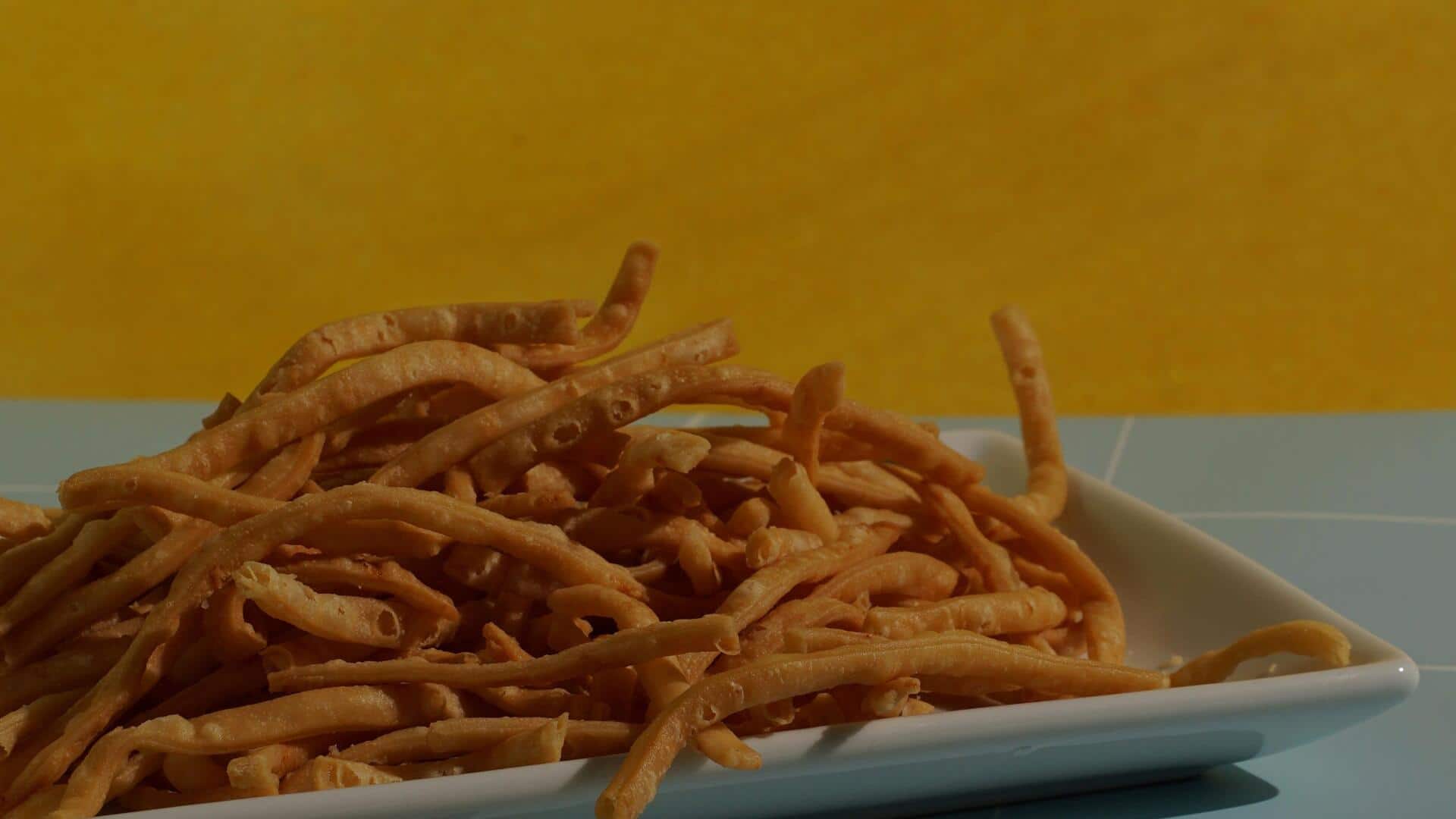
The story behind India's famous namak pare
What's the story
Namak pare, a traditional Indian snack, has traveled from the kitchens of India to become a global favorite. These crispy, savory snacks are made from flour and spices and are loved for their simplicity and flavor. From being a tea-time companion to a party snack, namak pare has evolved into a versatile snack option across the globe. Here's how this humble snack became a global sensation.
#1
Historical roots of namak pare
Namak pare has its origins in Indian households where it was prepared during festivals and special occasions.
Made with basic ingredients like flour, salt, and spices, it was an economical snack that could be prepared in bulk.
Over time, its popularity spread beyond regional boundaries as families shared recipes and techniques.
#2
Ingredients and preparation techniques
The basic ingredients of namak pare include all-purpose flour, semolina, carom seeds, salt, and oil.
The dough is kneaded into a firm consistency before being rolled out into thin sheets.
These sheets are then cut into desired shapes and deep-fried until golden brown.
Variations may include different spices or herbs for added flavor.
#3
Cultural significance in India
In India, namak pare is more than just a snack; it's part of cultural traditions.
It's often served during festivals like Diwali or Holi as part of the festive spread.
Its presence at family gatherings highlights its role in bringing people together over shared meals.
#4
Global adaptations of namak pare
As Indian cuisine gained popularity worldwide, namak pare found its way into international markets under various names such as "spiced crackers" or "savory biscuits."
Chefs have adapted the recipe by incorporating local flavors while retaining its essential characteristics.
This adaptability has helped namak pare maintain its appeal across different cultures.