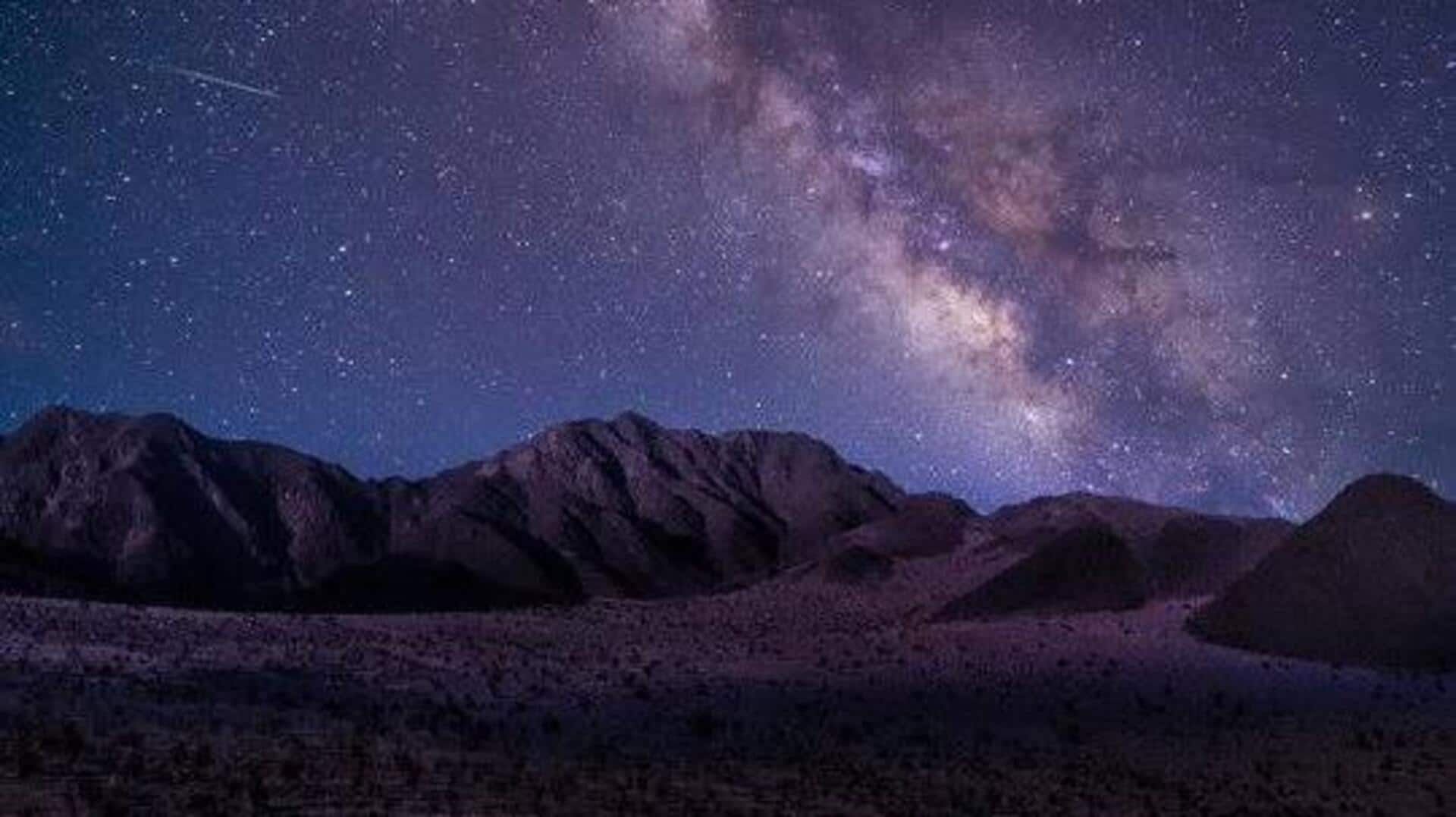
What makes Namibia a hotspot for stargazing
What's the story
Namibia's desert night skies are famous for their clarity and beauty, making them a perfect destination for stargazers. The country has some of the least illuminated skies on the planet, which makes celestial bodies visible in their full glory. This guide gives you tips to explore these starry wonders, from the best places to visit to tips on how to enjoy the experience.
#1
Best locations for stargazing
Namibia has several prime locations for stargazing.
One of the most famous sites is the Namib Desert, where clear skies and minimal light pollution make for an incredible view of the Milky Way.
Another great place is Sossusvlei, where visitors can see both desert landscapes and starry skies.
Etosha National Park also provides opportunities to see wildlife during the day and stars at night.
#2
Understanding celestial events
Stargazers in Namibia can also catch several celestial events throughout the year, including meteor showers, planetary alignments, and eclipses.
Knowing when these events will happen can greatly enhance your experience.
For instance, major meteor showers like Perseids and Geminids are visible every year at specific times.
Keeping an eye on astronomical calendars will help you plan your visit accordingly.
#3
Tips for optimal stargazing experience
To make the most of your stargazing experience in Namibia's deserts, consider bringing along binoculars or a telescope for closer views of celestial bodies.
A star map or mobile app can help identify constellations and planets in the night sky.
Dress warmly, as desert temperatures drop significantly at night, and find a comfortable spot away from artificial lights for an unobstructed view.
Tip 1
Photography tips for capturing stars
Capturing Namibia's starry skies through photography requires some preparation.
Use a tripod to keep your camera steady during long exposure shots, which are essential for photographing stars effectively.
Set your camera to a high ISO setting, with an aperture wide open, to let in more light, resulting in clearer images of distant stars and constellations.