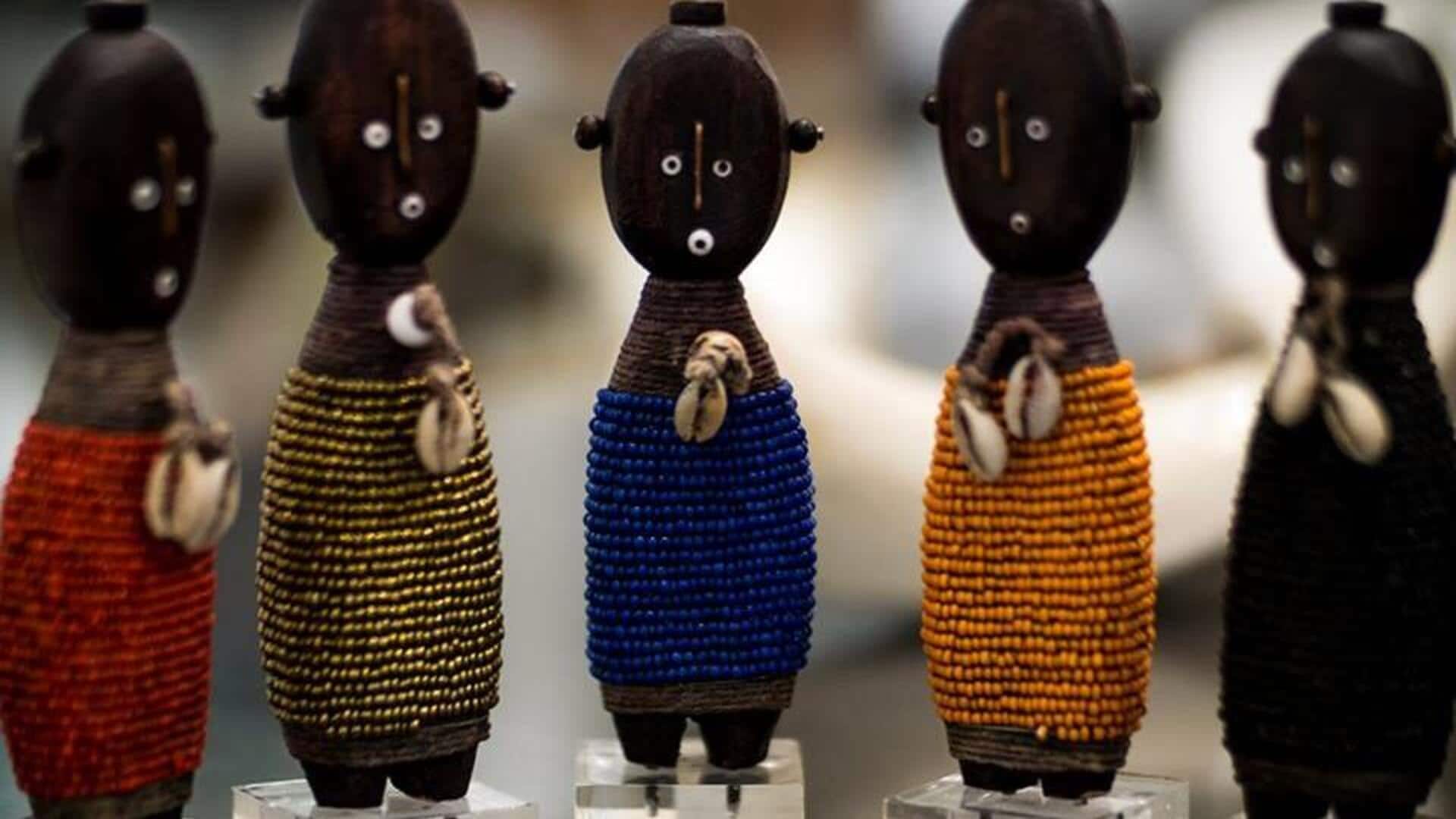
Namji dolls: A cherished craft from Cameroon
What's the story
Namji dolls, the traditional wooden figurines from Cameroon, are getting a modern makeover with colorful fabrics. These dolls are part of the rich cultural heritage of the region and are usually used as fertility symbols or toys for children. The new designs use bright textiles to make the dolls more appealing and relevant in today's world. The fusion of traditional craftsmanship with modern aesthetics is an interesting take on cultural preservation.
Historical insight
The history behind Namji dolls
Namji dolls have been a part of Cameroonian culture for centuries. Traditionally, they were carved out of wood and painted with simple patterns.
The dolls were believed to bring good fortune and fertility to families. Over time, the design evolved to include more intricate carvings and vibrant colors.
The use of textiles in their design is a recent innovation that adds another layer to their historical significance.
Fabric fusion
Modern textile influences
The use of modern textiles in Namji doll designs has revolutionized the traditional art form.
Bright fabrics with bold patterns are used to dress the dolls, making them more visually appealing.
This fusion of old and new not only preserves the cultural essence but also makes it relevant for contemporary audiences.
The textiles used are often sourced locally, supporting local artisans and economies.
Community Boost
Economic impact on local communities
The revival of Namji dolls with modern fabrics has also positively impacted local economies in Cameroon.
Artisans involved in making these dolls benefit from increased demand, which leads to higher income levels for many families.
Additionally, this trend encourages tourism, as visitors seek authentic cultural souvenirs that reflect Cameroon's rich heritage.
Collector's guide
Tips for collecting Namji dolls
For those interested in collecting Namji dolls, it is important to consider authenticity and craftsmanship.
Look for well-carved features, and quality fabric applications that reflect true artistry.
Also, consider supporting fair trade practices by purchasing from reputable sources or directly from artisans when possible.
This ensures fair compensation for creators while preserving cultural traditions through your collection efforts.