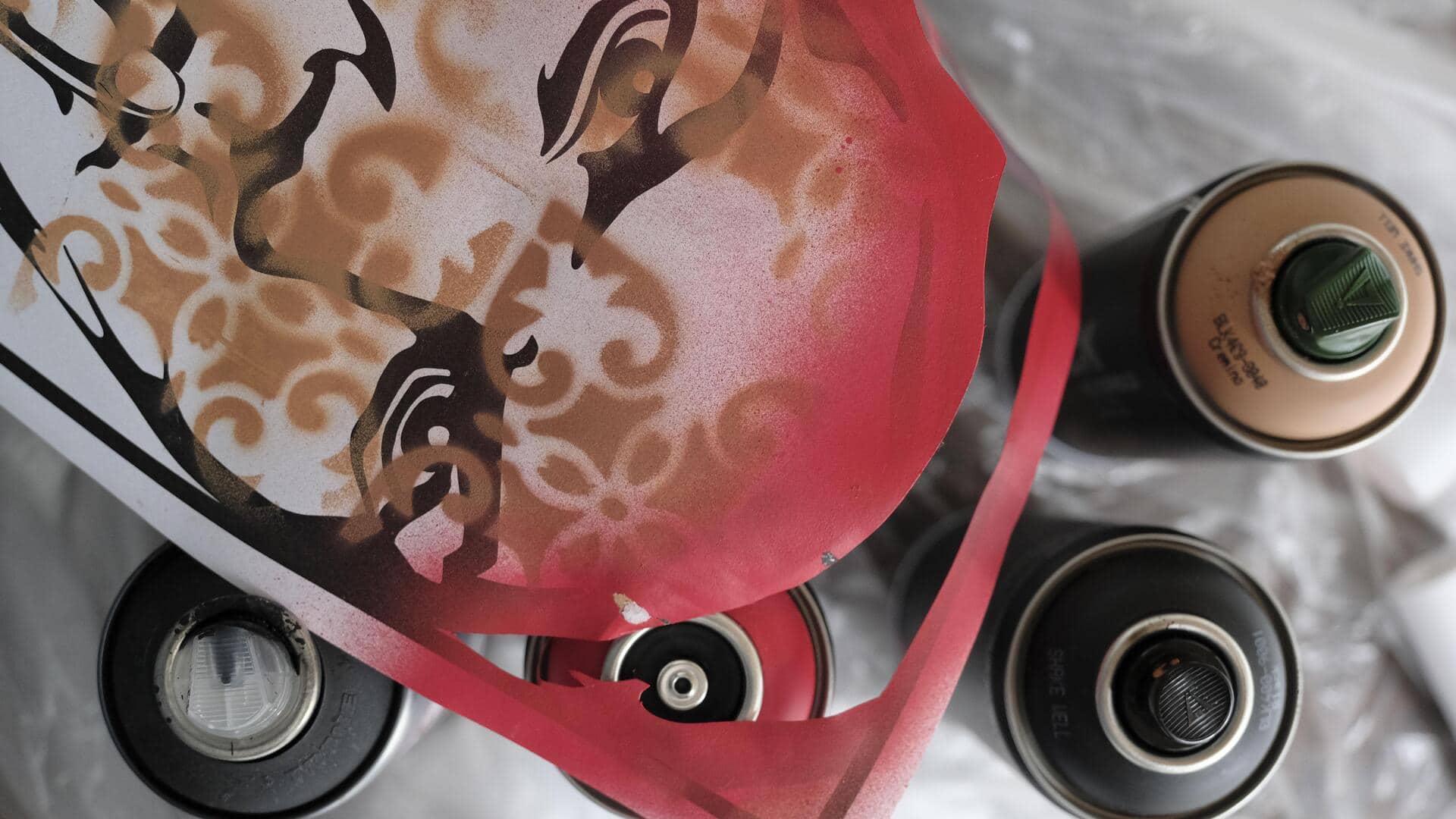
Create amazing stencil art with these tips
What's the story
Stencil art is a fun and creative way to express yourself, and it can be done easily at home. With just a few materials, you can create stunning designs on different surfaces. Whether it's walls, fabrics, or paper, stencil art gives you the freedom to experiment with colors and patterns. Here are some simple tips to help you get started with stencil art at home.
Tip 1
Choose the right materials
Choosing the right materials is key to successful stencil art.
Start with sturdy paper or plastic for your stencil sheets so that they last longer.
Use high-quality paints or sprays that are compatible with your chosen surface.
Brushes or sponges should be soft enough to avoid bleeding under the stencil edges.
Having these materials handy will make your project easier.
Tip 2
Prepare your workspace
A clean and organized workspace is essential for any art project.
Cover your work area with newspaper or a drop cloth to protect surfaces from paint spills.
Ensure good lighting so you can see details clearly while working on your design.
Keep all necessary tools within reach to maintain focus and efficiency throughout the process.
Tip 3
Practice simple designs first
Before diving into complex patterns, practice simple designs first.
Start with basic shapes like circles or squares to get comfortable with applying paint evenly through the stencil openings.
Once confident, gradually move on to more intricate patterns that challenge your skills without overwhelming you initially.
Tip 4
Experiment with colors and textures
Experimenting with different colors and textures can take your stencil art projects to the next level.
Try layering multiple colors by letting each layer dry before applying another one on top.
Use textured paints or add materials like glitter for added depth and interest in your artwork.
Tip 5
Maintain your stencils properly
Proper maintenance extends the life of your stencils significantly.
After each use, rinse them under warm water immediately, removing excess paint residue carefully without damaging delicate areas within designs themselves.
Store them flat, avoiding creases, which could affect future applications negatively over time.