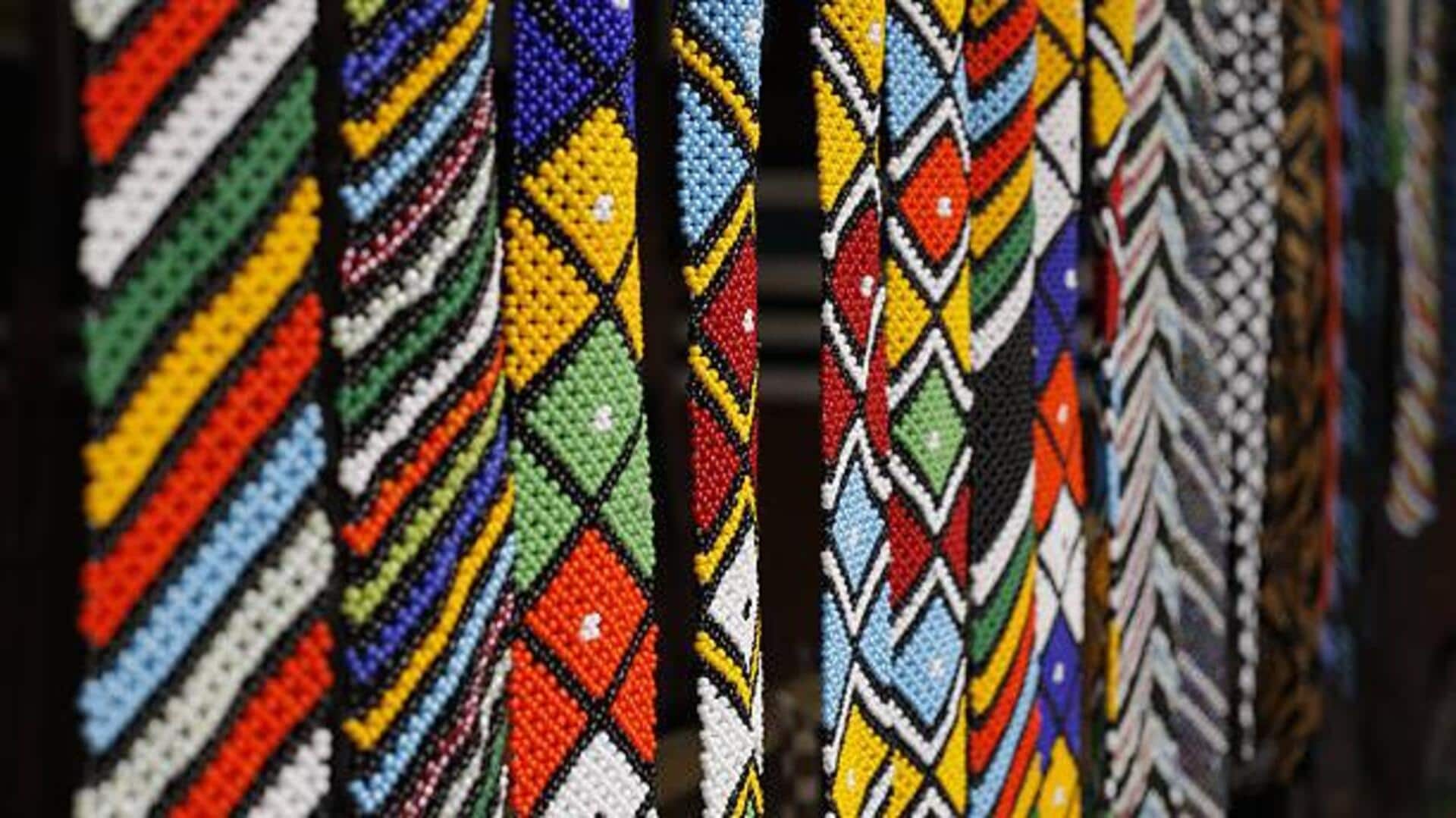
What is Nguni beadwork?
What's the story
Nguni beadwork is a traditional African art form that has been practiced for centuries. It is characterized by its intricate designs and vibrant colors, which are used to convey messages and cultural significance. The art form is not just a means of decoration, but also a way to preserve history and identity among the Nguni people. Today, this unique craft is being redefined as artisans innovate new patterns while honoring traditional techniques.
#1
Historical significance of Nguni beadwork
Nguni beadwork has a rich history that dates back to centuries. Traditionally, beads were used in ceremonial attire and jewelry, signifying social status and community roles. The patterns created with these beads often told stories or represented specific events in the community. This historical significance continues to influence modern creations, as artisans strive to keep the cultural heritage alive.
#2
Innovative patterns in modern beadwork
Modern Nguni beadwork sees artisans experimenting with fresh patterns that combine traditional motifs with modern aesthetics. These innovative designs are more appealing to a global audience while retaining their cultural essence. By playing with colors, shapes, and arrangements, beadworkers are redefining the boundaries of this ancient craft without losing its roots.
#3
Economic impact on local communities
The resurgence of interest in Nguni beadwork has had a positive economic impact on local communities. Artisans are now able to earn a sustainable income from their craft, which also supports community development initiatives. The demand for these unique pieces has led to increased opportunities for training and mentorship programs, empowering future generations of beadworkers.
#4
Preserving cultural heritage through education
Education is key to preserving the cultural heritage of Nguni beadwork. Workshops and classes allow young people to learn traditional techniques from experienced artisans. These educational efforts ensure that the art form continues to thrive in the years to come, while also fostering an appreciation for its historical importance among newer generations.