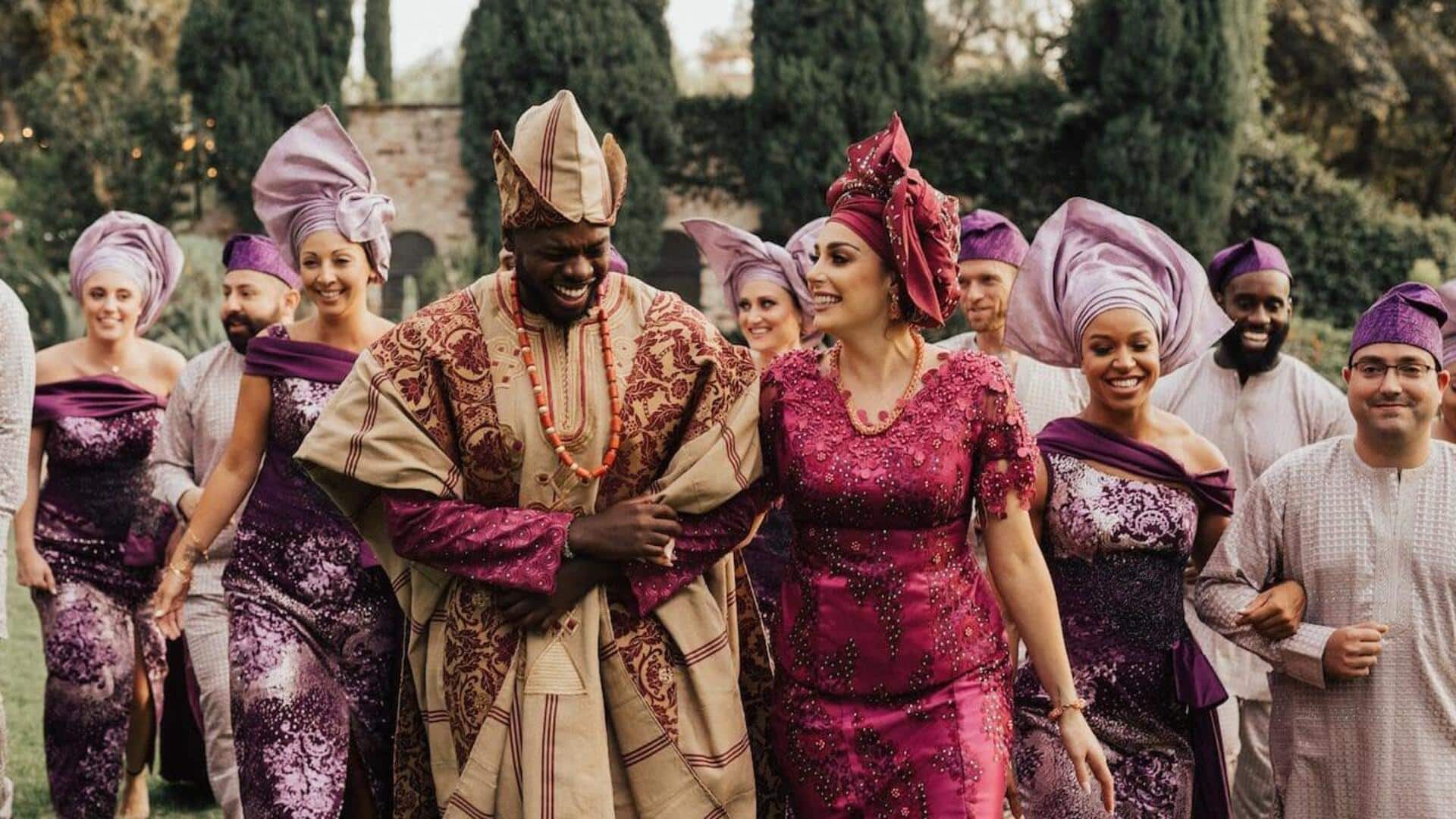
These Nigerian wedding processions are so interesting!
What's the story
Nigerian weddings are famous for their vibrant ceremonies and rich cultural traditions. One of the most important aspects of these celebrations is the procession, which varies from region to region. Each procession has its own significance and is a reflection of the diverse cultures that make up Nigeria. From traditional attire to rhythmic music, these processions are an integral part of wedding festivities.
#1
Yoruba traditional wedding procession
The Yoruba wedding procession is famous for its colorful attire and energetic dance. The bride usually wears an iro and buba, while the groom dons a matching agbada. The ceremony starts with the arrival of the bride's family, followed by prayers and blessings from elders. Music plays a key role, as guests join in traditional dances like the sekere or bata drum dance, adding to the joyous atmosphere.
#2
Igbo traditional wedding procession
In Igbo culture, the traditional wedding procession is called Ido Mmanwu. It involves the bride's family presenting kola nuts to the groom's family as a sign of acceptance and respect. The bride wears an elegant outfit with coral beads, while the groom wears a wrapper and shirt combination. The ceremony includes singing, dancing, and exchanging gifts between families, emphasizing unity and respect.
#3
Hausa-Fulani wedding procession
The Hausa-Fulani wedding procession is characterized by its simplicity but deep cultural significance. Known as Biki, it includes prayers and blessings from elders before any celebration begins. The bride wears a colorful hijab with a long dress called baban riga. Guests enjoy traditional music played on instruments like the kakaki or algaita flutes, while participating in group dances that symbolize community bonding.
#4
Efik traditional wedding procession
The Efik traditional wedding procession is known for its elaborate ceremonies, which include the Ekombi dance. The bride wears a calabar dress with intricate beadwork, while the groom wears a sokoto and baban riga. The procession begins with prayers, followed by the Ekombi dance, which is performed by both families to symbolize unity and acceptance. This is accompanied by live music, making it a joyous occasion for all.