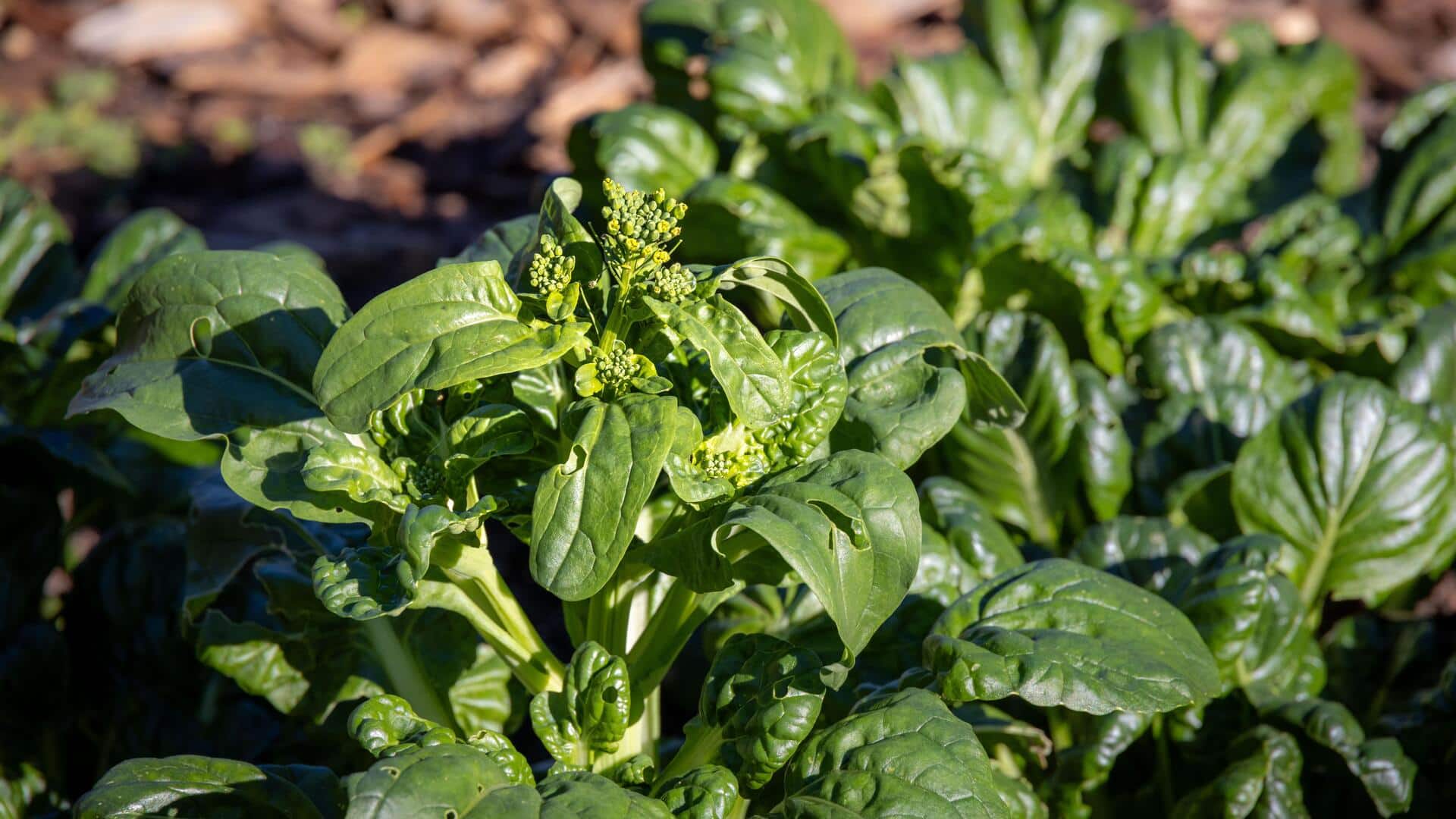
Want fresh Okinawa spinach? Grow it at home
What's the story
Okinawa spinach, or Gynura bicolor, is a nutritious leafy green that can be easily grown in your garden. Known for its vibrant leaves and health benefits, this plant is perfect for beginners. It requires little maintenance and can thrive in various conditions. Here are some practical tips to help you grow Okinawa spinach successfully, ensuring you have a steady supply of fresh greens all year round.
Tip 1
Choosing the right location
Selecting the right location is key to growing Okinawa spinach.
The plant loves warm temperatures and indirect sunlight.
Ideally, pick a spot that gets at least four hours of sunlight but is protected from harsh afternoon rays.
If you're growing indoors, a south-facing window would do well.
Make sure the area has good air circulation to keep the plant healthy.
Tip 2
Soil preparation and planting
Okinawa spinach prefers well-draining soil rich in organic matter.
Prepare your soil by mixing compost or well-rotted manure into it. This will ensure nutrients and improve drainage.
Plant seeds or seedlings about 12 inches apart to give them enough space to grow.
Water them lightly after planting to settle the soil around the roots.
Tip 3
Watering and maintenance
Consistent watering is key to keeping Okinawa spinach healthy, but don't overdo it.
Water the plants when the top inch of soil feels dry to the touch.
Mulching around the plants helps retain moisture and suppress weeds.
Prune regularly by removing older leaves from the bottom of the plant, which encourages new growth.
Tip 4
Pest management strategies
While Okinawa spinach is relatively pest-resistant, keep an eye out for common pests like aphids or caterpillars.
Handpick any visible pests, and use insecticidal soap if necessary.
Keeping your garden clean and maintaining healthy plants reduces pest problems significantly.
Tip 5
Harvesting tips for optimal growth
Harvesting Okinawa spinach encourages continuous growth throughout its growing season.
Pick leaves from the outer parts of the plant as needed, leaving inner leaves intact for future growth.
Harvesting regularly prevents flowering, which can make leaves bitter over time if not managed properly.