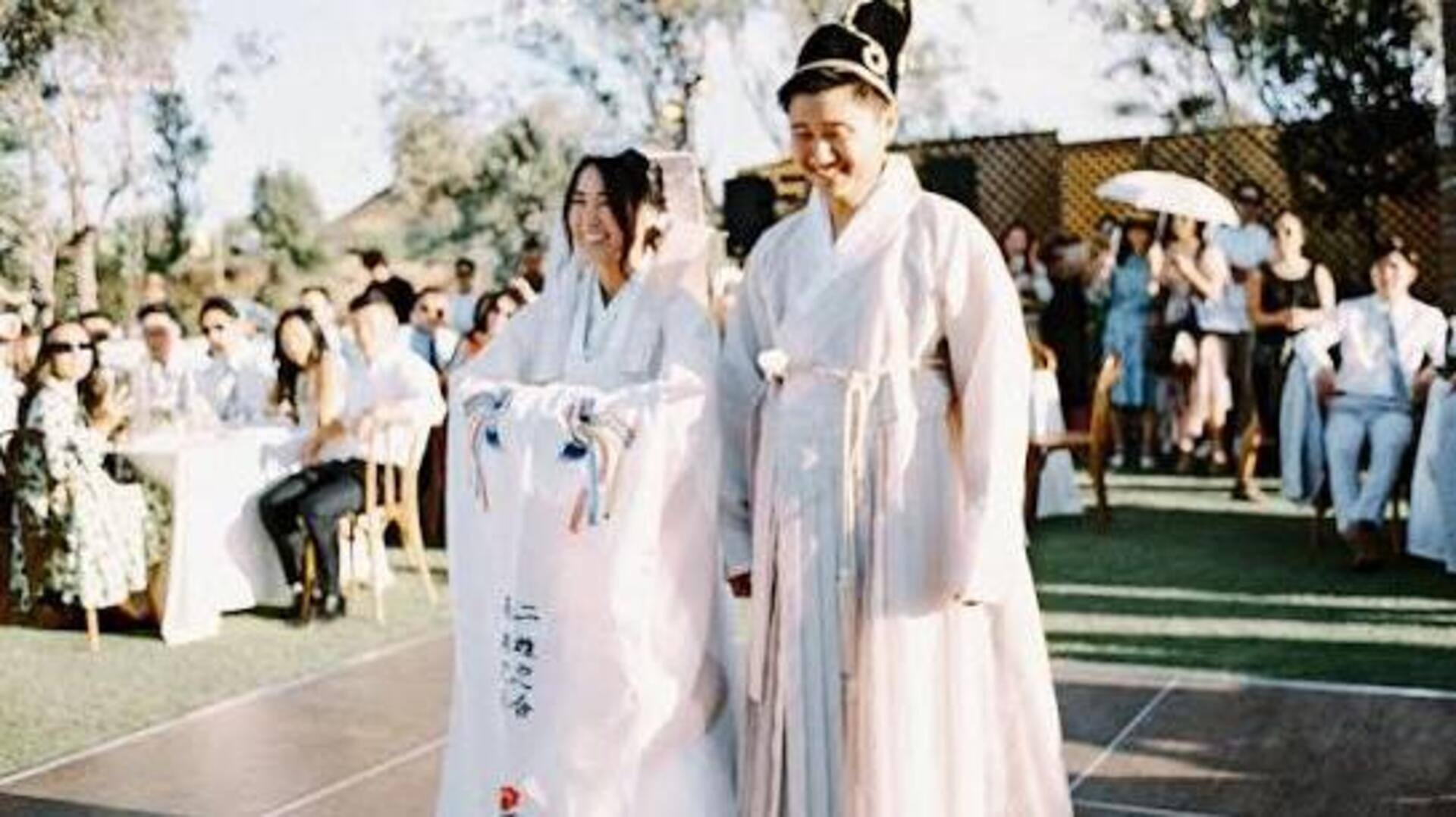
Paebaek: A unique wedding tradition from South Korea
What's the story
Paebaek is a traditional Korean wedding ceremony that dates back centuries. It is an important part of Korean culture, symbolizing the union of two families. The ceremony is usually performed after the main wedding ceremony and involves various rituals that are steeped in history and significance. Paebaek is not just a celebration of love, but also a reaffirmation of familial bonds and cultural heritage.
Cultural importance
The significance of paebaek
Paebaek holds immense cultural importance in Korea, as it emphasizes the importance of family in marriages.
The bride and groom pay respect to their elders by performing certain rituals, which signify their acceptance into each other's families.
This ritual helps strengthen family ties and ensures that both families are united in supporting the couple.
Attire & rituals
Traditional attire and rituals
During paebaek, the bride and groom wear traditional hanbok attire.
The bride usually wears a colorful jeogori and chima, while the groom wears a jeogori with baji or trousers.
The couple then performs rituals like bowing to their parents, and presenting gifts such as dates or chestnuts, symbolizing fertility and prosperity.
Contemporary practices
Modern adaptations of paebaek
In recent years, some couples have opted for modern adaptations of paebaek to suit their tastes, while still honoring tradition.
Some may choose to hold the ceremony at venues other than their homes, or even incorporate elements like music or photography, to capture the moment.
These adaptations allow couples to personalize their experience without losing sight of cultural significance.
Planning tips
Tips for planning a paebaek ceremony
If you are planning a paebaek ceremony, start by deciding on the venue and attire well in advance.
Budgeting is key, as traditional attire rentals can cost between $100 and $300 per person.
Consider hiring professionals who specialize in paebaek ceremonies for authentic execution.
Lastly, ensure all family members involved are aware of the schedule to avoid any last-minute confusion.