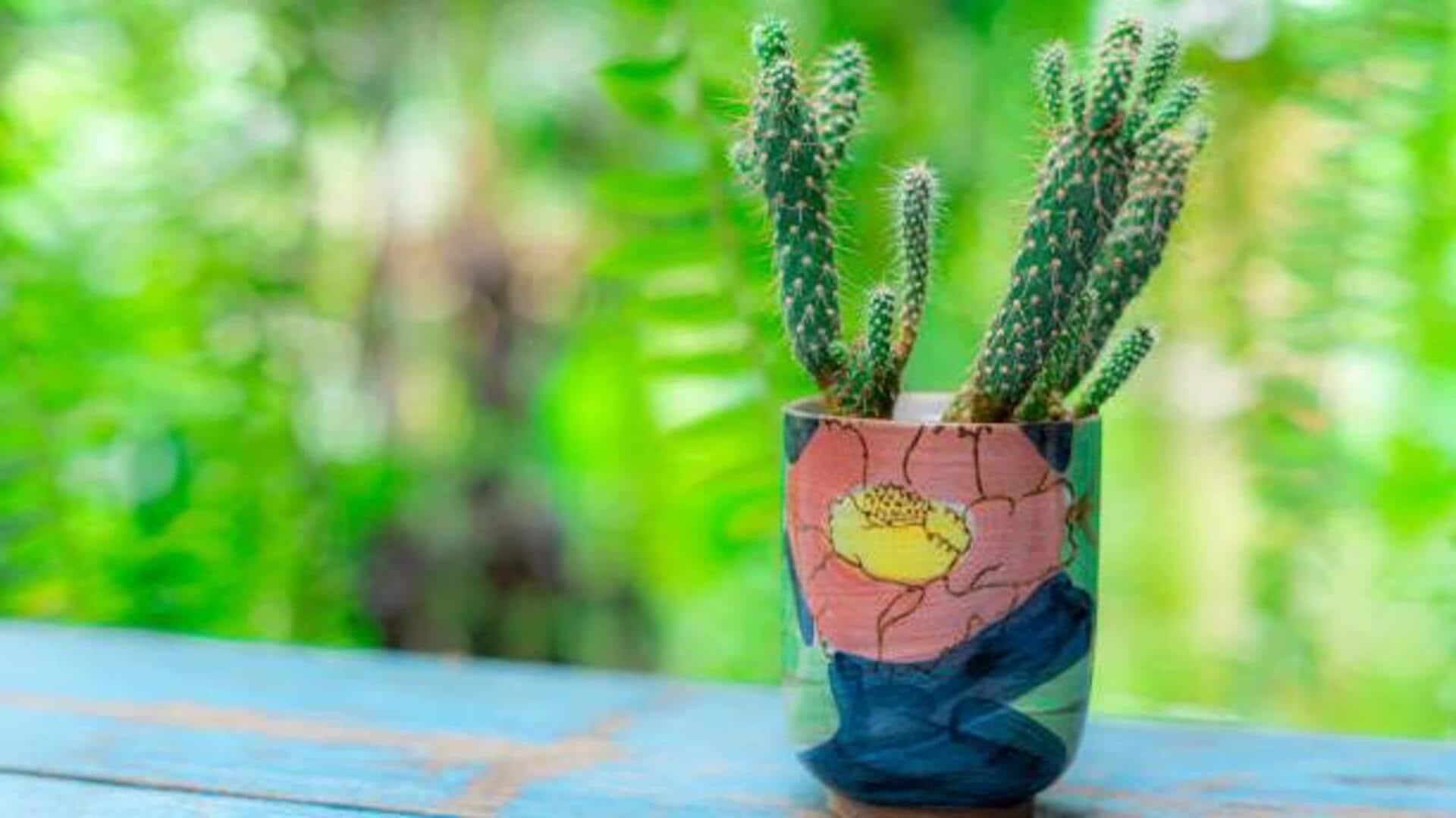
How to give your planters a stylish makeover
What's the story
Ndebele art is famous for its bright colors and geometric patterns. By painting ceramic plant pots in this style, you can add a touch of African culture to your home. The process is simple and requires only a few materials. With some creativity and patience, you can transform ordinary pots into stunning pieces of art. Here are some tips to help you get started.
Materials
Gather your materials
To start painting Ndebele patterns on ceramic plant pots, gather all necessary materials.
You will need ceramic pots, acrylic paints in bright colors like red, blue, green, and yellow, paintbrushes of different sizes, masking tape for clean lines, and a palette for mixing colors.
Ensure that the pots are clean and dry before starting the project.
Design selection
Choose your design
Choosing a design is key to achieving an authentic Ndebele look.
Browse through images of traditional Ndebele art for inspiration. Focus on geometric shapes like triangles, diamonds, and zigzags.
Plan your design by sketching it out on paper or directly onto the pot with a pencil. This step will help you visualize how different patterns will look together.
Base coat application
Apply base coat
Before adding intricate patterns, apply a base coat of paint to the entire pot.
Choose a color that complements your chosen design but does not overpower it.
Allow the base coat to dry completely before moving on to the next steps.
A well-applied base coat provides a smooth surface for further detailing.
Pattern painting
Paint geometric patterns
Using fine brushes or paint pens, start adding geometric patterns onto your pot.
Use masking tape to create straight edges between shapes, if required.
Alternate between colors frequently to mimic the vibrant style of traditional Ndebele art.
Be patient as you work through each section carefully, without rushing.
Sealing artwork
Finish with protective sealant
Once all painted designs have dried thoroughly, apply a clear acrylic sealant over the entire surface area of the pot.
This will protect your artwork from fading or chipping over time, especially if the pots are placed outdoors.
Follow the manufacturer's instructions regarding application and drying times to ensure the best results.