
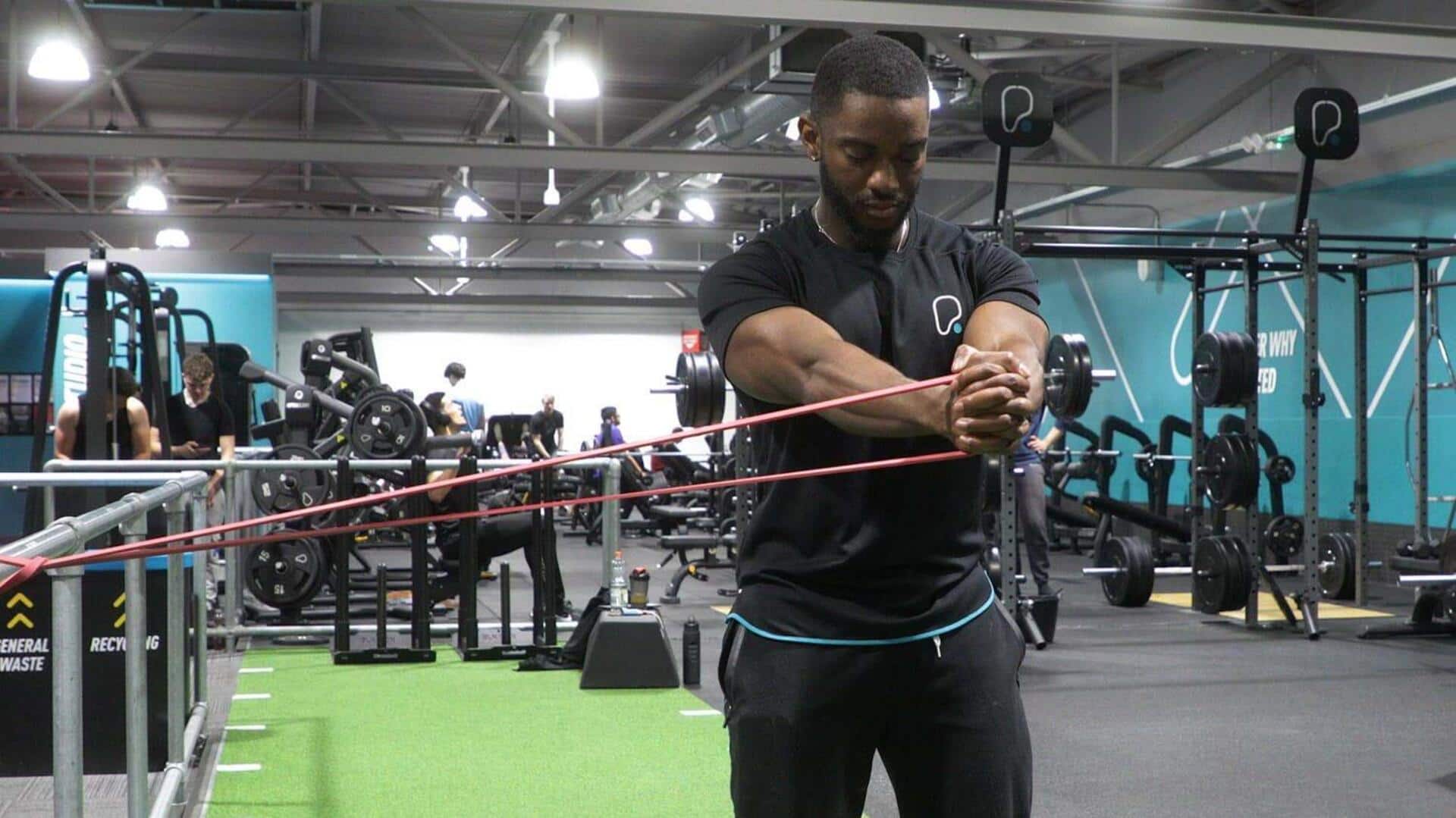
Pallof press: What are some common mistakes people do
What's the story
The Pallof press is a popular exercise for building core stability and strength. It is often performed incorrectly, which can limit its effectiveness and even lead to injury. Knowing the common mistakes can help you perform this exercise better and get the most out of it. Here are five mistakes to avoid when performing the Pallof press, along with tips to fix them.
Tip 1
Incorrect stance positioning
A common mistake is having an incorrect stance. If your feet are too close or too far apart, it can throw off your balance and form. Ideally, your feet should be shoulder-width apart, providing a stable base. This positioning helps maintain balance while engaging the core muscles effectively throughout the movement.
Tip 2
Poor alignment of hands and elbows
Another mistake is not keeping the hands and elbows aligned properly. The hands should be at chest level with elbows slightly bent, not flared out or too close to the body. Proper alignment ensures that the tension is evenly distributed across the core muscles, maximizing the benefits of the exercise.
Tip 3
Neglecting breathing techniques
Many people forget about breathing techniques while doing the Pallof press. It's important to exhale as you press outward and inhale as you bring your hands back to the starting position. Proper breathing helps maintain intra-abdominal pressure, which supports spinal stability during the movement.
Tip 4
Using excessive resistance
Using too much resistance can compromise form and increase injury risk. Beginners should start with lighter resistance until they master technique before gradually increasing weight or resistance level. This approach ensures that focus remains on form rather than just lifting heavier loads.
Tip 5
Rushing through repetitions
Rushing through repetitions is a common mistake that compromises form and effectiveness. It's important to perform each movement slowly and deliberately, focusing on engaging the core muscles throughout the entire range of motion. This controlled pace ensures maximum muscle activation and minimizes the risk of injury, making the exercise more beneficial for building core stability and strength.