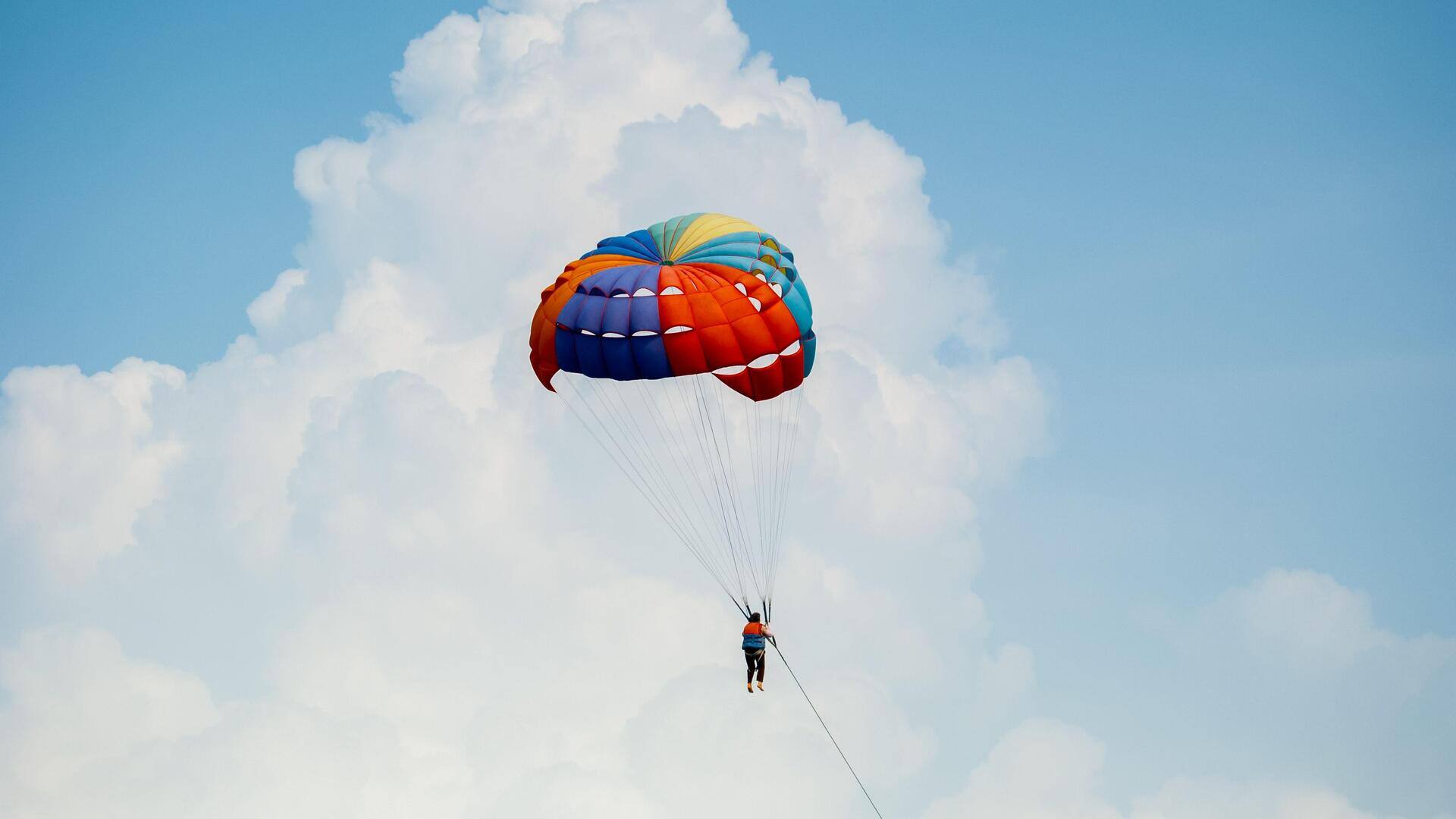
Parasailing v/s paddleboarding: Which helps you relax more?
What's the story
Parasailing and paddleboarding are two popular water activities that promise unique experiences. While both can be fun, they also have distinct benefits that can affect your mental well-being. Here is a look at how these activities can influence your mind and help you choose the right one for your mental health goals.
#1
The thrill of parasailing
Parasailing gives you a bird's-eye view of the world, which can be exhilarating.
The thrill of being high up in the air can trigger adrenaline, known to improve mood and reduce stress.
The activity also gives you a chance to enjoy nature from a different perspective, which can be refreshing for the mind.
#2
Calm waters of paddleboarding
Paddleboarding is all about balance and focus.
The calm waters give you a chance to meditate and reflect, which can be calming for the mind.
The rhythmic paddling motion can also be a form of meditation in itself, helping you clear your head and focus on the present moment.
#3
Social interaction opportunities
Both parasailing and paddleboarding can be done in groups or with friends, giving you the opportunity to socialize.
Social interaction is important for mental health, as it gives you a sense of community and support.
Doing these activities with others can improve your mood and give you lasting memories.
#4
Physical exercise benefits
Both parasailing and paddleboarding are great physical activities that can benefit your mental health by releasing endorphins, the body's natural mood lifters.
Parasailing, though, is more about the thrill and less about the physical workout.
Paddleboarding, on the other hand, gives a full-body workout that can improve your balance, core strength, and cardiovascular health.
This makes it a great option for those looking to stay active while also focusing on their mental well-being.