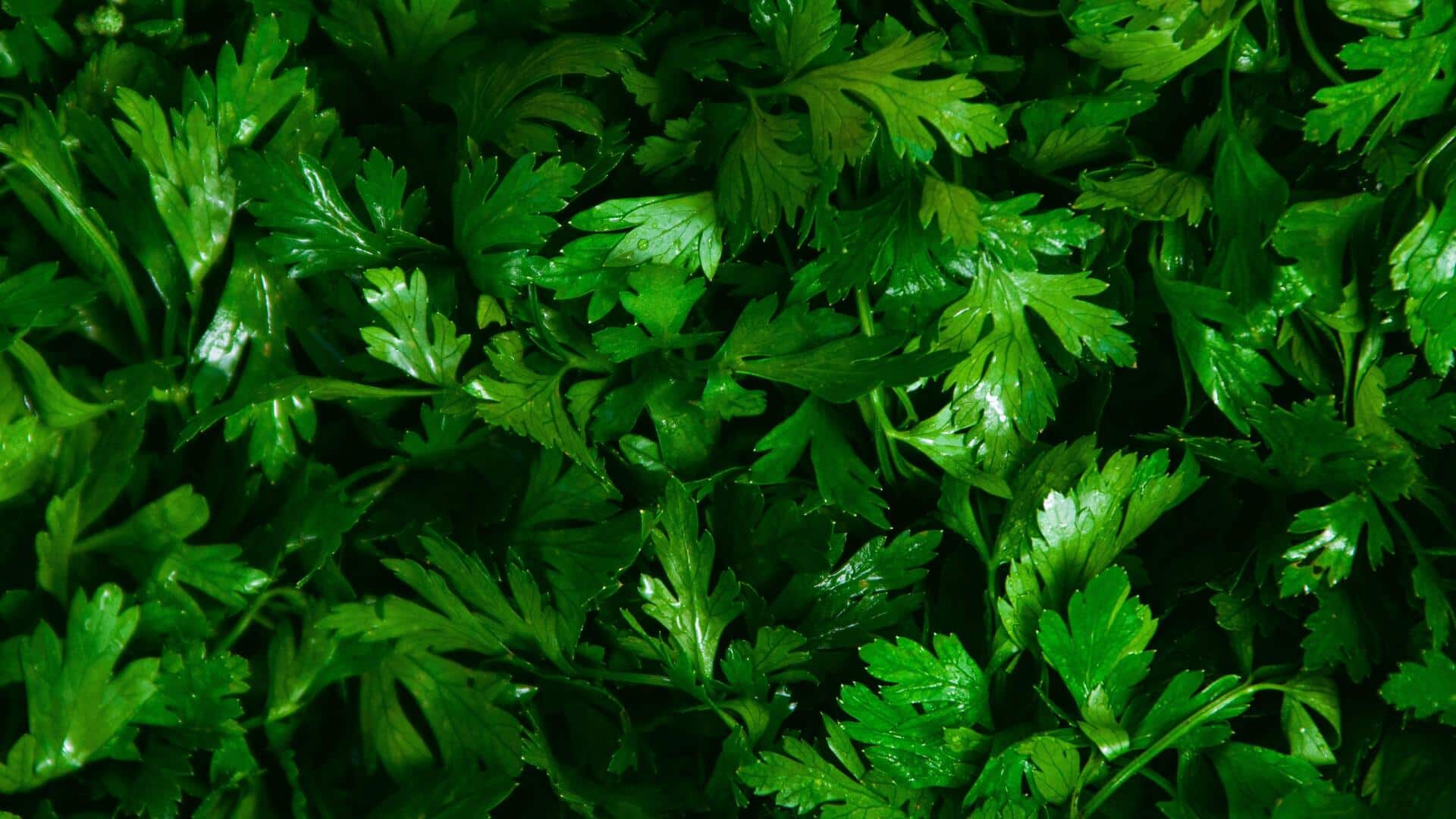
The nutritional difference between parsley and cilantro
What's the story
Parsley and cilantro are two popular herbs that are used to flavor a variety of dishes. While they may look similar, both have their own nutritional profiles that can benefit our health in different ways. Knowing these differences can help you add the right herb to your diet, depending on what you want. Here's a look at the nutritional differences between parsley and cilantro.
#1
Vitamin content analysis
Parsley is rich in vitamins A, C, and K. It gives you more than 100% of the daily value for vitamin K in just a few tablespoons.
Cilantro also offers vitamins A and C, but in lesser amounts than parsley. However, cilantro's unique phytochemicals may offer other health benefits.
Both herbs can be great additions to a balanced diet.
#2
Mineral composition differences
When it comes to minerals, parsley is a good source of iron and calcium. It helps in bone health and oxygen transport in the body.
Cilantro has potassium and magnesium, which are important for heart health and muscle function.
Depending on your mineral needs, you can choose one herb over the other.
#3
Antioxidant properties explored
Both parsley and cilantro are loaded with antioxidants that help fight oxidative stress in the body.
Parsley has flavonoids, such as apigenin, which may have anti-inflammatory properties.
Cilantro contains quercetin, which is known for its potential to reduce inflammation.
Adding either herb to your meals can boost your antioxidant intake.
#4
Culinary uses and flavor profiles
While parsley has a mild flavor that goes with most dishes, cilantro has a bold, citrusy taste that pairs well with Asian or Mexican cuisines.
Your choice between these herbs may depend on the kind of cuisine you like or the kind of dish you are preparing.