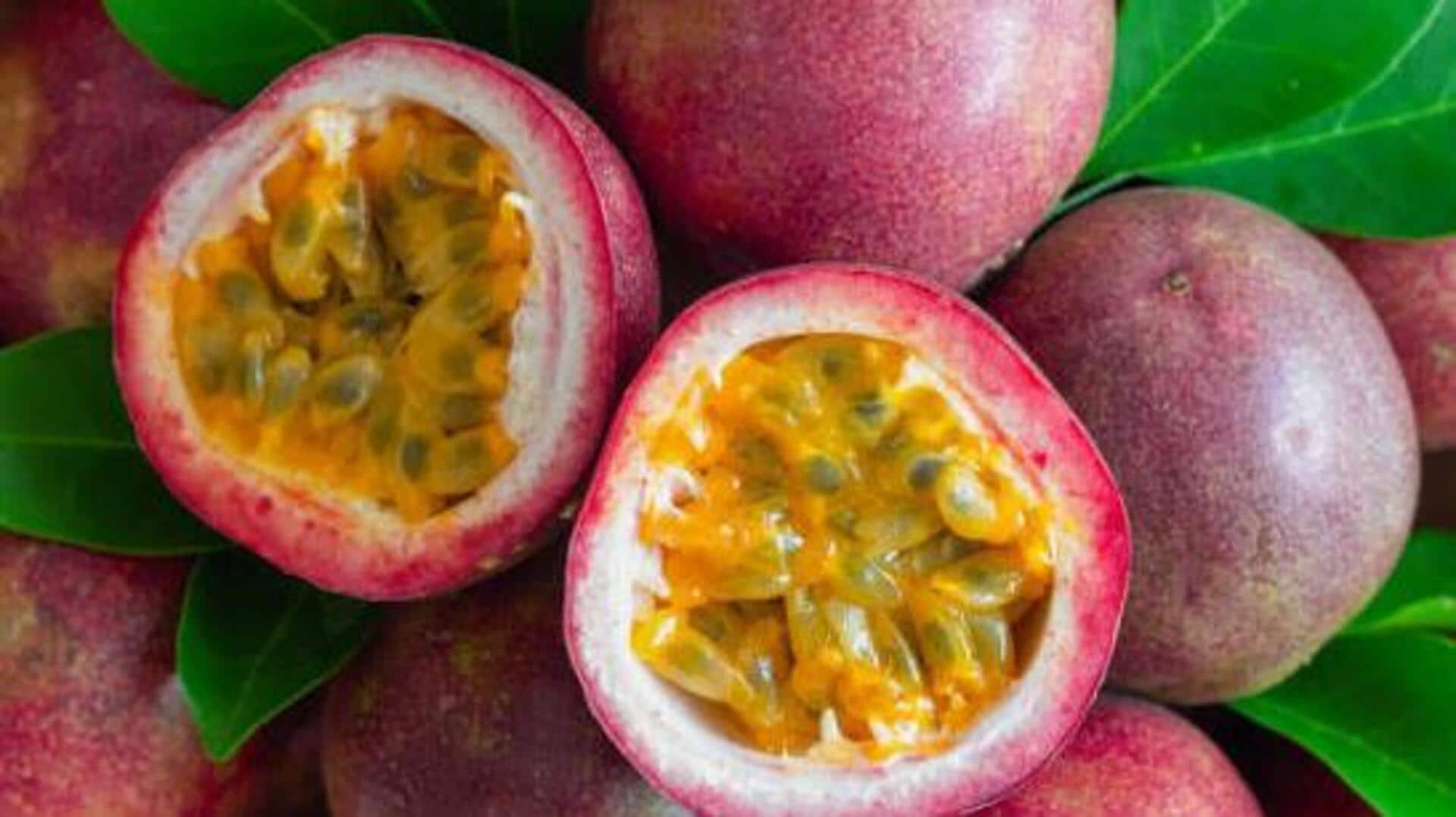
How passion fruit is used in African culture
What's the story
Passion fruit, a vibrant and nutritious fruit, is a staple in many African nations. Not only is it a delicious treat, but it also serves practical purposes in these countries. From culinary uses to traditional practices, passion fruit is ingrained in the daily lives of many. Let us take a look at five African nations where passion fruit is more than just a snack.
#1
South Africa's culinary delight
In South Africa, passion fruit is a common ingredient in desserts and beverages.
Its tartness complements sweet dishes, making it a favorite for pies and cakes.
Locally, it is also used to make refreshing juices and smoothies.
The fruit's versatility makes it a staple in both home kitchens and restaurants across the country.
#2
Kenya's traditional uses
In Kenya, passion fruit is not just eaten fresh but is also used for its medicinal properties.
Locals believe that it helps with digestion and can calm an upset stomach.
The seeds are sometimes ground into a powder and added to herbal teas for extra health benefits.
This traditional knowledge shows how deeply embedded passion fruit is in Kenyan culture.
#3
Tanzania's nutritional value
Tanzania emphasizes the nutritional benefits of passion fruit, which is rich in vitamins A and C, as well as dietary fiber.
These nutrients are essential for maintaining good health and well-being.
The locals consume it regularly as part of their diet to reap these health benefits.
This highlights the importance of passion fruit in Tanzanian cuisine, and its contribution to a balanced diet.
#4
Zambia's cultural significance
In Zambia, passion fruit is more than just a food item; it holds cultural significance during community gatherings and celebrations.
It is often served as part of traditional meals, or offered as a gesture of hospitality to guests visiting homes, or events like weddings or festivals.
#5
Uganda's economic impact
In Uganda, passion fruit cultivation has become an important source of income for many farmers.
The crop grows well in the country's climate and requires relatively low investment to grow.
As demand increases locally and internationally, farmers are reaping the benefits of exporting this beloved fruit.