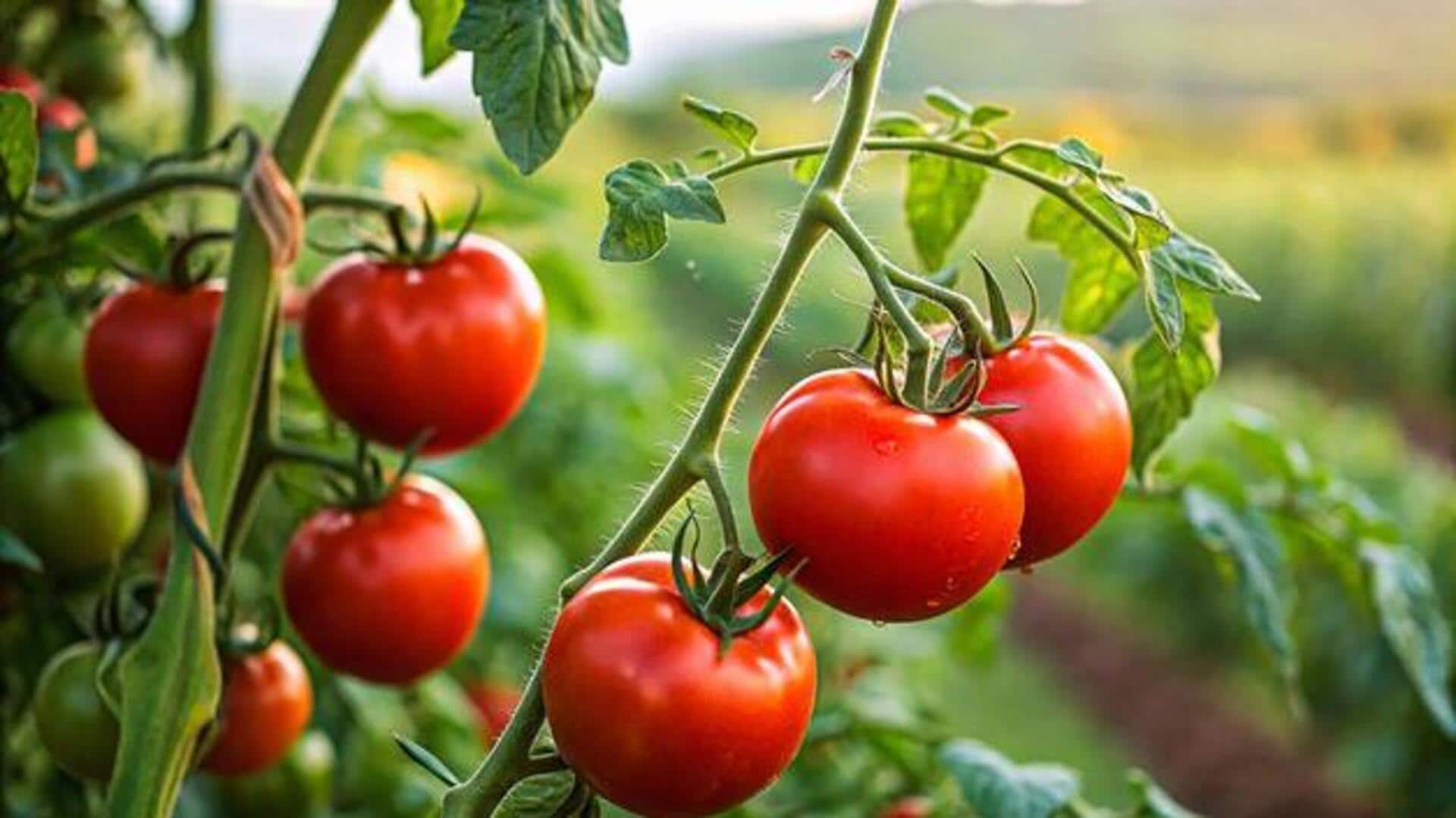
How to grow cherry tomatoes at home
What's the story
Growing cherry tomatoes from seeds is a rewarding task, especially if you have a patio. With limited space, you can still enjoy the pleasure of homegrown produce. Cherry tomatoes are ideal for patio gardens as they require little space and can flourish in containers. By following a few simple steps, you can grow these vibrant fruits right at home, enjoying fresh harvests throughout the growing season.
Tip 1
Choosing the right container
Selecting an appropriate container is essential for growing cherry tomatoes on your patio.
Go for pots that are at least 12 inches deep and wide to allow ample room for root development.
Make sure the container has drainage holes to prevent waterlogging, which can damage the plant's roots.
Using lightweight materials like plastic or resin can make it easier to move the pot around as needed.
Tip 2
Soil and planting essentials
Use high-quality potting mix designed for container gardening to ensure your cherry tomatoes thrive.
This type of soil retains moisture while allowing excess water to drain away, preventing root rot.
Plant seeds about half an inch deep and keep them evenly spaced within the container.
Water thoroughly after planting and place the container in a sunny spot where it will receive at least six hours of sunlight daily.
Tip 3
Watering techniques for success
Proper watering is key to growing healthy cherry tomatoes on your patio.
Water regularly but avoid overwatering; let the top inch of soil dry out between sessions.
Using mulch on top of the soil can help retain moisture and regulate temperature fluctuations within the container.
Monitor weather conditions closely; during hot spells, you may need to increase watering frequency.
Tip 4
Fertilizing for optimal growth
To ensure your cherry tomato plants get the nutrients they need, apply a balanced fertilizer every four weeks. This will help them grow and produce fruit.
Look for fertilizers with equal parts nitrogen, phosphorus, and potassium, or a formula with a higher phosphorus content. This will promote blooming and fruiting.
This way, your plants will have the nutrients they need to thrive.