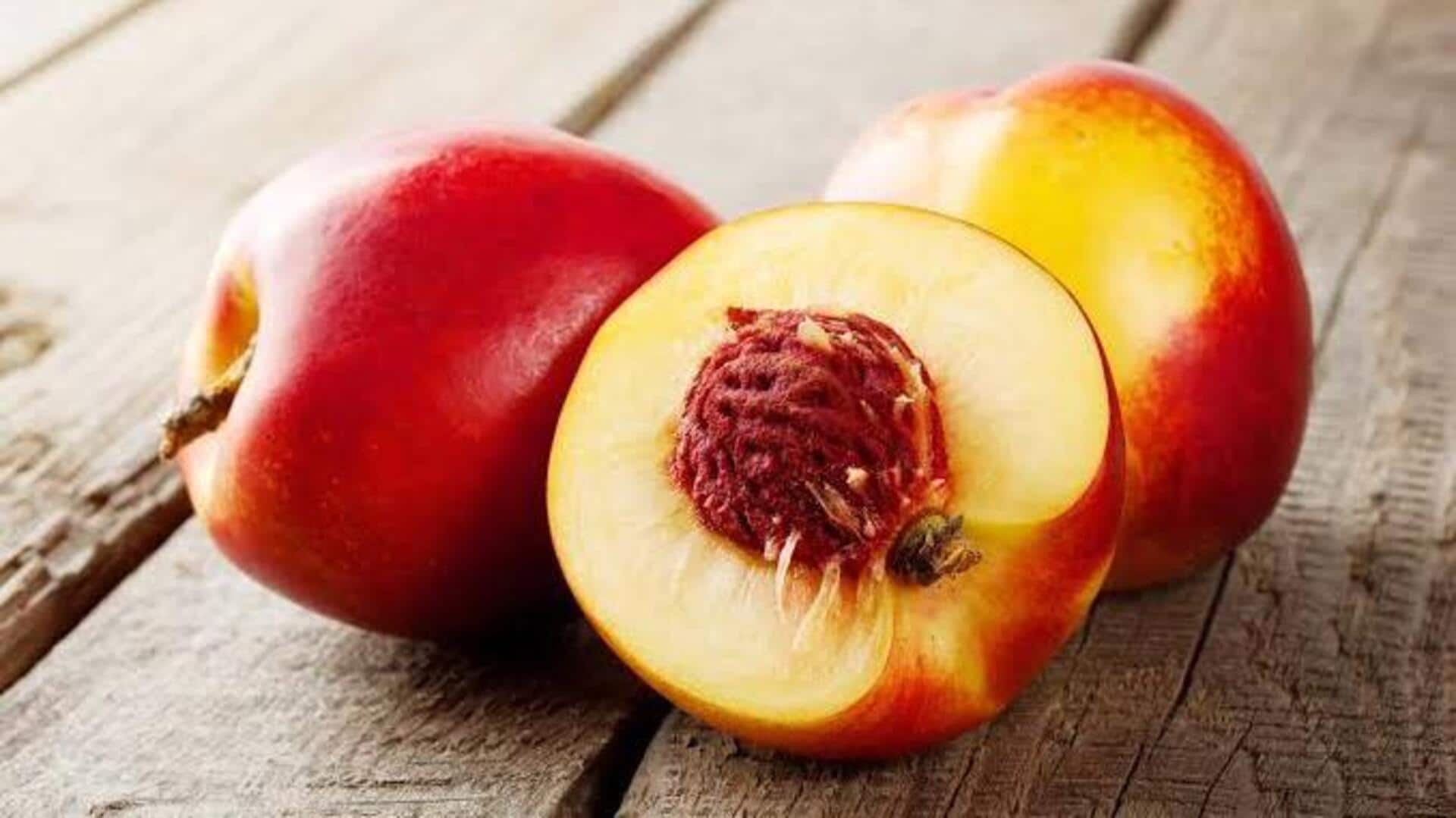
What is a nectarine fruit?
What's the story
Peaches and nectarines are two popular stone fruits that are often confused for one another. While they may look similar, the two have some notable differences in terms of nutrition. Knowing these differences can help you make informed dietary choices. Here, we look at the nutritional profiles of peaches and nectarines, and how they can fit into a healthy diet.
#1
Vitamin content comparison
Peaches and nectarines are both rich in vitamins, especially vitamin C.
A medium peach offers around 10% of the daily recommended intake of vitamin C, while a similar-sized nectarine offers about 8%.
Vitamin C is essential for immune function and skin health.
However, nectarines have slightly more vitamin A than peaches, which is great for vision and skin health.
#2
Fiber levels in each fruit
Fiber is an essential part of a healthy diet, as it promotes digestion and keeps you full.
A medium peach has about two grams of fiber, while a medium nectarine has roughly 1.5 grams.
The difference is not huge, but if you are looking to up your fiber intake, you may want to add more peaches to your diet.
#3
Caloric content analysis
When it comes to caloric content, both fruits are low-calorie options for anyone looking to maintain or lose weight.
A medium peach has about 58 calories, while a similar-sized nectarine has roughly 63 calories.
The slight difference in calories can be taken into account if you are tracking your daily caloric intake closely.
#4
Sugar levels examined
Natural sugars in fruits provide energy but should be consumed in moderation as part of a balanced diet.
A medium peach contains around 13 grams of sugar, whereas a similar-sized nectarine contains approximately 14 grams.
Both fruits provide natural sugars without added ones found in processed foods, making them healthier choices when craving something sweet.