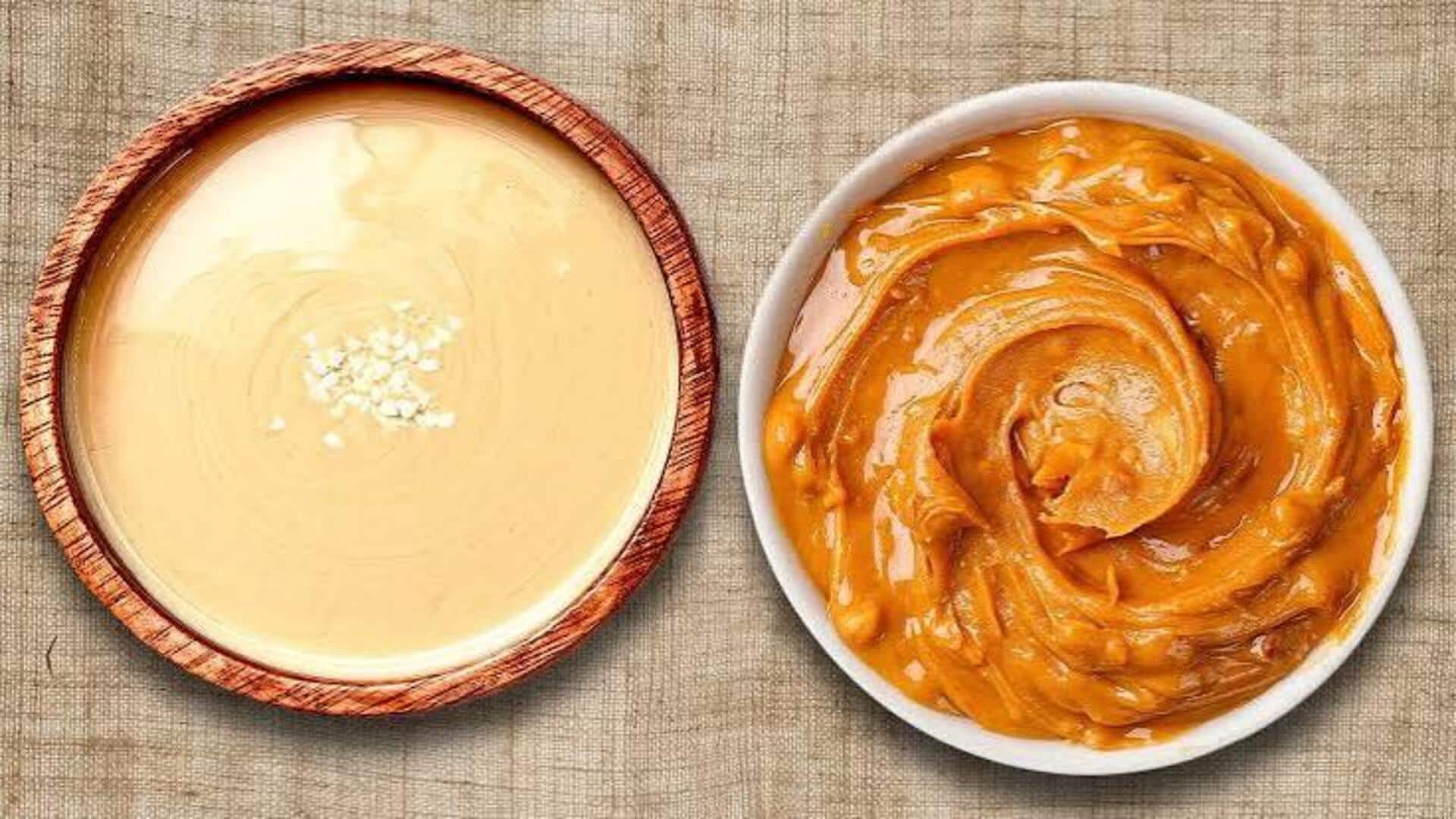
Peanut butter v/s tahini: Which spread is healthier?
What's the story
Peanut butter and tahini are two popular spreads that have made their way into the daily diets of many. While peanut butter is made from ground peanuts, tahini is made from sesame seeds. Both are rich in nutrients and offer unique health benefits. Knowing the nutritional profiles of these spreads can help you make informed dietary choices. Here's a look at the nutritional comparison of peanut butter and tahini.
#1
Protein content analysis
Peanut butter is well-known for its high protein content, offering around eight grams of protein per two-tablespoon serving.
This makes it an ideal choice for anyone looking to increase their protein intake without animal products.
Tahini, on the other hand, provides around six grams of protein per two-tablespoon serving.
Although slightly less than peanut butter, it still contributes significantly to daily protein needs.
#2
Fat composition insights
Both peanut butter and tahini are packed with healthy fats, but their compositions differ.
Peanut butter has about 16 grams of fat per serving, mostly monounsaturated fats that promote heart health.
Tahini has around 14 grams of fat per serving, with a good amount of polyunsaturated fats that also promote cardiovascular well-being.
#3
Vitamin and mineral content
Tahini is a powerhouse of vitamins and minerals, particularly calcium and magnesium from sesame seeds. It provides about 9% of the daily recommended intake of calcium per serving.
Peanut butter is rich in vitamin E and magnesium, but it has a lower calcium content than tahini. It offers around 2% of the daily recommended intake of calcium per serving.
#4
Caloric value comparison
When it comes to caloric value, both spreads are relatively high-calorie options due to their fat content.
Peanut butter has around 190 calories per two-tablespoon serving, while tahini has slightly fewer calories at approximately 178 calories for the same serving size.