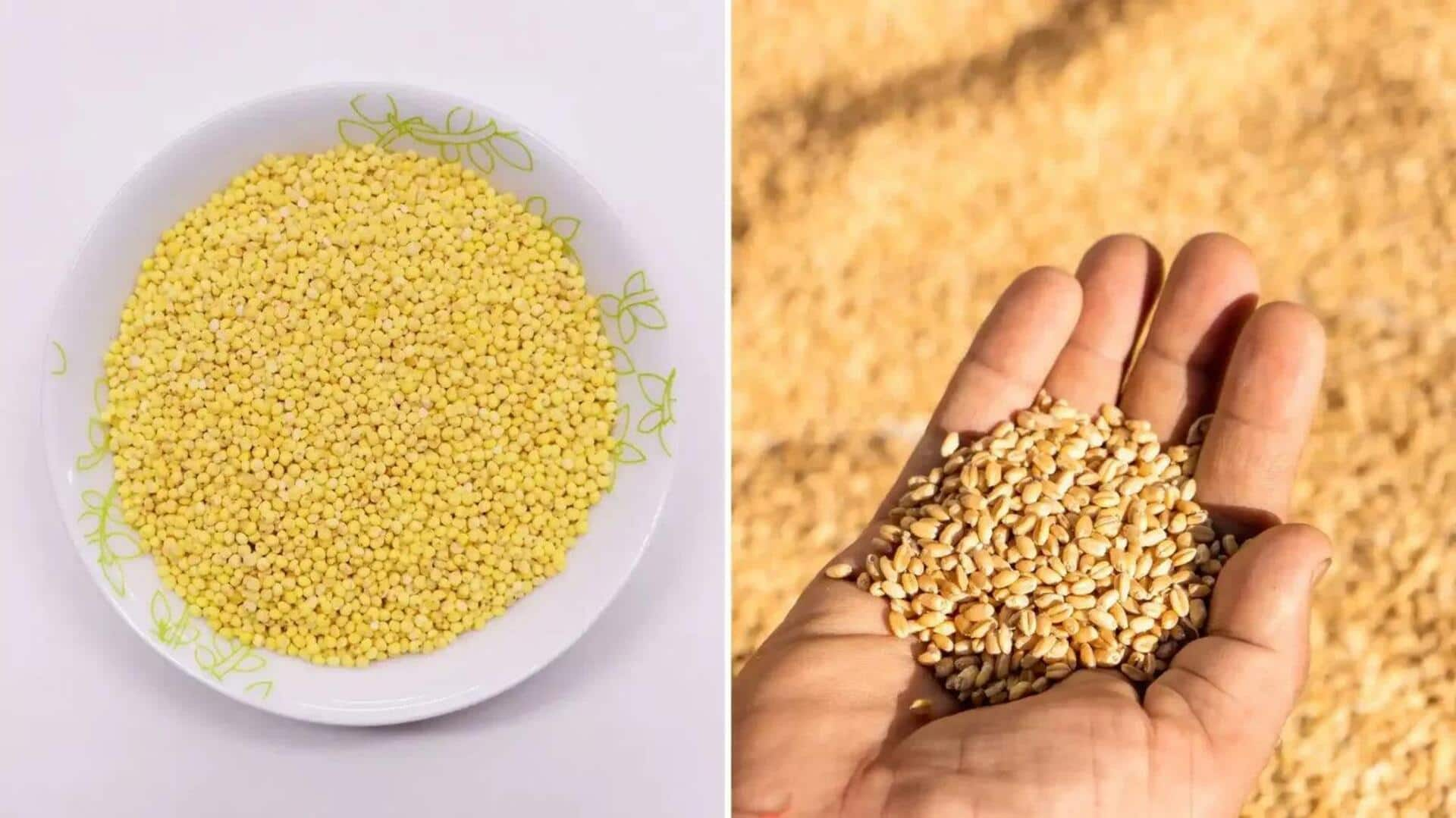
Pearl millet or wheat: Which is more nutritious?
What's the story
Pearl millet and wheat are two of the most commonly consumed grains in India. Both have their own nutritional benefits and energy-boosting properties. Knowing the difference between the two can help you make informed dietary choices. In this article, we will explore the nutritional profiles of pearl millet and wheat, their impact on energy levels, and how they can be included in your diet for optimal health.
#1
Nutritional profile of pearl millet
Pearl millet is rich in essential nutrients such as iron, magnesium, phosphorus, and B vitamins.
It is also high in fiber, which helps with digestion and keeps blood sugar levels stable.
Its low glycemic index makes it a great option for diabetics.
Pearl millet also has antioxidants that help fight oxidative stress in the body.
#2
Wheat's nutritional benefits
Wheat is a staple grain that provides important nutrients such as protein, fiber, zinc, and vitamin B6.
It is also a good source of carbohydrates that provide energy for daily activities.
Whole wheat products retain more nutrients than refined ones as they contain bran and germ layers of the grain.
#3
Energy-boosting properties
Both pearl millet and wheat provide carbohydrates that serve as the primary source of energy for the body.
However, due to its high fiber content, pearl millet releases energy slowly. This helps sustain energy levels throughout the day without causing spikes in blood sugar.
Wheat also provides a quick energy boost owing to its carbohydrate content but may lead to rapid fluctuations in blood sugar levels if consumed in excess.
Tip 1
Incorporating grains into your diet
To reap the benefits of these grains, include them in your meals regularly.
For instance, use pearl millet flour for making rotis or porridge for breakfast.
Use whole wheat bread or pasta for lunch or dinner options.
This way, you can enjoy the nutritional benefits of both grains while keeping your meals interesting with different textures and flavors.